Last Updated: June 16, 2025
Never a day goes by that I don’t receive a survey request—sometimes multiple ones. I bet that’s true for you too.
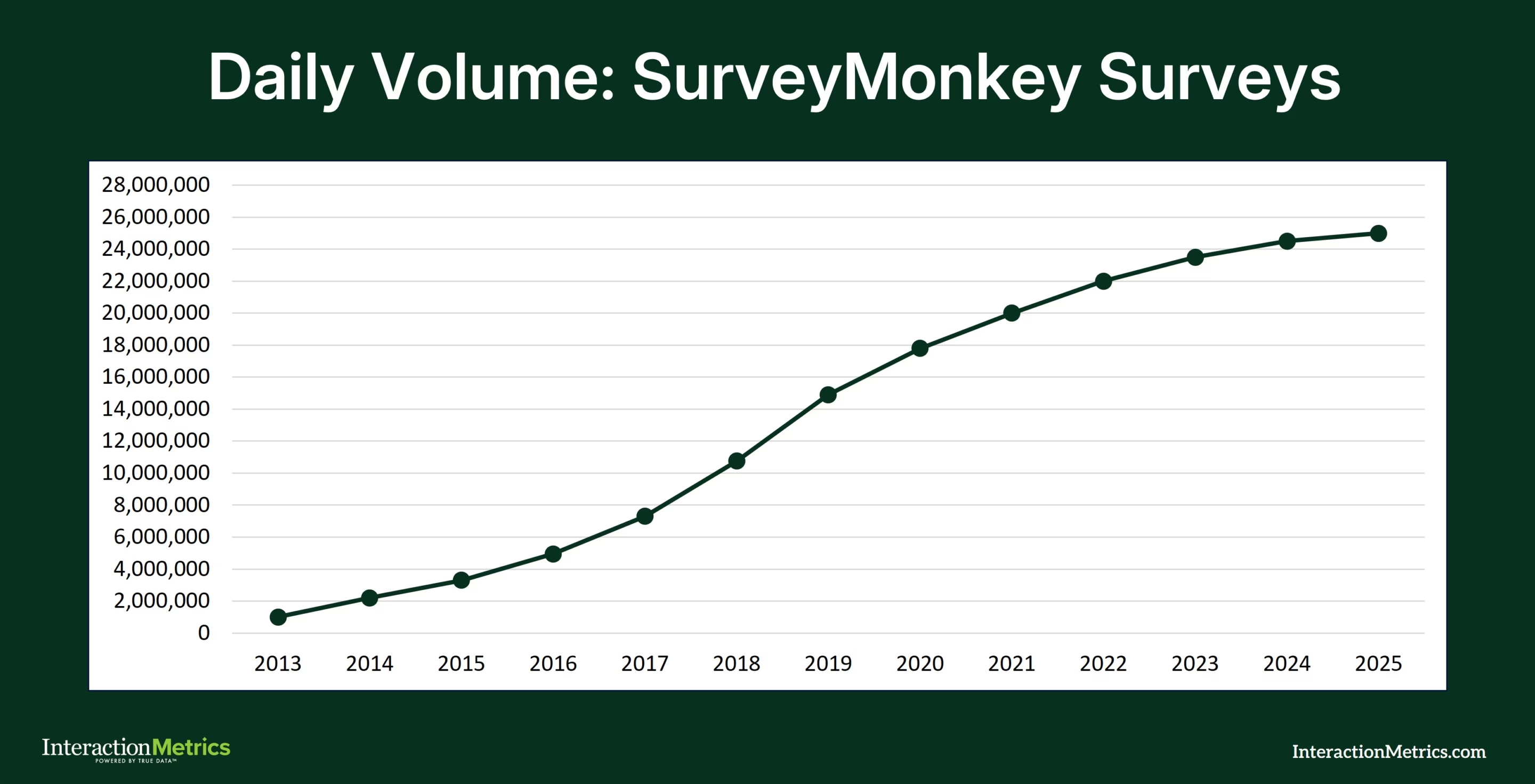
In 2013, SurveyMonkey processed approximately 1 million survey responses per day. By 2014, that number had already more than doubled to 2.2 million per day.
And now? By 2025, SurveyMonkey reports over 25 million questions answered every day, which translates to millions of surveys completed daily, on that platform alone. And that’s just SurveyMonkey.
Qualtrics, Medallia, Alchemer, and lots of other companies are processing millions of surveys too.
That’s why we’ve updated this blog—because survey overload has only gotten worse. The problem we wrote about years ago has evolved into a more significant threat to response rates and data quality.
Survey fatigue. And it’s growing exponentially.
Customers are drowning in surveys.
From quick-star ratings to endless forms, everyone wants their opinion. But few companies make it easy, relevant, or worth the customer’s time.
Bottom line: Customers don’t like it, and response rates show it. Even your most loyal customers are tuning out.
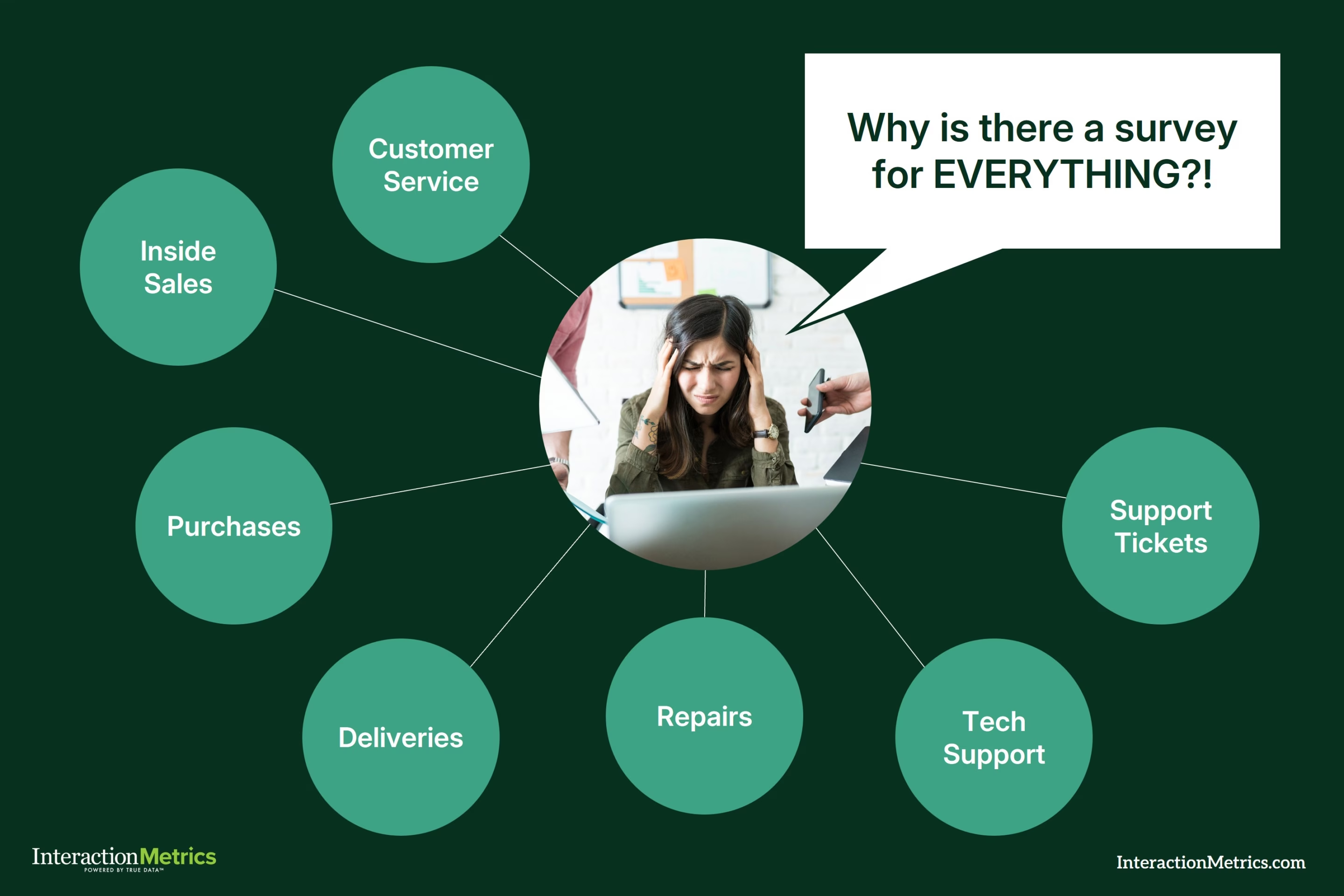
Survey fatigue is more real and more damaging than ever. And it’s why working with a third-party survey expert is essential if you want real insights.
Our customer surveys are designed for honesty, engagement, and high response rates. Here’s how:
- A real reply-to email. We never use “no-reply” emails. Instead, our surveys come from a real address. It’s a way of proving we’re truly interested, and by extension, our clients are truly listening to what their customers have to say.
- Incentives that work. We seamlessly integrate rewards that boost participation. This gives customers a genuine reason to share their thoughts and complete your survey.
- Anonymity that feels real. Our third-party status and the option for anonymity protocols make customers feel safe giving their most honest feedback.
Fatigue Isn’t Just Annoying—It’s Costing You
Even when customers do respond, things can still go sideways.
Sometimes customers rush through surveys.
Or they sugar-coat their answers.
They even abandon surveys halfway through. Why? Because too often, the process feels like an impersonal chore rather than a meaningful interaction.

That’s survey fatigue . And it’s killing your customer insights.
When participants feel frustrated or fatigued, they disengage, and the data you collect becomes shallow, inaccurate, and ultimately useless.
Problem: Too Many Surveys, Too Little Trust
Survey fatigue is what happens when customers are asked for feedback too often, or in such poor ways that they tune out.
At its core, survey fatigue happens when:
- You make too many survey requests.
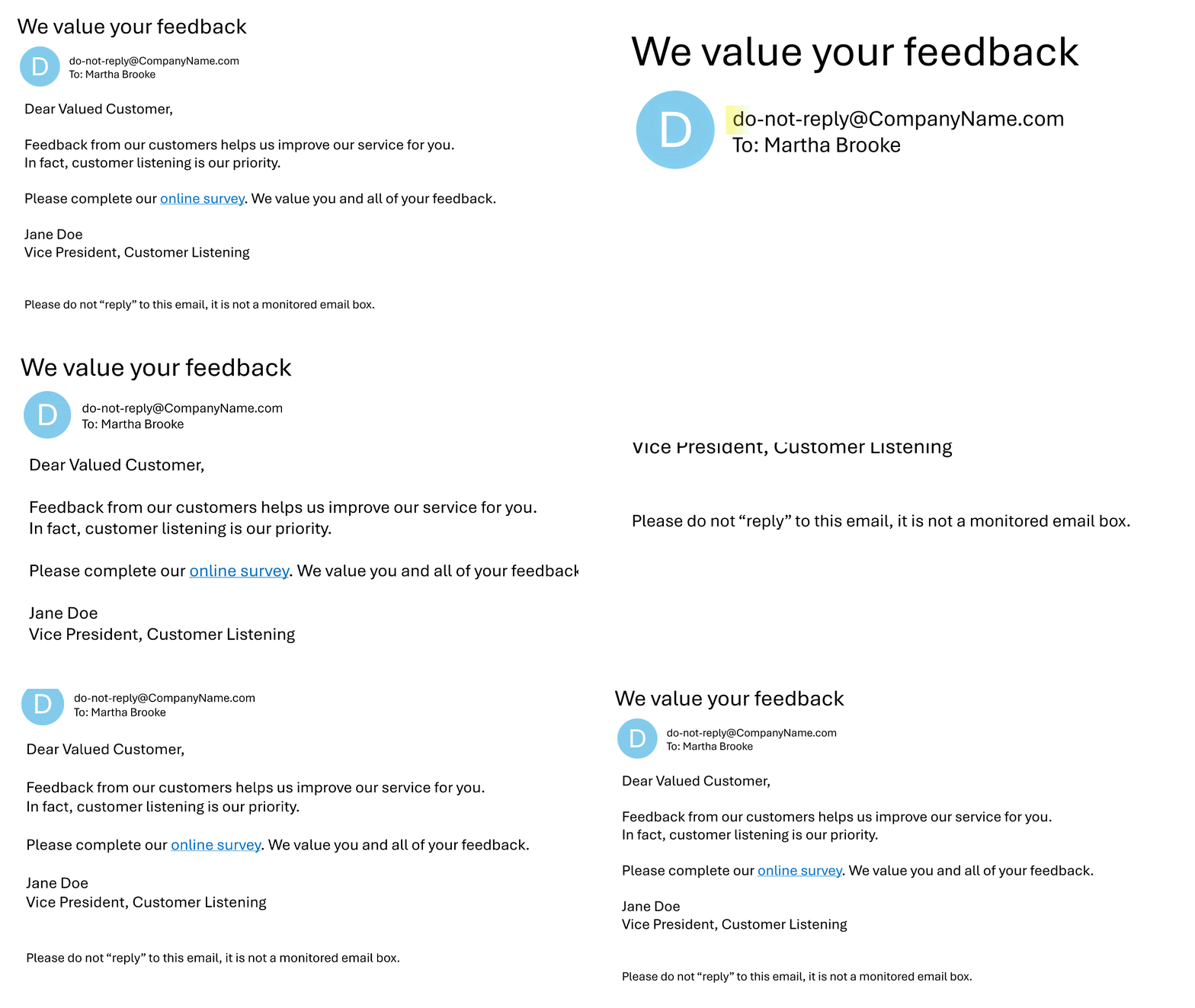
- Your surveys feel like a waste of time—they are too long, poorly written, or, as mentioned above, sent from a dead-end, no-reply (do-not-reply) email address.
When everyone is surveying everyone, constantly, that barrage leads to:
- Low response rates
- Incomplete or unreliable feedback
- Customers’ lack of trust that anything will be done with their input
Customers are saturated. They’ve stopped believing you’re listening.
What Causes Survey Fatigue?
Survey fatigue doesn’t come from one bad decision—it builds through a series of survey program missteps that result in surveys that feel like a waste of time.
But when your survey is too long, too vague, or too frequent, it sends the opposite message: “We don’t really care what you think.”
Based on research, here are six of the most common (and avoidable) sources of respondent burnout and survey abandonment.
#1. Long Surveys That Feel Like Homework
If your survey has no clear end in sight—you’re asking for drop-offs. Survey length correlates with respondent engagement.
Needlessly long or repetitive surveys lead to participant fatigue, sloppy answers, and higher abandonment rates, directly impacting data quality and survey completion.

Bottom line, just like you and me, customers are busy. Unless there’s a clear reward, like a well-communicated incentive, they’re unlikely to finish. Incentives show you value their time and can dramatically increase completion rates. (BTW, incentives can be effective without draining your budget.)
#2. Confusing Layouts and Clunky Interfaces
A well-designed survey should be effortless to navigate. But many surveys suffer from poor usability (UX) with unclear buttons, tiny text, bad mobile formatting, or inconsistent question styles. These friction points create cognitive fatigue, especially for mobile users.
#3. Repetitive or Irrelevant Questions
When customers are asked the same thing in multiple ways, or receive questions that don’t apply to them, it feels like you’re not listening.
Asking the same questions repeatedly can quickly frustrate participants and lead to drop-outs. Repetitive questions contribute to survey fatigue by making respondents feel their time is not valued, which can result in incomplete responses or low data quality.
This type of poor question design leads to question fatigue, where participants become tired or disengaged due to unnecessary repetition. Using fewer questions can help improve engagement and completion rates by reducing fatigue and making the survey experience more efficient.

#4. Surveying the Same People Too Often
This one’s easy to miss. If you’re surveying customers after every purchase, every ticket, and every week—it adds up. Even loyal customers start tuning out.
Survey too often, and you risk bothering the wrong people at the wrong time, leading to noise, not insight.
#5. No Clear Purpose or Follow-Up
When customers don’t know why they’re being surveyed—or what you’ll do with their feedback—they’re less likely to respond. Moral: Tell customers why their feedback matters and how you’ll use it — I hope to improve the experience!
If you’ve never followed up or made visible improvements from previous surveys, you’re begging for survey fatigue and customer frustration.
#6. The Feeling That Their Responses Don’t Matter
Expanding on point #5 is the silent killer of all feedback programs. If your customers have answered multiple surveys and never seen change, they’ll stop responding—because they’re realistic. They know that their input doesn’t matter and doesn’t make a difference.
Unhappy customers, in particular, may be less likely to participate if they feel their feedback is ignored, making it harder to identify and address critical issues.
How to Avoid Survey Fatigue (And Get Responses That Matter)
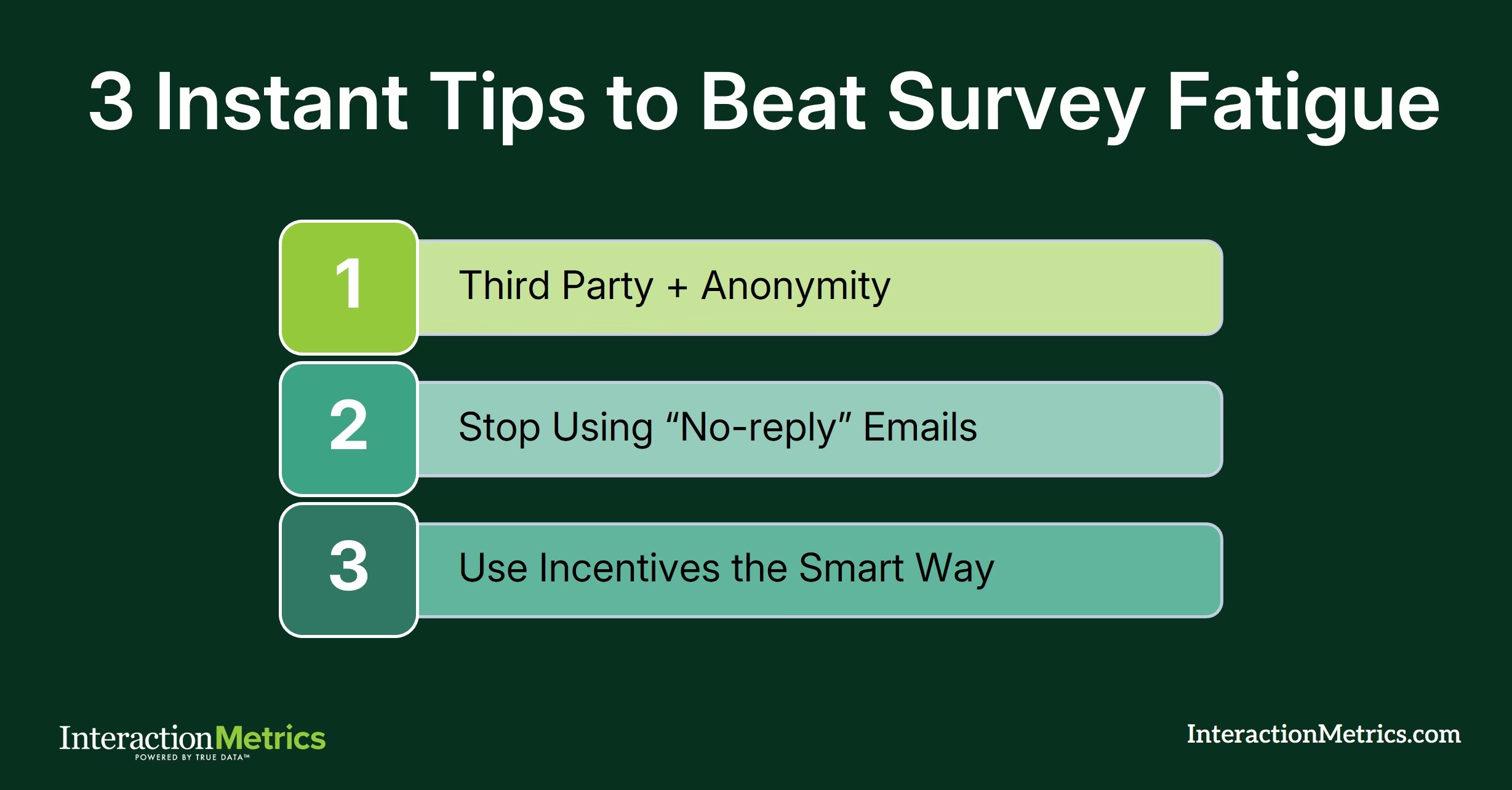
#1. Work with a Third-Party Who Guarantees Anonymity
The option for anonymity is critical to helping some customers to open up so that you get honest, actionable feedback.
In certain situations, when customers know their responses can’t be traced back to them personally, they’re more likely to be candid and engage truthfully.
At Interaction Metrics, offering the choice of anonymity is foundational to how we run most (but not all) of our surveys. Furthermore, because surveys come from us—not you—customers feel safe giving honest, unfiltered feedback.
Our third-party status removes the fear of repercussions, especially in B2B and employee contexts where relationships are at stake.
Even more to the point, we use proven protocols to make anonymity a visible, credible option. And of course, before delivering the resulting data, we scrub all identifying details to ensure no response can be linked to a specific individual.
This separation builds trust, increases participation, and leads to insights you can act on.
#2. Stop Using “No-reply” Emails
Want to show customers that you’re not listening? Send a feedback request from “no-reply@.”
Want to show them you ARE listening?
Allow customers to hit “Reply.”
We never use no-reply emails. Every message is designed to feel personal, credible, and open for response.
Email Best Practices That Fight Fatigue:
Use a real sender name and personalize the subject line to make the survey email feel human—not robotic.
Keep the tone warm and conversational, and allow customers to reply to your survey requests outside of the survey itself. Again, emails sent from a no-reply address signal to customers that you’re not truly listening.
Explore all our email survey best practices for techniques that improve open rates and boost completion.
#3. Use Incentives the Smart Way
You don’t need to bribe customers, but you do need to value their time. Thoughtful, well-placed survey incentives (gift cards, donations, etc.) can double or even triple participation, without biasing your data.
Because we manage every part of your survey campaign, we can integrate incentives seamlessly. It’s effortless for you, and rewarding for your customers.
See how we increase survey response rates while maintaining data integrity.
Effective Survey Questions: The Heart of Honest Feedback
The quality of your survey questions is the single biggest factor in obtaining honest, actionable feedback. When survey fatigue occurs, it’s often because survey respondents are faced with rote or confusing questions that don’t apply to their situation. This leads to lower response rates, rushed answers, and ultimately, feedback that doesn’t help your business grow.
To avoid this, focus on survey design that puts the respondent first.
Use clear, concise language and write interesting questions. Because think about it: if every question you ask has already been asked by Hilton, Hertz, and Honda—you won’t want to take your survey, so don’t expect your customers to either. Moral: avoid templated surveys like the plague!
And avoid survey design pitfalls, such as extensive follow-up questions that drag out the process, or disingenuous surveys that seem more interested in collecting data than in listening to real feedback.
Here’s how to create survey questions that work:
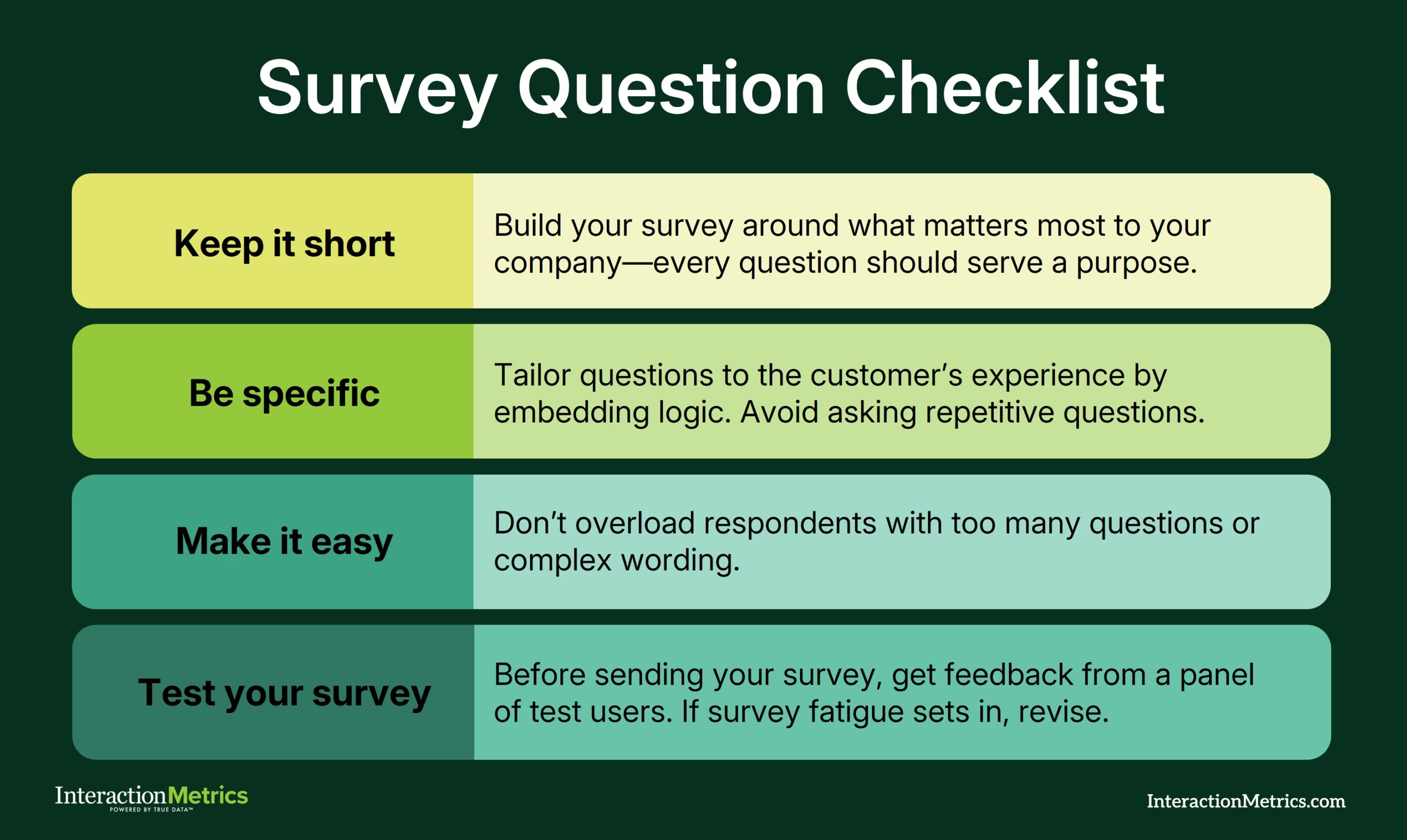
- Keep your questions short and focused: Build your survey around what matters most to your company—every question should serve a purpose.
- Be specific and relevant: Tailor questions to the customer’s experience by embedding logic. Avoid asking repetitive questions.
- Make it easy to answer: Don’t overload respondents with too many questions or complex wording.
- Test your survey: Before sending your survey, get feedback from a panel of test users. If survey fatigue sets in, revise.
By designing surveys that respect your respondents’ time and attention, you’ll reduce survey fatigue, increase response rates, and improve the quality of feedback collected. Remember: a well-designed survey is a conversation, not an interrogation.
Survey Frequency and Timing: When (and How Often) to Ask
How often you send surveys—and when you send them—can make or break your feedback program. Too many surveys, especially in a short period, can overwhelm your customer base and lead to over-surveying. This results in survey dropouts, lower response rates, and fatigued respondents who are less likely to complete surveys or provide thoughtful answers.
To reduce survey fatigue, be strategic about your survey timing.
Online surveys sent immediately after a customer interaction often see higher response rates, as the experience is still fresh in the customer’s mind.
However, bombarding customers with multiple surveys in quick succession can backfire, causing dropouts and diminishing the value of the feedback collected.
Tips for optimizing survey frequency and timing:
- Segment your customer base: Not every customer needs to be surveyed every time. Rotate your lists to avoid over-surveying.
- Space out your requests: Give customers time between surveys to prevent fatigue and keep participation high.
- Monitor response patterns: If you notice a spike in dropouts or a dip in response rates, it may be time to adjust your survey schedule.
- Ask at the right moment: Timing your survey after key interactions—like a purchase or support call—can increase response rates and the quality of feedback.
By respecting your customers’ time and attention, you’ll reduce survey fatigue, collect more meaningful feedback, and build a stronger relationship with your audience.
Measuring Survey Effectiveness: Are You Really Listening?
It’s not enough to send out surveys—you need to know if they’re actually working. Measuring survey effectiveness means looking beyond just response rate.
Is the answer quality strong? Or, are you seeing signs of respondent fatigue, like incomplete answers?
Long surveys and poor survey design can lead to inaccurate answers, undermining your efforts to improve customer satisfaction. To truly measure effectiveness, keep your surveys as short as possible and use smart survey design features like skip logic. This reduces cognitive burden, helps respondents stay engaged, and improves the quality of feedback collected.
Key ways to measure and improve survey effectiveness:
- Track response rates and dropouts: A low response rate or high dropout rate signals survey fatigue or disinterest.
- Analyze response quality: Are answers thoughtful and specific, or rushed and generic? Poor survey design often leads to the latter.
- Act on feedback: Show customers you’re listening by making changes based on survey results. This boosts customer satisfaction and encourages future participation.
- Avoid disingenuous engagement: Over surveying or sending surveys that don’t lead to real change can result in negative feedback and erode trust.
By continuously refining your survey process and acting on the feedback you collect, you’ll not only improve your customer experience but also drive real business growth. Remember, effective surveying is about listening and proving to your customers that their voices matter.
Bonus: What If You Have to Run Your Own Survey?
If you’re not ready to bring in a survey partner (yet), here are tips to reduce survey fatigue on your own. Using an online survey can make it easier to design user-friendly questions and collect accurate responses:
- Don’t over-survey the same list of participants—target the right people to ensure high-quality feedback
- Explain why their feedback matters to participants
- Include a named sender and a real reply-to address
- Test different email subject lines
- Offer small rewards or a thank-you message to participants
- Use branching logic to shorten the survey for participants
FAQ: Quick Survey Fatigue Fixes
How long should a customer survey be?
Shorter is always better. Under 5 minutes is ideal—unless the customer is highly engaged or compensated.
Is it okay to offer incentives?
Yes. Survey incentives increase engagement, especially when the reward is relevant and easy to redeem.
What’s a good customer survey response rate?
It varies by industry, but with third-party surveys, a 15%–60 % response is possible. Internal surveys usually underperform these rates.
Fatigue-Proof Your Surveys, Starting with Us
Customers are flooded with feedback requests. If you want your survey to cut through the noise—if you want higher response rates, more honest feedback, and data that leads to growth—you need a partner who gets it.
Whether you need to increase survey response rate, reduce abandonment, or simply get real customer insights, Interaction Metrics is your full-service solution.
If you’re tired of inactionable data or low response rates, get in touch!
We’d love to design a survey campaign for you that gets the response and results you can trust.