Read more
The post 7 Quick Tips To Improve Customer Service appeared first on Interaction Metrics.
]]>Improving customer service is more crucial than ever in 2024. Research shows that customers are 2.4 times more likely to stick with a brand when their issues are resolved quickly, yet over half will abandon companies that fail to anticipate their needs. This blog will explore how to improve customer service, common pitfalls to avoid, and metrics that ensure your efforts are on the right track.
Whether you’re tackling customer service challenges or fine-tuning your approach, these strategies will help you provide great customer service and quickly increase customer satisfaction.
Defining Customer Service: Building Trust at Every Step
Customer service is the support and assistance provided to customers before, during, and after their interactions with a company. It’s more than answering questions or resolving issues—it’s about building trust and fostering loyalty.
Exceptional customer service creates memorable experiences that align with your brand’s values, leaving customers feeling valued and understood. Understanding how to improve customer service means focusing not only on problem-solving but also on creating emotional connections that make customers feel genuinely cared for.
Why Great Customer Service is Your Business’s Secret Weapon
Customer service is the backbone of trust and loyalty in any business. A positive customer service experience can turn one-time buyers into lifelong advocates, while poor service can drive customers straight to your competitors.
The stakes are higher than ever—1 in 8 customers will abandon a brand forever after just one poor experience. This statistic underscores the critical role of customer service in building trust and retaining loyalty.
In a competitive market, knowing how to improve customer service is crucial to staying ahead. Businesses that prioritize customer service not only improve satisfaction but also strengthen customer relationships, leading to repeat business and positive word-of-mouth referrals.
The Golden Rules of Customer Service: How to Win Loyalty for Life
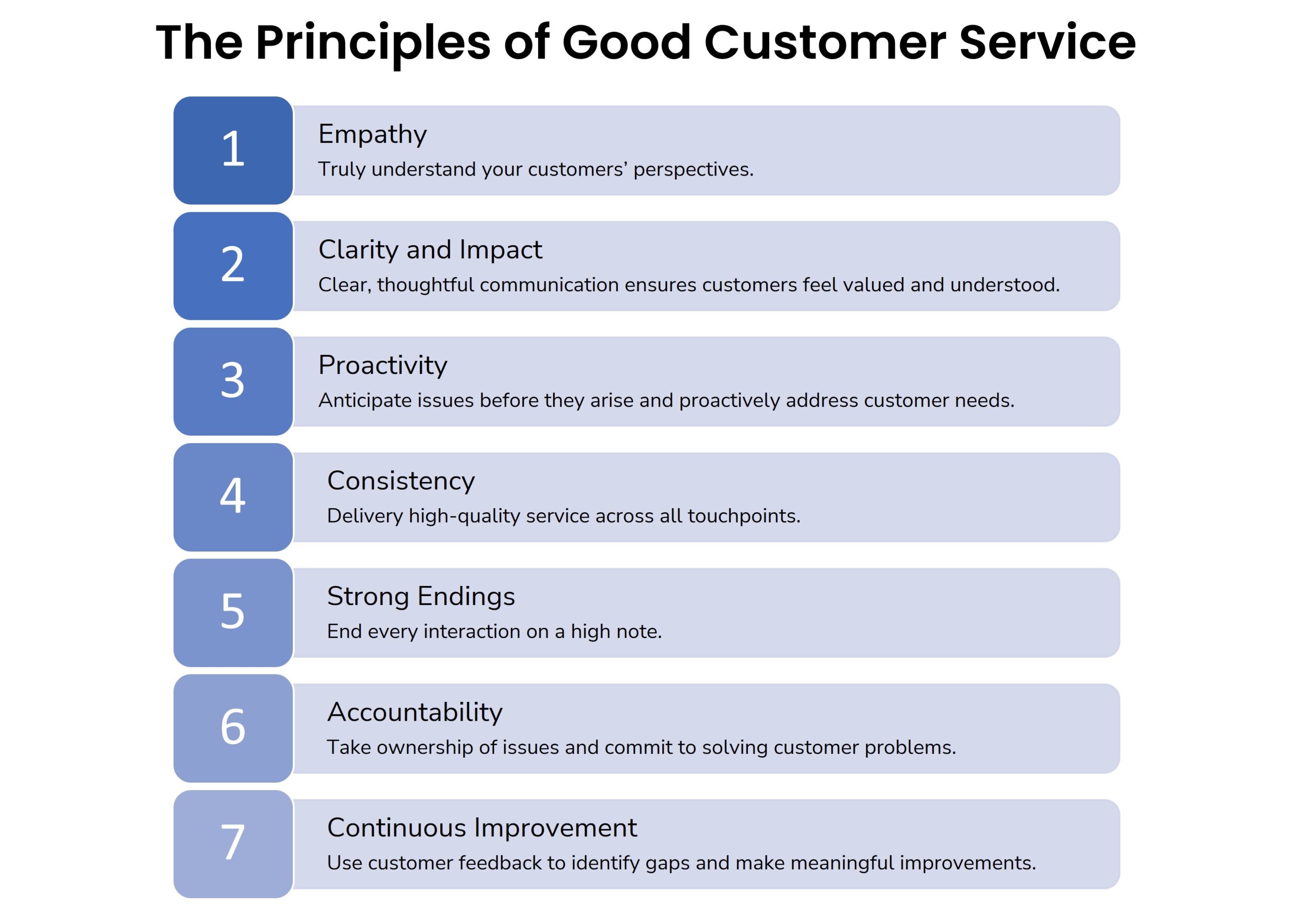
Good customer service is guided by principles that build trust, demonstrate care, and ensure satisfaction. These principles include:
- Empathy: Truly understanding your customer’s perspective is the foundation of excellent service. Reflecting on past interactions or reworking communications helps your team connect with customers on a personal level, ensuring their needs are met with care and understanding.
- Clarity and Impact: Clear, thoughtful communication—whether in emails, surveys, or conversations—ensures customers feel valued and understood. Every interaction should address immediate needs while anticipating future ones, aligning with your brand’s commitment to excellence.
- Proactivity: Anticipating issues before they arise sets great service apart. Whether through workshops, feedback mechanisms, or data-driven tools, proactively addressing customer needs builds trust and prevents frustration.
- Consistency: Delivering the same high-quality service across all touchpoints reinforces trust and dependability. Whether it’s through well-trained teams or aligned tools and processes, consistent interactions create a seamless customer experience.
- Strong Endings: According to the Peak-End Rule, customers remember the final moments of an interaction most vividly. End every interaction on a high note, summarizing resolutions, offering follow-up options, and leaving customers with a positive impression.
- Accountability: Taking ownership of issues demonstrates your commitment to solving customer problems fully and fairly. By equipping your team with the right tools and training, they can confidently address concerns and take responsibility for resolutions.
- Continuous Improvement: Use customer feedback, unbiased metrics, and tools like customer journey mapping to identify gaps and make meaningful improvements. Refining your approach shows customers you are committed to evolving alongside their needs.
By consistently applying these principles, you not only deliver exceptional service but also build lasting relationships that drive loyalty and trust.
How to Improve Customer Service: 5 Tips
1: Pick One Customer and Empathize
Empathy is a cornerstone of excellent customer service. A simple yet powerful exercise is to reflect deeply on a recent customer interaction:
- What was their experience from their perspective?
- How did it compare to your ideal customer interaction?
- If you could do it over, what would you change?
By putting yourself in your customer’s shoes and being honest about any shortcomings, you take a vital step toward improvement. Repeat this exercise for at least 10 different customers. Consistent practice builds empathy muscles and enhances your ability to deliver exceptional service.
2: Re-Read One Email for Clarity and Impact
Customer communication often starts with emails. Pick one you’ve sent recently and evaluate it:
- Does it align with your company’s brand?
- Does it address both immediate and potential future customer needs?
Revise that email for clarity and better alignment with your customer service goals. Share it across departments for feedback, then apply those insights to 15 more emails. Refining written communication boosts clarity, consistency, and customer satisfaction.
3: Focus on the End of Interactions for How to Improve Customer Service
If you’re focusing on how to improve customer service, start with the end. According to the Peak-End Rule, people remember experiences based on the most intense moment and the end. A poor ending can overshadow an otherwise positive interaction, while a great conclusion can redeem a flawed process.
Quick Win: Always End on a High Note
- Summarize resolutions clearly.
- Offer additional help or follow-up options.
- Use a friendly, branded sign-off that leaves customers with a positive impression.
For example, (depending on the kind of company you are) coaching agents to express statements like these can move the needle on interaction quality significantly:
- “Thanks for placing an order with us today; all of us at (Company Name) truly appreciate your business!”
- “I’m glad we could work together to get this resolved. What other questions can I answer for you about this or anything else about our company?”
4: Workshops: Aligning Teams for Immediate Improvements
A unified team approach can immediately improve customer service. Workshops are a powerful way to align employees on best practices, hone their skills, and practice scenarios they’ll encounter. These training sessions should focus on:
- Active listening skills.
- Effective de-escalation techniques.
- Delivering concise yet empathetic resolutions.
How to Measure Customer Service Quality Through Workshops
Use customer service surveys before and after workshops to gauge their impact. Are customers noticing the changes? Are employees implementing the techniques? Workshops are just the start, and ongoing measurement ensures the strategies stick.
A Step-by-Step Process to Improve Customer Service
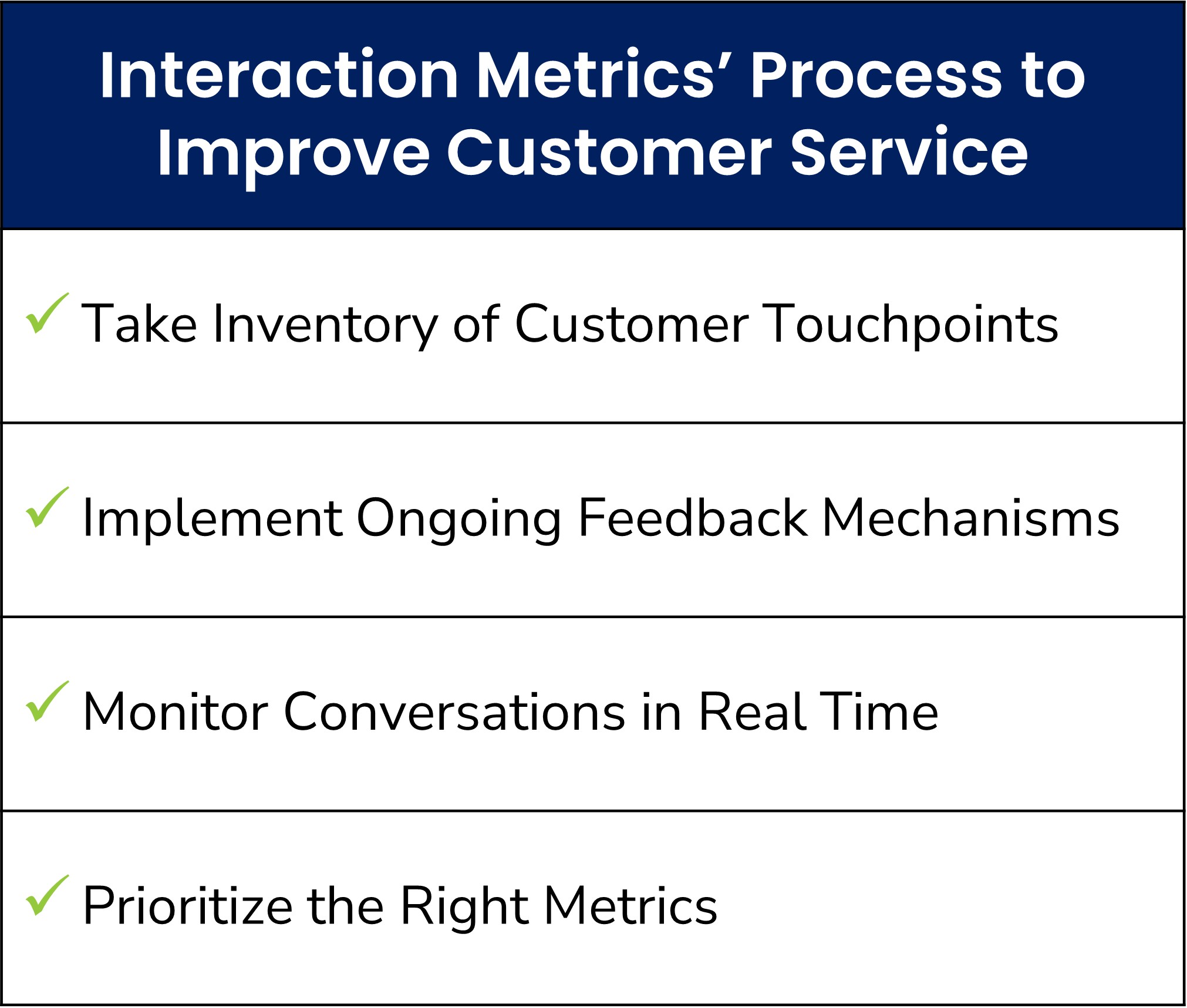
If you’re looking for a structured way to improve customer service, follow this proven approach:
- Take Inventory of Customer Touchpoints
Use surveys tailored to specific interactions, whether it’s tech support, warranty issues, or repairs. Understanding what happens at each stage is critical to identifying gaps. - Implement Ongoing Feedback Mechanisms
Regular customer feedback through real-time surveys or post-interaction evaluations helps identify problems as they arise. Tools like chat transcripts or call recordings offer additional insight. - Monitor Conversations in Real Time
Listening to live interactions or reviewing recordings helps measure if agents apply workshop teachings and follow service standards. Combine this with mystery shopping to get an unbiased view. - Prioritize the Right Metrics
Avoid over-relying on generic scores like Net Promoter Score (NPS). Instead, focus on metrics like proactivity, courtesy, expertise, efficiency, and how well customers feel listened to.
5: Refine Your Customer Feedback Process
Take a closer look at your latest customer satisfaction survey to identify and eliminate hidden biases that may skew results. Gather your team, provide everyone with a copy of the survey, and dedicate 20 minutes to evaluating it critically. You can work together as a group or divide into smaller teams, then reconvene to compare notes and discuss findings.
How many biases can you uncover?
This exercise delivers a double benefit. First, it helps you improve the quality of your future surveys, ensuring more accurate feedback. Second, it fosters a culture of empathy by encouraging your team to view the process from the customer’s perspective. By refining your feedback process, you not only collect better data but also deepen your team’s connection to your customers’ needs.
Customer Service Survey Example Questions
- “Did our team resolve your issue efficiently?”
- “Did the agent demonstrate expertise?”
- “Please rate the quality of the interaction overall.”
Technology’s Role in Enhancing Customer Service
AI and automation are revolutionizing customer service. These tools can streamline processes, personalize interactions, and offer insights into customer behavior:
- AI-Powered Platforms: Tools like Zendesk and Freshdesk analyze conversations to identify recurring customer concerns.
- CRM Systems: Salesforce Einstein and HubSpot CRM track customer preferences and offer tailored recommendations.
Integrating AI into your strategy can improve efficiency and customer satisfaction, but success requires careful testing and ongoing quality assurance.
Common Mistakes Companies Make—and How to Avoid Them
- Focusing on the Wrong Metrics
Overusing NPS or incentivizing managers to report glowing results can skew your understanding of performance. Opt for more detailed measurements that focus on specific interactions. - Survey Gaming
Asking customers to rate interactions highly can lead to biased data. Use neutral, open-ended questions to gather genuine feedback. - Taking a Hands-Off Approach
Customer service is too important to delegate entirely. Leaders should actively review metrics, participate in workshops, and understand the feedback firsthand.
Work with an expert like us! An objective, third-party view ensures accurate assessments and actionable recommendations.
Equip Employees with Tools to Improve Interactions
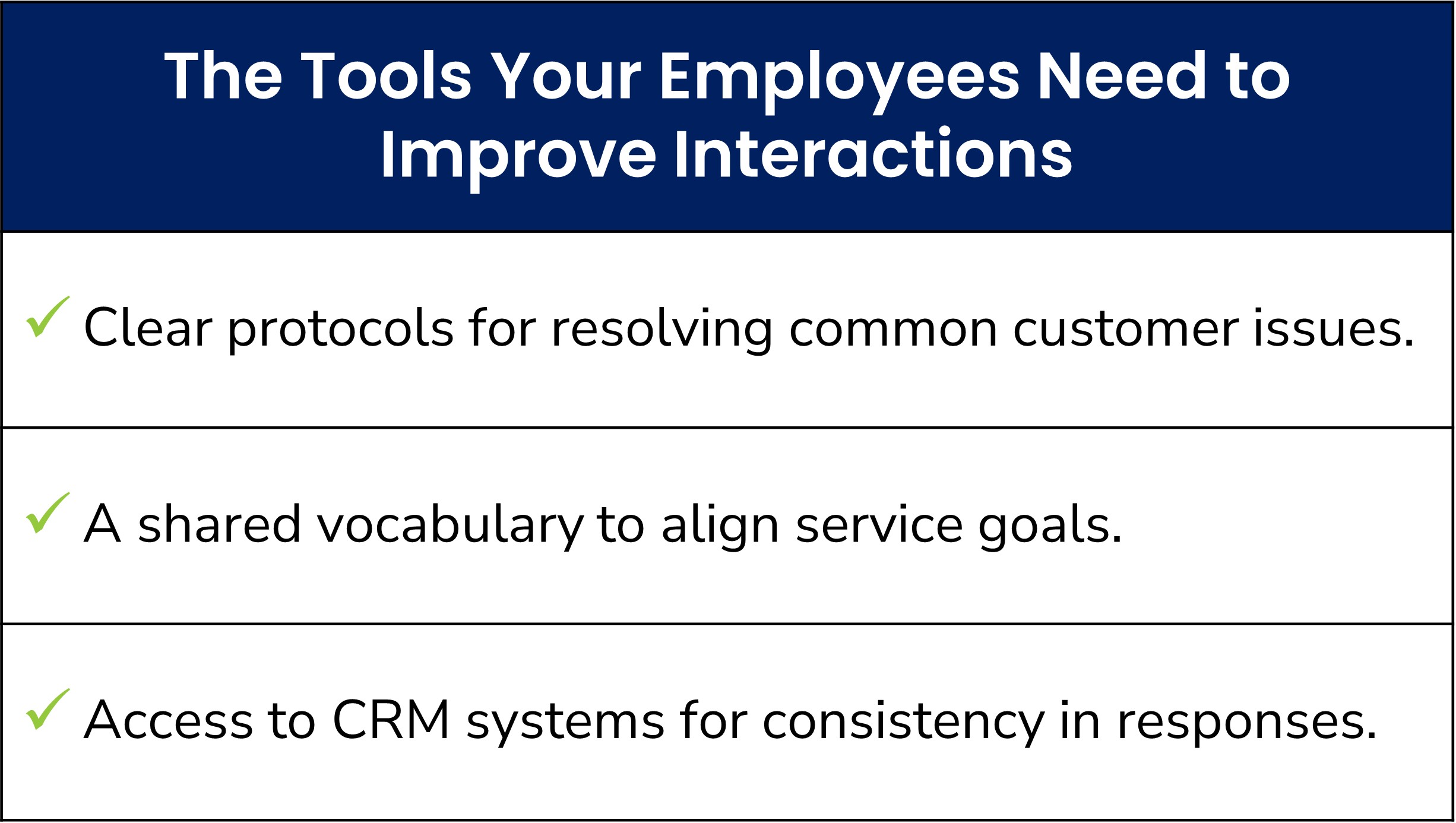
Your team’s success depends on having the right tools and training. Ensure they have:
- Clear protocols for resolving common customer issues.
- A shared vocabulary to align service goals.
- Access to CRM systems for consistency in responses.
How to Improve Customer Service: Additional Tools
- Customer Journey Mapping: Visualize the steps customers take when interacting with your brand, identify friction points and opportunities to improve, and streamline customer interactions.
- Data Dashboards: Monitor key metrics and adjust strategies in real time.
By empowering employees with these tools, you enable them to provide exceptional service and adapt to customer needs dynamically.
Real-Life Examples: Small Changes, Big Impact
One client implemented branded email sign-offs as a quick win. Agents were trained to add a personal touch to their final messages. The exact statement is proprietary, but it was similar to:
“We appreciate your loyalty to [Company Name]. How else could we support you moving forward and into the future?”
We had to continuously audit for seven weeks to get agents to the point where they expressed this statement in greater than 90% of their calls, but once that happened, this simple change led to a 15% boost in post-interaction survey scores.
Another success story involved creating a customer service dashboard accessible across the company, from agents to the C-suite. Visibility into real-time metrics encouraged accountability and motivated employees to improve.
Make Every Interaction Count
Improving customer service requires a nuanced approach and an investment in resources and planning. Some of your plan will include focusing on the end of interactions, aligning your team through workshops, and measuring the right metrics. Whether you’re addressing common mistakes or building on quick wins, every step you take brings your business closer to exceptional customer service.
============================================
Care to learn more about how to improve customer service? Get in touch!
============================================
The post 7 Quick Tips To Improve Customer Service appeared first on Interaction Metrics.
]]>Read more
The post How a Customer Service Consulting Firm Can Grow Your Company appeared first on Interaction Metrics.
]]>Each interaction your customers have with your company’s representatives gives them either a positive or a negative view of your company. In other words, your customer service is either promoting your brand or driving your customers away. If you’re not sure how your customers perceive your customer service, it’s time for a customer service consulting firm.
What Exactly is Customer Service Consulting?
Customer service consultants use their expertise to dive deep into your operations, analyze your current customer service, identify areas for improvement, and develop plans so you can achieve your service goals.
As a consulting firm that has helped hundreds of companies, we’ve identified three main ways customer service consulting can help you:
- If your brand promises exceptional customer service, it’s critical to ensure that it is. Whether it’s tech support, consumer affairs, front desk personnel, or inside sales, ensuring that every interaction is exceptional is crucial.
- If you have complicated situations at your company that you need your service staff to handle masterfully, that’s another opportunity for a customer service consulting firm to measure and improve your performance. That could be rate increases, supply chain difficulties, an unusual number of questions about a new product or service, or something else. Our Customer Service Evaluation shows you how you score in your current handling and how to do better and improve that score!
- If for your company, every customer relationship is vital, investing in customer service just makes sense. This is especially true for B2B companies, where the relationship between the customer and company is akin to a partnership and both sides mutually influence each other. If you’re interested in B2B, read the whitepaper here.
There are other scenarios when customer service consulting is needed, but most of our customer service consulting falls into one of these three categories.

Why You Need a Customer Service Consulting Firm
The quality of customer service impacts everything from how your customers perceive your brand to sales.
Bad customer service hurts companies’ bottom lines—by a lot. According to a 2016 Accenture study, the cost of customers switching companies due to poor service is $1.6 trillion. With the rise of social media and review sites, customers will leave your brand if they don’t like your customer service, leaving negative reviews for the entire internet to read.
Customers today are unhappier than ever with the service they receive. In 2023, nearly three-quarters of Americans said they had a product or service problem in the past year —more than double the number of problems in 1976.
A survey by Forrester Consulting found that customers are most frustrated about:
- Different customer service agents giving different answers (41 pct)
- Customer service agents not knowing the answer (34 pct)
- Respondents being unable to find an answer on a website (31 pct)
The good news is that this is preventable. And good customer service is one of the best ways to earn customer loyalty. Nearly 90 percent of customers are more likely to make another purchase after a positive customer service experience, according to Salesforce. And 68 percent of customers say they will pay more for a brand that’s known for its good customer experience.
The Four Key Dimensions of Customer Service
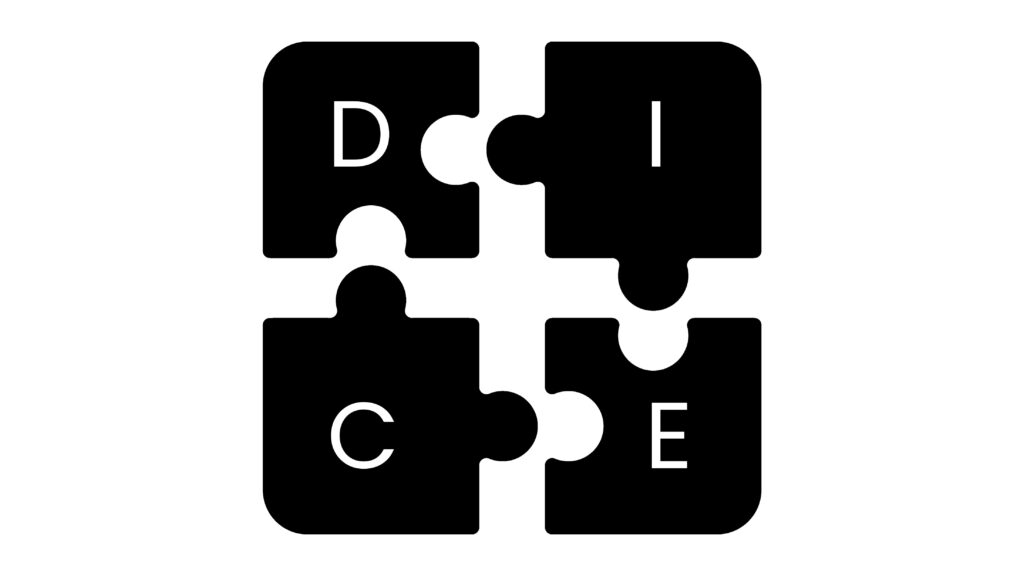
No matter what your use case is, all customer service interactions can be broken down into four core dimensions: Differentiation, Information, Connection, and Efficiency.
- Differentiation: Does your customer service set your company apart in a way that makes customers remember you? Whether it’s an expert touch or a memorable sign off, differentiation is key.
- Information: Do your associates answer questions clearly and proactively? Are their answers complete, yet easy to understand? Do they frame your company in the best possible light?
- Connection: How well do your customer service staff engage your customers? Do they use listening and affirming words? Do they personalize interactions?
- Efficiency: Do your customer service associates show that they value your customers’ time? Are they transparent about wait times and reasons for holds?
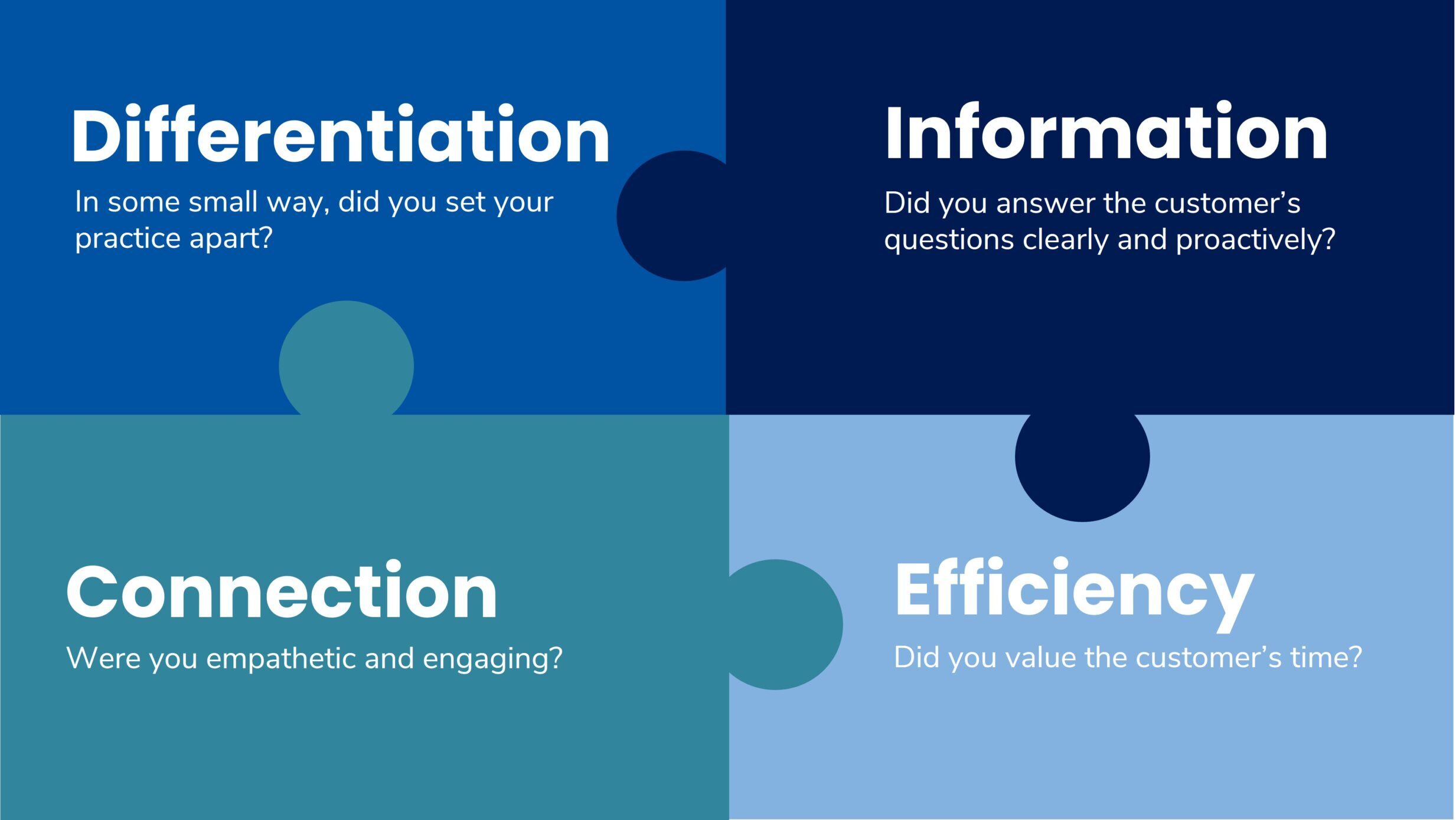
Each dimension should be present in every customer interaction, but they are weighted differently based on your company’s goals and customer needs.
The Four Dimensions in Play
For a customer service consulting firm, it’s important to grasp how the four dimensions stack up in different industries.
For a construction company handling customer service calls, the quality of information is the most important: customers want to know what products are in stock, when they can pick them up or have them delivered, and specifics about products and applications. Customers care less about how friendly the representative is.
Sometimes information isn’t the most important element of customer service. For example, if Starbucks serves you cold coffee, connection and efficiency are most important. The barista should say, “I’m so sorry that happened,” and rectify the situation immediately.
What’s the Customer Service Consulting Process Like?
Here’s how the customer service consulting process works at Interaction Metrics:
- First, we mystery shop you and your competitors to gauge the current state of customer service at your company. When we can, we augment this with your call recordings, chat documentation, etc.
- Based on our findings, we create a set of criteria surrounding the four dimensions of customer service and use these criteria to do customer service evaluations. Depending on the company and what the customers need and expect, each of the criteria are weighted differently.
- Then, we score real calls between customers and representatives using the criteria and present the results in a Power BI dashboard so you can see real-time data and make informed decisions.
- Lastly, we do a customer service survey to see how customers perceive the company and if the changes and training we’ve implemented are having an impact.

Customer Service Surveys Pinpoint Next Steps
A Customer Service Survey is like a direct line to your what your customers really feel and think, giving your company the chance to zero in on what’s working and what needs a tweak.
This helps you make smart, informed decisions that enhance the customer experience. Plus, when customers see that you’re genuinely interested in their opinions and are committed to making changes, it builds trust and loyalty.
This is because of the ever-changing nature of customer expectations. Successful companies must adapt to meet these evolving needs, and customer service surveys provide direct insights into what customers value now.
Why Measurement Is the Key
When you’re deciding which customer service consulting firm to work with, ask what metrics they’re measuring. Do they have a system of measurement?
Cold, hard, differences in data impress your CEO and get buy-in from the board. Without measurement, you can’t make objective, data-backed decisions. If consulting isn’t based on scientific methodology, it’s just guesswork!
A team of expert analysts ensures your measurement system is replicable and objective. Here’s how our measurement process works at Interaction Metrics:
- Make a hypothesis: take the time to think about what you don’t know and what you’re looking for
- Quantify Results: using precise measurements, you can see emergent themes and present them to company leadership
- Take action: based on your findings about your initial hypothesis, you can make business decisions with confidence
Your metrics, methods, and goals should complement and inform each other. And take a hybrid approach to measurement, because every method has its pros and cons. Surveys are easy to implement, but they often reveal shallow insights because customers don’t think deeply about the details of their experience.
A hybrid approach will give you deeper insights. Service evaluations combined with customer interviews will identify where you lose customers and reveal customers’ deep thoughts.

What’s the Role of AI in Customer Service Consulting?
AI chatbots are becoming an increasingly popular tool to handle basic customer service interactions, offering quick, efficient responses to customer inquiries at any time of day.
While they can’t replace the human touch entirely, AI chatbots can handle routine tasks like answering frequently asked questions, processing orders, or guiding customers through simple troubleshooting steps.
And while AI can be a valuable tool for analyzing customer service conversations, you still need analysts who understand the difference between “It’s fine!” and “It’s fine, I guess,” to properly score your customer service interactions.
Which Departments Benefit from Customer Service Consulting Firms?
Customer service consulting isn’t just for customer service! Multiple departments can benefit from customer service consulting.
Customer Service/Support: Consulting agencies can streamline customer service processes, improve representative training, decrease response times, and introduce technology solutions to improve the customer experience.
Marketing: Marketing departments benefit from customer service consulting by understanding customers’ preferences, feedback, and behaviors. Consulting firms can help align marketing strategies with customer expectations, develop targeted messaging, and leverage customer service data to inform marketing campaigns.
Sales: Consulting firms can help sales teams understand customers’ needs and pain points, improve communication and relationship-building skills, and identify opportunities for upselling or cross-selling.
Operations/Logistics: Efficiency is one of the core components of customer service, and it can have an outsized impact on operations and logistics. A customer service consulting firm can help improve supply chain management to meet customers’ expectations and minimize disruptions.
Human Resources: Human resources departments can benefit from customer service consulting by improving employee training. Consulting firms can help HR teams identify skill gaps, develop customer service competencies, and foster a positive work culture that prioritizes customer satisfaction.
Customer Service Training: Hands-On Improvement
Occasionally, clients already know they need to improve their customer service. Often, it becomes apparent once we perform a customer service evaluation or a satisfaction survey.
If you want to deliver stellar customer service, your representatives need customer service training that exemplifies the highest standards and offers examples.
Our Customer Service Trainings educate employees on how to:
- Create peak moments
- Conclude interactions on a high note
- Connect with customers compassionately
- Communicate clearly and effectively in a wide range of scenarios
- Demonstrate your brand through customer service
Whether you choose an hour-long workshop or a half-day coaching session, we will start by discussing the core qualities of the customer experience and break the interaction into the four fundamental principles of customer service. We’ll explore different customer personas and situations and deconstruct examples of good and bad customer service.
Then, we’ll demonstrate model answers with The Playbook, reworking specific scenarios with your representatives. We’ve written Playbooks with hundreds of Model Answers and can help your representatives with any potential scenario.
Our Model Answers are more than scripted responses. They demonstrate to your associates what great customer service looks like in specific customer situations.
Last, we’ll do interactive exercises and co-critique interactions to increase customer service awareness. We’ll also brainstorm ways to incorporate the Model Answers into customer service.
Is a Customer Service Consulting Firm Worth It?
Investing in your customer service strategy is a game-changer for any business. When you make customers feel valued and heard, they don’t just stick around—they become your biggest fans and tell their friends, too. Plus, standout service sets you apart from the crowd, letting you stand out in a competitive market.
Over time, happy customers lead to more sales—so putting money into upgrading your customer service isn’t just smart; it’s essential for building a brand people love and trust.
If you’re wondering whether your customer service could be improved, send us a call recording, email exchange, or chat transcript. For free, we will give this interaction an objective assessment. This way, you’ll get insight into our processes and how we think.
================================================
Want to learn about our customer service surveys, evaluations, and workshops? Get in touch!
================================================
The post How a Customer Service Consulting Firm Can Grow Your Company appeared first on Interaction Metrics.
]]>Read more
The post Call Center Training: Jason Bader Interviews Martha Brooke appeared first on Interaction Metrics.
]]>In this episode of the podcast Distribution Talk, Jason Bader has a far-reaching conversation with Martha Brooke. Martha briefly touches on how Interaction Metrics measures and improves the customer experience; then, Jason narrows in on call center training. Martha explains that customer service is a subset of customer experience and discusses how to evaluate and elevate call center interactions based on four key dimensions: Efficiency, Information, Connection, and Differentiation; within each dimension, there are usually several elements.

Case Study Explored:
Martha and Jason dissect a distribution company that sought to improve its inside sales customer service. The client achieved a 50% improvement in performance over a six month period, highlighting the necessity for employing programs, not just one-and-done call center training projects. Listeners interested in discussing the customer experience can contact Martha here.
Call Center Training Episode Summarized:
- What do Interaction Metrics’ clients have in common? They are all serious about the customer experience, of which customer service and call center training are critical components. Martha says, “When the customer thinks about their experience, they wonder if you have the right inventory. Will the product arrive on time?” “If you didn’t have it in stock, were there alternates? What’s the quality of your website? What about the portal? There’s almost nothing about a company that’s not customer experience.”
- Martha and Jason discuss a program that started by surveying customers and employees to assess customer service perceptions. The metric came in at 54 on a scale of 0 to 100, indicating a clear need for improvement.
- This led to a program involving recorded call analysis and call center training workshops. The Interaction Metrics’ solution included setting the criteria for what constituted great customer service for this specific distributor and establishing a Playbook for how interactions (email and call) should unfold.
Highlights from the Conversation:
This interview has been edited for length and clarity.
Martha: “Often with customer service, there is no objectivity. When we say, “I know it when I see it” or make other subjective evaluations like, “I like him, or I don’t like him,” it’s not scientific, and it’s not useful. Most importantly, subjectivity doesn’t help customer service reps improve their game.
Customer service criteria are going to be different for every company. But for all companies, there are four dimensions to customer service. The first one is Efficiency—did you value the customer’s time? The second is Information—did you answer their questions? The third is Connection—Did you sound like you were listening? And the fourth dimension is what we call Differentiation or pop—were you exceptional in some way, or did you sound like any call center anywhere?”
Martha:“For most customer service interactions, Information has an outsize impact because the customer isn’t calling to jabber, no of course not, they are calling to get answers.
The customer wants to know things like: What inventory do you have? When will you get something in stock if you don’t have it in? Can you expedite it? What are some alternatives? When can you get those other options?” Martha continues by explaining how Information is evaluated and how it is specific to each client.
Jason: “Where would a greeting fall in? Do you get points for saying their name?”
Martha: “Usually, that’s a part of connection. And it happens right away when the customer is, from the outset, judging whether they will enjoy talking with the rep. Another example of connection would be what we call listening or affirming words. Generally, we’re looking for affirming or listening words to happen two or three times in a short conversation or four or five times in a long conversation. In our call center training, we focus on finding what’s natural. What are natural words for reps to use?” And our Playbooks emphasize word choices that make sense for specific contexts.
Martha: “Sometimes, you need to put the customer on hold, right?”
Jason: “Yeah. That’s not good from the customer’s perspective. So, there’s got to be a way to do it professionally.”
Martha: “The rep should clearly say something like, ‘I need to put you on hold to check our inventory, and it will take about XYZ minutes.’ All too often, without solid call center training, we hear reps talking or whistling to themselves while they look things up. And sometimes, you’ll hear the customer say, ‘Are you there?’ Customers appreciate being told why they’re being put on hold, and how long it will take.”
Martha: “Scoring always improves performance. It’s human nature. If you know you’re getting a score from an objective third-party, you’re incentivized to perform better, especially if there is a material incentive for your performance.”
Jason: “I know you did workshops, and you did some individual coaching. What was the reaction? What about the individuals who were caught with a poor score? How did they react to coaching and scrutiny?”
Martha: “In general, it was it was very, very positive. The reps appreciated getting that kind of attention. In general, from the reps, there was this sense that they matter because they were being invested in.”
Continuous Training for Improvement:
Jason: “What else do you think is important for call training programs?”
Martha: “We encourage clients to do programs. I recommend a quarterly program at minimum. That way, you have a Customer Experience Dashboard that makes everything abundantly clear. Our dashboards filter down to location, reps, particular calls and emails.
Call center training programs don’t have to be daily to be effective, but there needs to be a commitment to an objective, expert third-party view. There are many methods like surveys, interviews, call scoring, and email scoring that can be used to measure objectively. But the main point is that the only gains that matter are ones you can prove scientifically. Unless you have data scientists on staff you need a third-party to do this for you. “
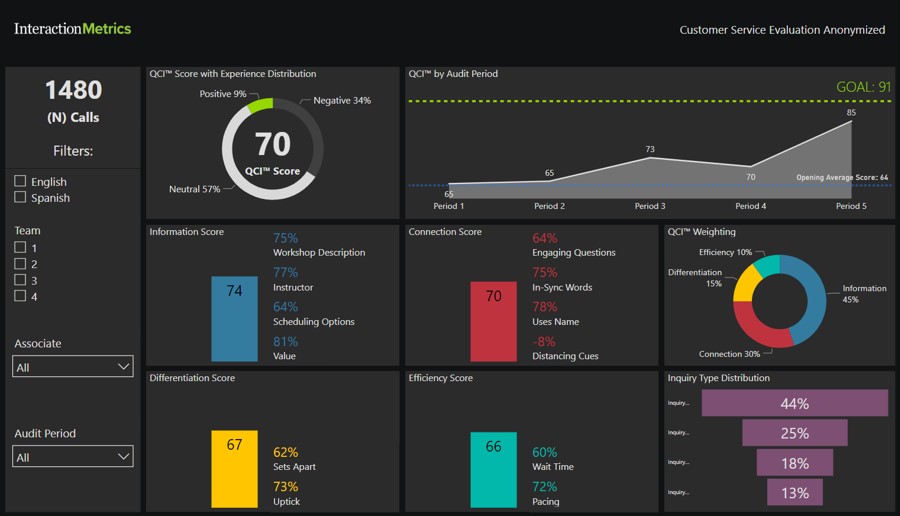
Click on the image for an interactive Customer Experience Dashboard example.
To read the entire transcript of the podcast, go here.
===============================================
Interested in customer service or call center training? Get in touch!
The post Call Center Training: Jason Bader Interviews Martha Brooke appeared first on Interaction Metrics.
]]>Read more
The post Customer Empathy: Everything You Think You Know is Wrong appeared first on Interaction Metrics.
]]>Empathy is trendy. Qualtrics XM Institute[i] has declared 2023 the Year of Empathy, and Forbes Magazine calls empathy the “most important leadership skill”.[ii] Because of this, customer service staff are receiving customer empathy training in droves.
But research shows a dark side to customer empathy that can quickly undermine the interactions we’d like to create.
Cognitive Scientist Paul Bloom, Against Empathy
In his 2016 book Against Empathy: The Case for Rational Compassion, Paul Bloom, professor emeritus of psychology at Yale University, presents solid evidence that empathy can be counterproductive, even harmful, in many scenarios.
Through the lens of cognitive science, Paul Bloom makes a strong case for ending our fixation on empathy and applying rational compassion instead.
And while Bloom does not write explicitly about the customer experience, much of his research applies directly to customer interactions.
“Unmitigated communion makes you suffer when faced with those who are suffering, which imposes costs on yourself and makes you less effective at helping,” Bloom writes.[iii]
In simple terms: Empathy is exhausting.
Empathy Feels. Compassion Solves.
So, what’s the difference between empathy and compassion? While often used interchangeably, there’s a critical distinction between the two.
- Empathy is the act of seeing the world through the eyes of another or training yourself to feel their emotions.
- In contrast, compassion is the motivation to help another when presented with their problems without feeling the other person’s pain.
Four Drawbacks to Customer Empathy
Given all the attention customer empathy gets in the business world, let’s look at what the science reveals.
In fact, the downsides of customer empathy affect every angle of the customer experience – impacting service staff, individual customers, and entire groups of customers.
Drawback 1: Empathy Burnout
For the person empathizing, it’s tiring.
Within the context of personal relationships, empathy is healthy. For example, in a happy marriage, spouses feel elated when their partners get promoted at work. And loving parents are filled with joy when their children graduate from college. For our families and closest friends, making an effort to empathize is worth it.
But suppose your staff is expected to feel frustration, anger, confusion—or even elation over a customer’s new car purchase, and they have to do this for dozens of customers a day. That’s begging for staff turnover.
Symptoms of empathy fatigue include isolation, numbness or disconnect, a lack of energy, feeling overwhelmed or hopeless, and being unable to relate to others.[iv]
This is not how we want service staff to feel, yet empathy fatigue can occur in as quickly as one hour.[v]
Is focusing on customer empathy all day, every day the best strategy for your company? The science says “no.”
Drawback 2: The Helpless Empathizer
A second problem with empathy is that it can incapacitate the listener to the point where they cannot help.
In the relationship between patients and doctors, this is clear. For example, if a trauma surgeon were to experience the feelings of a bleeding patient, she would not be able to concentrate on stitching up his wounds.
We don’t need our therapists to experience our anxious or depressed feelings – we want them to help heal those problems within us and restore us to a healthy mental state.
To be good at their jobs, doctors mute their empathy. Lawyers and other professionals do this too.
Turning this back to customer service experiences, an annoyed customer wondering why their order was lost doesn’t need your service staff to feel annoyance. They need your associates to be competent, calm, kind, and solve the problem.
Drawback 3: Spotlight Effect
Joseph Stalin allegedly once said, “The death of one man is a tragedy. The death of millions is a statistic.” Even though Stalin himself murdered millions, his words contain a truth. We can only empathize with one person at a time. As a group of people gets larger, it gets harder to empathize with them.
Clearly, the death of a million people is a greater evil than the death of one person. But because we’re wired to empathize with individuals, not with statistics, we focus on one person’s death and remain numb to the plight of millions.
Paul Slovic, a professor of psychology at the University of Oregon, points out the vast difference between news coverage of the death of Natalee Holloway in 2004 and the Darfur genocide that was occurring at the same time. In his paper, Slovic quotes Mother Teresa: “If I look at the mass, I will never act. If I look at the one, I will.”[vi]
Consider this spotlight effect in light of customer empathy when it’s a group being helped, not just an individual.
For instance, think of delayed flights where customer service staff are working to reroute hundreds of stranded strangers. Unfortunately, too many times, we’ve all seen this is precisely when companies lose every last shred of kindness.
For a brutal accounting of this scenario, I encourage you to read the brilliant Mark Hurst on his recent 26-Hour Delta Airlines Delay. [vii]
And, of course, there is the question of which individual to focus on or empathize with in the first place — raising the most severe problem of bias.
Drawback 4: Preferential Empathy
From an evolutionary standpoint, empathy was valuable in keeping the “tribe” unified.
But within contemporary culture, by reinforcing biases, empathy is a blatantly bad strategy — often tragically so.
Founder of the Equal Justice Initiative, Bryan Stevenson, highlights how empathy can lead to the most unjust outcomes in a court of law. In his book Just Mercy: A Story of Justice and Redemption, Stevenson shows how victim impact statements can be an instrument for injustice by appealing to our senses of empathy.
When a criminal is sentenced for his crimes, the victim is often asked to state how the crime has impacted their lives.
If the victim of the crime is easy for the judge to empathize with — for example, they might be young, pretty, wealthy, or white — judges are likely to impose a harsher sentence than if the victim is unattractive, older, or black.
In the United States, the victim’s race is the greatest predictor of who receives the death penalty. In Georgia, offenders are eleven times more likely to be sentenced to death if the victim is white than black.[viii]
“The expansion of victims’ rights ultimately made formal what had always been true,” Stevenson writes. “Some victims are more protected and valued than others.”
Even when the “tribe” is something as innocuous as a sports team, the bias within empathy is evident.
Researchers led by German psychologist and social neuroscientist Tania Singer found that soccer fans prefer to help those with the same favorite team. If a person’s favorite team is a rival, rather than helping that person by intervening in a conflict, they will watch the person suffer.
Basically, who we choose to empathize with strongly correlates with who we are — or who we aspire to be.
That means asking our customer service staff to express empathy is counterproductive because staff will tend to empathize exclusively with those customers they see as similar to themselves.
You can’t perfectly match the tribe of your staff to the tribe of your customers, nor should we want that because companies benefit by having a diverse clientele. Having diverse customers is to my mind, the single most important reason to loosen our grip on customer empathy.
Even at an Abercrombie store, where a grandmother might be buying a top for her grandchild, for good customer service, in some small way, associates must connect with that older customer.
So what’s the solution?
The Kindness Fix
Let’s return to Paul Bloom. Since he’s one of the preeminent authorities on this subject, let’s accept his recommendation to employ rational compassion instead of empathy.
Unlike empathy, compassion does not cause burnout.
In fact, in another study by Tania Singer, researchers measured brain activity in subjects who had undergone empathy and compassion training.
The researchers found that when the subjects watched videos of human suffering, those who had undergone empathy training experienced negative symptoms. But those who had undergone compassion training did not experience such symptoms.
Subsequent compassion training was used to reverse the negative effects of empathy training.
“[Training for] compassion may reflect a new coping strategy to overcome empathic distress and strengthen resilience,” according to the researchers.[ix]
This is so important it’s worth repeating. Science shows that training for empathy fails while training for compassion succeeds.
Within the context of business and customer experience, I use the term “kindness” instead of “compassion.” Having worked in customer experience and customer service disciplines for decades, I find that the word “kindness” better captures what we want our customer service staff to do.
To be kind is to be considerate of other people’s feelings and willing to help. Kindness upgrades the entire customer experience.
Kindness in Action
Furthermore, where “compassion” might feel vague or a bit treacly, “kindness” is concrete and tied to specific behaviors and principles. Here are a few of those kindnesses that companies can and should teach.
Solve Problems:
One kindness is to focus on problem-solving.
Instead of empathy in customer service, staff should focus on finding solutions to the problem at hand.
This inherently reduces tension and leads to positive customer AND representative outcomes.
Care for Staff:
Another way to apply the concept of kindness in customer service is to prioritize self-care for representatives.
By recognizing the emotional toll of their work and providing resources for self-care, companies can help ensure representatives can provide the best service.
Give the Gifts of Kindness:
Lastly, we should encourage staff to set the bar high when it comes to customer service experiences. Kindness evokes a generous spirit, and the best service includes small “gifts.” Gifts don’t have to be physical objects. Gifts can be insights into how customers can save money or reap more value from a product.
Gifts can also be tips and tricks for using products or services more efficiently. A gift can even be a warm, friendly interaction that adds a break to a customer’s otherwise ho-hum day.
In our own customer service evaluations, we measure the willingness of customer service reps to give these small gifts.
Encourage your staff to find new, innovative ways to add small ‘extras’ that unequivocally show customers they care.
This produces benefits not only for the customer but also for your staff. Happiness researchers have found that giving gifts produces happiness in the giver[x], not just the recipient.
In Sum: Promote Kindness
We should train our service staff to be more like surgeons and psychiatrists, not like spouses and parents. Let’s promote kindness within the world of customer experience.
As for empathy? In 2016, Paul Bloom wrote his masterfully researched book Against Empathy. Now, seven years later, with copious research accumulated, let’s use empathy to improve our personal relationships. Otherwise, kill it.
- [i] https://www.xminstitute.com/blog/2023-year-of-empathy/
- [ii] https://www.forbes.com/sites/tracybrower/2021/09/19/empathy-is-the-most-important-leadership-skill-according-to-research/?sh=25016a763dc5
- [iii] Paul Bloom, Against Empathy, pp. 139-140.
- [iv] https://health.clevelandclinic.org/empathy-fatigue-how-stress-and-trauma-can-take-a-toll-on-you/
- [v] Paul Bloom, Against Empathy, p. 139.
- [vi] Slovic, P. (2007). “If I look at the mass I will never act”: Psychic numbing and genocide. Judgment and Decision Making, 2(2), 79-95. doi:10.1017/S1930297500000061
- [vii] https://creativegood.com/blog/23/my-26-hour-delay-on-delta-air-lines.html
- [viii] Bryan Stevenson, Just Mercy: A Story of Justice and Redemption, p. 142.
- [ix] Klimecki OM, Leiberg S, Ricard M, Singer T. Differential pattern of functional brain plasticity after compassion and empathy training. Soc Cogn Affect Neurosci. 2014 Jun;9(6):873-9. doi: 10.1093/scan/nst060. Epub 2013 Apr 10. PMID: 23576808; PMCID: PMC4040103.
- [x] https://greatergood.berkeley.edu/article/item/5_ways_giving_is_good_for_you
The post Customer Empathy: Everything You Think You Know is Wrong appeared first on Interaction Metrics.
]]>The post 5 Ways to Improve Your Customer Service Chat—Today! appeared first on Interaction Metrics.
]]>
Using Customer Service Chat
There are many modes of customer service (phone, in-person, email, etc.). But, when done well, customer service chat is by far the best.
It reduces customer effort, increases customer satisfaction, and answers customers’ questions quickly. Plus, it’s less costly than the phone, is more immediate than email, and it amplifies conversion by showing up on your website just when customers are about to bail.
The thing is… usually chat is NOT done well—meaning these advantages are rarely realized.
5 Ways to Improve
Here are 5 ways to improve your customer service chats and ensure profitability:
- Skip the empty questions. Customers are chatting for answers, and while chat can be conversational, get to the point. “How are you doing today?” and other space-filler questions are usually read as tedious hurdles rather than niceties.
- Be specific and reference the customer’s situation immediately. If the intake form shows why the customer is chatting, don’t ask the customer to repeat themselves; instead move into relevant, clarifying questions that show listening.
- Use the customer’s name; it’s a small way to show the customer you care and are focused on them.
- Make sure the customer has all the facts they might not have thought to ask about. This could include information about timeframes, what to expect next, or how to customize the product.
- Tell the customer you’re following up with an email and then do it. This gives your customer a reminder of where they were and gives you a way to add context and value; it’s a win-win.
Of course, your associates can have the best tips and tricks along with the most extensive training but if you don’t measure how often and how well they act on that information, you can’t prove (or disprove) the quality of your customer service. And let’s face it, the world is full of good intentions and terrible execution.
At Interaction Metrics, we provide robust, highly accurate customer feedback programs and customer service evaluations with optimizations. With meaningful metrics and elemental analysis, we remove the biases and other flaws that obstruct customer experience success.
Say hello to get the 1 number you need for customer experience success. Or, just say hello because you’d like to exchange ideas about how to improve customer service.
The post 5 Ways to Improve Your Customer Service Chat—Today! appeared first on Interaction Metrics.
]]>