Read more
The post Email Survey Best Practices appeared first on Interaction Metrics.
]]>Your Reply-To Address Matters!
An essential email survey best practice is this: Use a Reply-To email address that actually works. Too many companies send surveys from a Do-NOT-Reply address which frustrates customers and lowers response rate.
Here’s What NOT to do:
Most companies don’t want to collect customer feedback in all its various forms, so they send their survey from a ‘do-not-reply’ platform. The problem is that a Do-Not-Reply Email signals that customer listening is not a priority.
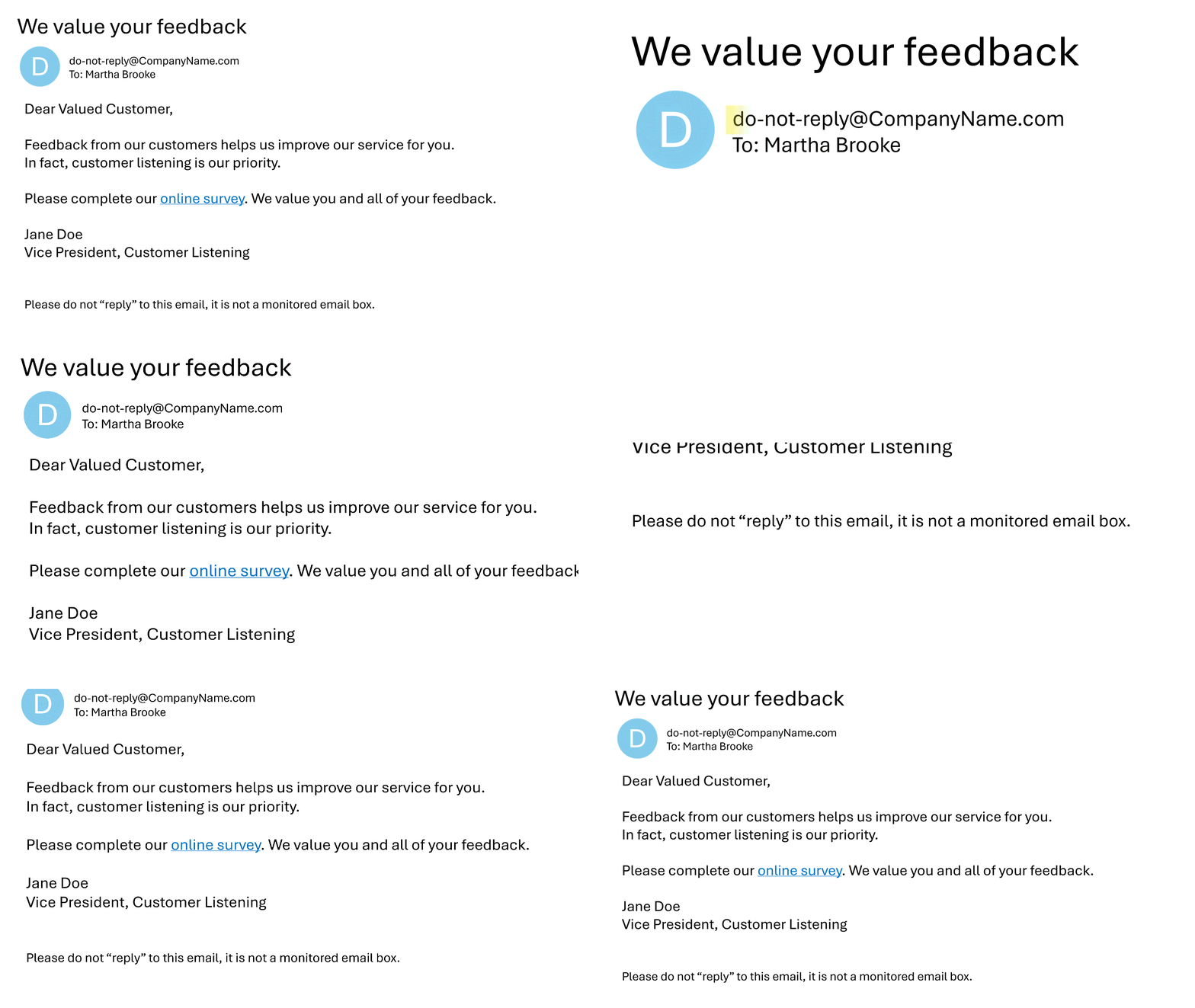
Instead, Use a Real Email that Customers Can Respond To
At Interaction Metrics, we always include a ‘reply to’ address, and we always hear from some customers who want to give feedback but don’t want to take the survey. Additionally, we help our clients keep their databases fresh by capturing the list of auto-replies showing a customer has changed their email address.
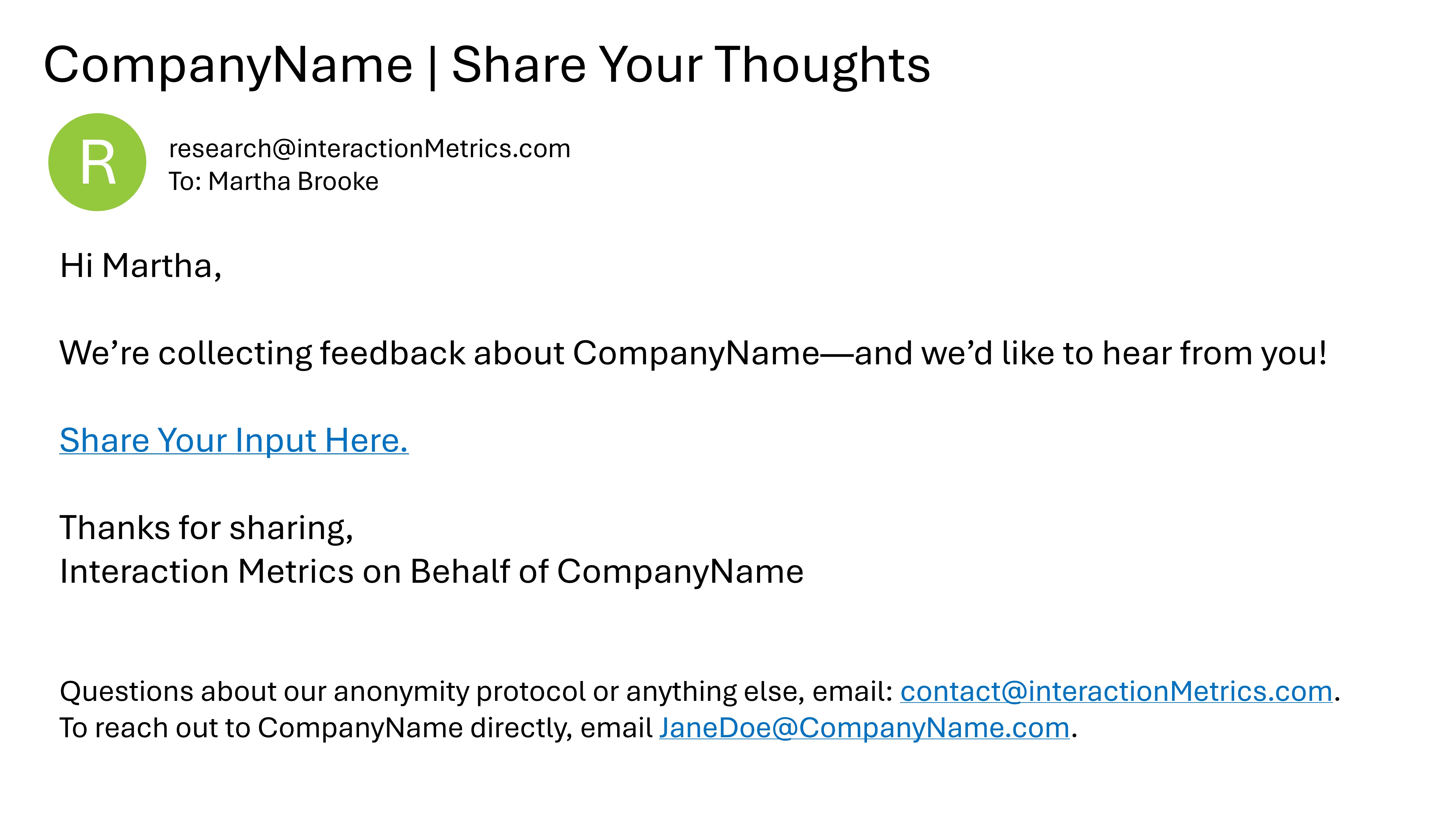
The entire point of your survey is to interact with customers and employees, inviting them to share their thoughts. You want to signal to your customers that you are listening to them and will take their opinions seriously. Listening doesn’t mean that you have to agree with each of your customers’ views, but it does mean that you sincerely want to know how things went and what happened.
Unfortunately, the survey industry is plagued by a ‘worst practice’ that fundamentally undermines surveys as listening vehicles. The worst practice I am referring to is sending surveys directly from a survey platform using a DO-NOT-REPLY email address. While this might be cheap and easy for you, it signals deaf ears that, deep down, don’t value feedback.
Examples of what shows in a DO NOT REPLY email address line are:
- “no reply,” followed by a string of numbers
- (simply) “do-not-reply”
- “no-reply@nameofcompany”
Sometimes, the email address might look like you could reply to it, but then the signature fine print will say, “This is an automatically generated email. Please do not reply.”
Aesthetically, a DO-NOT-REPLY email communicates you don’t want to interact and that your priority is to send surveys, but the listening part is not necessarily your concern.
Functionally, DO-NOT-REPLY means you won’t hear from customers who want to share their opinions outside your survey. With any survey, at least some customers have meaningful things to say but don’t feel that a survey is the best way for them to share what’s at the top of their minds.
Furthermore, if you use a DO-NOT-REPLY address, you’ll fail to capture the list of customers who have a new role with a new address such that the email is automatically returned.
Email Survey Best Practices Have Outsized Impact
At Interaction Metrics, we use a real email address that customers can respond to because that IS the email survey best practice.
How do we do this? The back end of our surveys incorporates engineering logistics to link survey platforms (we use Qualtrics, Alchemer, and others) with an email platform.
Basically, we’ve created a mini-survey software stack that results in the best email practice for our clients.
The benefits are not just that we can do more listening; we’re also able to compile a complete list of incorrect email addresses and recently changed email addresses.
This helps our clients keep their databases fresh.
Plus, it drives a higher response rate because, from the outset, we’re signaling that we care. Screaming at customers with an all-caps DO-NOT-REPLY email address is distancing and impersonal.
Surveys that Stand Out from the Clutter
Email survey best practices may seem like a small thing, but they make a huge difference. Think of it this way.
If you have a door that is ¼ inch off, it’s a pretty small thing. Nevertheless, your door won’t open properly. Same thing with email survey best practices. Small things can have outsized importance that affect your response rate and that influence how customers perceive the authenticity of your customer listening.
================================================
Interaction Metrics builds scientific surveys that result in decisive outputs and actions. Interested in more detail about email survey best practices? Get in touch!
================================================
The post Email Survey Best Practices appeared first on Interaction Metrics.
]]>Read more
The post 17 Alternatives To Qualtrics: Key Features & Use Cases Compared appeared first on Interaction Metrics.
]]>Qualtrics is the industry standard for customer experience surveys. But that doesn’t mean it’s the right fit for everyone.
If you’re a large enterprise with a team of analysts and a six-figure budget, it might be perfect.
But for most companies?
It might be too expensive, clunky, or bloated with features you’ll never use. The interface is dense, the support may not be as responsive as you need, and the learning curve is steep.
So, unless you’re running global, multi-departmental programs, quite possibly it’s more than you need.
At Interaction Metrics, we help organizations of all sizes improve how they collect and use feedback. And we know from experience: having the right survey tool is just one part—but a critical part— of your survey success.
That’s why we’ve put together this guide. It’s a curated list of 17 Qualtrics alternatives, each chosen for a specific strength—whether that’s streamlined online surveys, better integrations, or smarter ways to tie customer feedback data to revenue.
(If you’re ready to discuss the best survey software for your company, skip this article and click here to contact our team. We have software licenses with the top survey software providers, which saves you time and money because when you do your survey with us, we include all the software you need.)
Why Look for Alternatives to Qualtrics?
Qualtrics is a powerful survey platform—but for some companies, it’s overkill.
It was built for organizations with the resources to manage layered feedback systems, not for lean teams that need quick, actionable customer feedback analysis.
Here’s why so many teams start shopping for alternatives to Qualtrics:
- There’s a high cost for core feedback collection methods, often starting at a minimum spend of $5000 per year, or more
- It has a complex user interface that slows down setup
- It comes with limited flexibility for niche use cases and personalized surveys
- Its portals aren’t as customizable as some other interfaces, like Alchemer.
- Many plans are priced based on how many responses you get.
Meanwhile, the customer experience software space is vast and there are competitors that offer simpler reporting tools, comparable (or better) design, and stronger value.
I’ll get to the top 17 Qualtrics alternatives in just a minute, but first, a shameless plug for Interaction Metrics.
While we are not a software (Saas) company like Qualtrics, we’re the best alternative in that we already license Qualtrics and other software. This means if you don’t want to waste time learning a complicated survey platform, you may want to consider us. We’re a full-service survey company handling everything you need including survey design, deployment, analysis, reporting, and more.
Bottom line: with us, you get access to world-class software without paying for it directly or learning how to use it.
Features & Usability
Instead of logging into yet another survey tool, you’ll have a team of survey scientists who create and manage everything for you.
No software setup, no design headaches, no analysis left to guesswork.
Every survey is tailored to your specific goals using a 20-point bias checklist that removes skew and uncovers what truly drives customer behavior.
Interaction Metrics also blends text mining, correlation analysis, and cross-tabs to deliver insights you can actually act on without lifting a finger.
Best For
Organizations of any size that want expert-built surveys, top-tier analytics, and full access to premium platforms without paying for or managing the tools themselves.
Compared to Qualtrics
Where It Wins:
- No learning curve—everything is handled for you
- Access to top tools without the subscription cost
- Scientifically designed surveys that eliminate bias and reveal real insights
- Fully managed, end-to-end survey services
Where It Falls Short:
- Not a self-service platform—best for teams that want expert execution, not DIY
Top 17 Qualtrics Alternatives
Each of the following platforms is designed to help you collect customer feedback, analyze it, and act on it, without the bloated overhead of a large enterprise solution.
1. Medallia
Medallia’s CX management software is a strong Qualtrics alternative for large companies that want real-time feedback and AI-powered insights. It’s built to collect and analyze data from multiple channels—email, social, mobile apps—and turn that into clear, actionable insights.
Features & Usability
Key features include dynamic dashboards, role-based reporting, and Ask Athena, its AI tool for identifying sentiment trends. It’s rated slightly higher than Qualtrics on G2 for ease of use, though setup can still be complex for smaller teams.
Best For
Enterprise teams (especially in finance or hospitality) that need visibility into the full customer journey and fast insights from multiple touchpoints.
Compared to Qualtrics
- Where It Wins:
- Stronger real-time feedback loops
- More robust out-of-the-box integrations
- AI-powered text and sentiment analysis via Ask Athena
- Where It Falls Short:
- Fewer pre-built survey templates
- Less flexible for custom survey design
- High pricing and complexity make it a poor fit for smaller organizations
2. SurveyMonkey
SurveyMonkey is a go-to online survey tool for small businesses and teams that need simple feedback collection. It’s easy to use, affordable, and offers a free plan that makes it a strong alternative to Qualtrics for basic survey needs.
Features & Usability
With a drag-and-drop builder, mobile apps, and integrations with Google Drive, Slack, and Office 365, SurveyMonkey is built for speed and ease. It offers custom question types, logic, and multilingual support, though its analytics are more basic compared to Qualtrics.
Best For
Small to mid-sized businesses, nonprofits, or solo users who need quick, easy-to-deploy surveys—like customer satisfaction or market research—without complex features.
Compared to Qualtrics
- Where It Wins: Easier to use, significantly cheaper, and ideal for mobile and casual survey users.
- Where It Falls Short: Lacks deep analytics, extensive customization options, and scalability for large enterprise needs.
3. InMoment
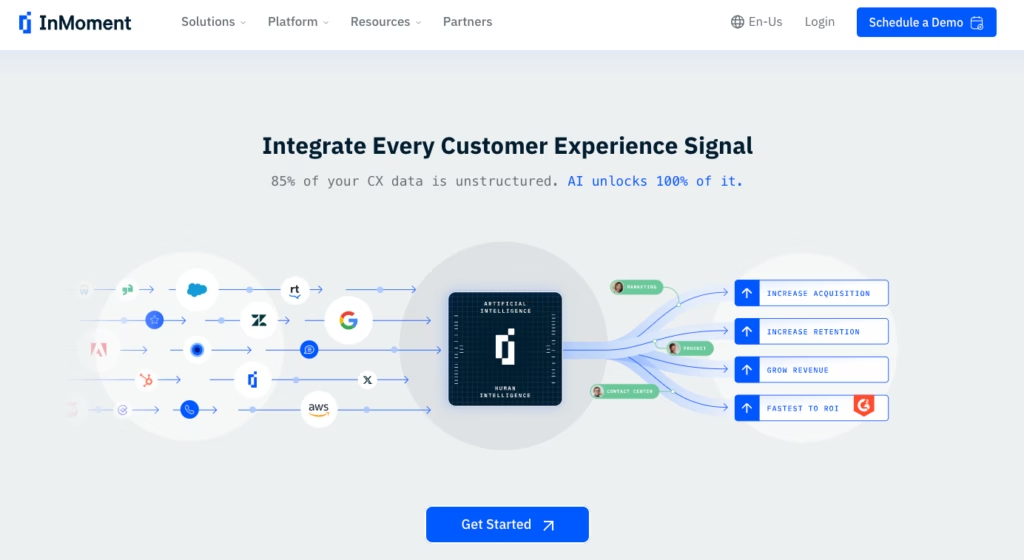
InMoment is built for enterprises looking to gather insights from structured and unstructured feedback across multiple channels. It’s especially strong in the software and IT sectors.
Features & Usability
InMoment includes AI-driven analysis, pre-built survey templates, and omnichannel user feedback collection.
It provides 24/7 support and excels at qualitative data analysis, but may lack the advanced features other survey tools like Qualtrics offer for deep research use cases.
Best For
Large companies that need to manage customer experience across multiple channels and want strong AI tools for analyzing surveys with written or spoken feedback.
Compared to Qualtrics
- Where It Wins: Stronger at handling unstructured data, easier to launch with pre-built templates, and more focused on real-world customer touchpoints.
- Where It Falls Short: Pricing lacks transparency, and its security ratings are mid-tier—something to consider for regulated industries.
4. Survey Vista
Survey Vista is a Salesforce-native survey tool designed for HR teams at mid-sized businesses. It’s mobile-optimized, easy to launch, and budget-friendly.
Features & Usability
Survey Vista includes templates for NPS, CSAT, engagement, and exit survey creation. It supports SMS/MMS and offline collection, with exportable reports (XLS, CSV, PDF) and HRIS integration via API. Metrics Cards display real-time scores.
Best For
Mid-sized companies in education, healthcare, or hospitality that need to collect regular employee feedback on a lean budget.
Compared to Qualtrics
- Where It Wins: More affordable, mobile-first, strong HRIS sync, easy to deploy. The biggest benefit is the immediate tie-in to Salesforce – no need to use Zapier or similar tools.
- Where It Falls Short: Limited analytics depth and scalability.
5. Typeform
Typeform is ideal for small businesses and marketers who want interactive mobile surveys with user-friendly interfaces that are quick to build.
Features & Usability
Known for its conversational, interactive survey designs and smooth mobile experiences, Typeform offers over 3,000 customizable survey templates, supports logic jumps, and makes surveys feel more personal. Great for marketers and small teams looking to boost response rates without technical hassle.
Best For
Teams prioritizing design, speed, and usability over advanced analytics, like marketers and small business owners.
Compared to Qualtrics
- Where It Wins: Affordable, visually engaging, mobile-optimized, template-rich. Very immersive, super engaging interface for open-ended questions. If you’re primarily interested in asking open-ended questions, Typeform is the go-to choice.
- Where It Falls Short: Limited analytics and scalability for complex research. Not as strong as Qualtrics for asking quantitative questions.
6. Alchemer
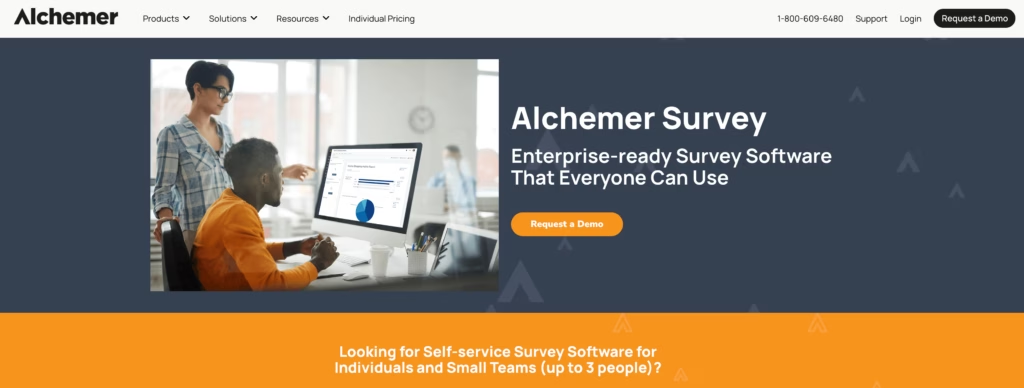
Alchemer is a strong Qualtrics alternative for teams that want advanced survey tools without the enterprise price tag. It’s easy to deploy, compliant with HIPAA and GDPR, and supports offline data collection.
Features & Usability
Alchemer offers 43+ question types, robust logic options, offline collection via “Offline Links,” and integrations with 400+ platforms.
Its setup is quicker than Qualtrics, so it’s ideal for teams that want customization without a long onboarding process.
Best For
SMBs and research teams in need of compliant, customizable surveys and offline collection, without paying enterprise-level rates.
Compared to Qualtrics
- Where It Wins: Lower cost, easier to implement, strong offline and privacy features. A beautiful, customizable, real-time portal with filters gives agency over your data.
- Where It Falls Short: Lacks Qualtrics’ deeper analytics, and yet those analytics don’t replace the type of robust analytics like you’d get through SPSS. Their interface for the NPS question could be better.
7. AskNicely
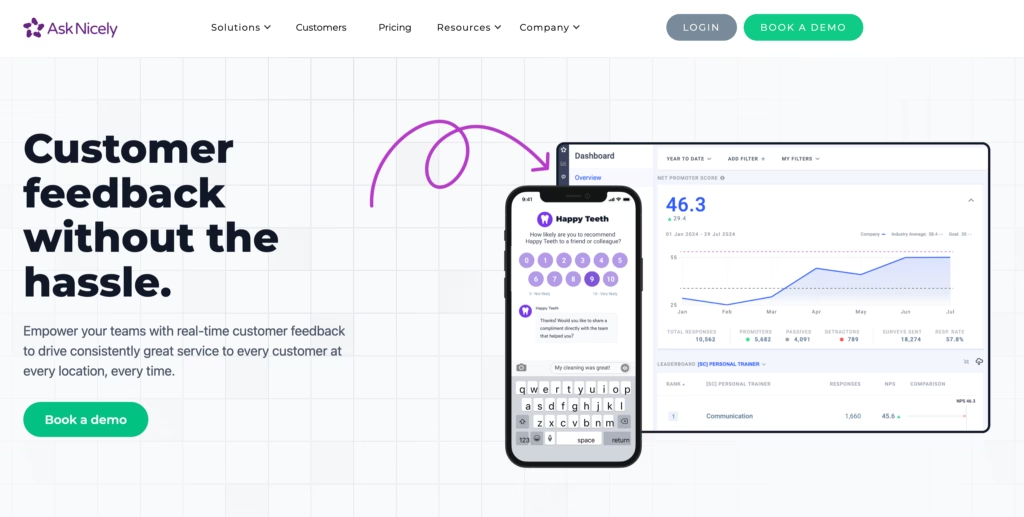
AskNicely is a great fit for service-focused teams that need fast, actionable customer feedback. It’s easy to use, built for frontline teams, and more affordable than Qualtrics.
Features & Usability
AskNicely specializes in real-time NPS and CSAT surveys with automated workflows. Feedback is routed to the right teams instantly, with built-in alerts, Slack integration, and review requests. It’s designed for action, not research-heavy programs.
Best For
Healthcare, retail, and hospitality teams focused on daily customer experience and staff motivation.
Compared to Qualtrics
- Where It Wins: Lower cost, faster feedback loops, frontline-friendly.
- Where It Falls Short: Limited analytics and not designed for enterprise-scale research.
8. Zoho Survey
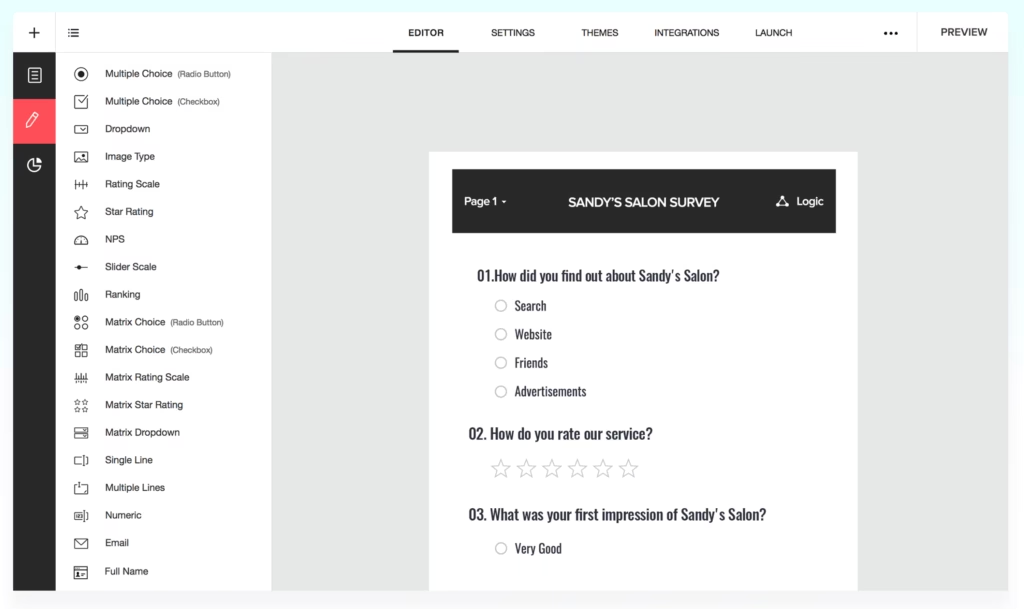
Zoho Survey is a budget-friendly, simple survey tool for SMBs—especially those already using Zoho CRM. It’s built for quick, integrated feedback collection.
Features & Usability
The platform includes unlimited surveys and questions, logic branching, CRM syncing, and quota controls. Analytics are basic, but the platform integrates seamlessly with other Zoho tools.
Best For
Zoho CRM users and small businesses looking for easy-to-manage customer or employee surveys.
Compared to Qualtrics
- Where It Wins: Cheaper, easier to use, and deeply integrated with Zoho CRM.
- Where It Falls Short: Not built for complex research or advanced analytics at scale.
9. QuestionPro
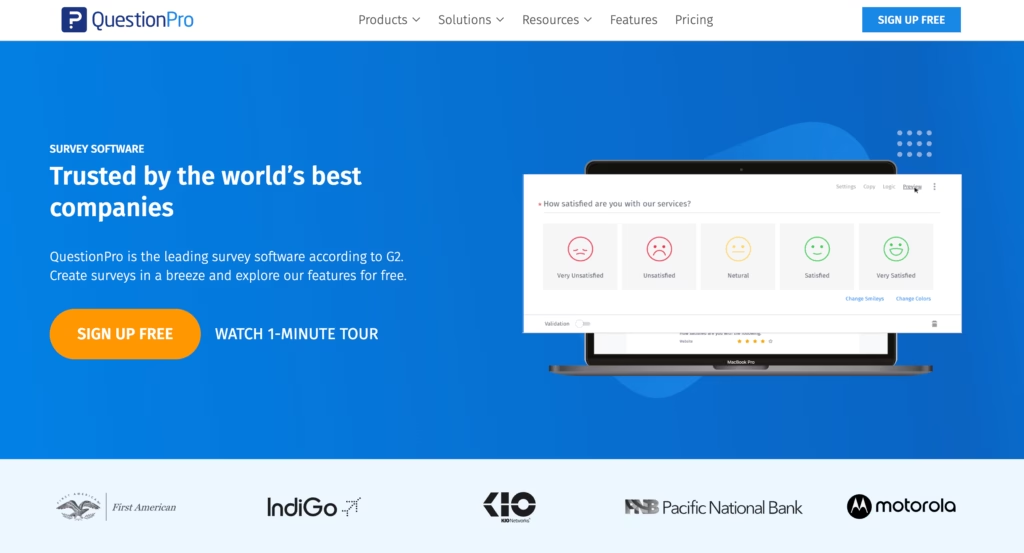
QuestionPro is a user-friendly, flexible alternative to Qualtrics for small to mid-sized businesses that need strong survey tools without the enterprise price tag. It’s especially well-suited for industries like education, healthcare, and market research.
Features & Usability
QuestionPro supports unlimited surveys, logic (branching, skip, loop), and strong analytics like sentiment analysis and heatmaps. It offers 24/7 support and platforms for CX and employee feedback. Its intuitive interface uses a drag-and-drop builder to make complex surveys manageable.
Best For
SMBs that need flexible, compliant survey tools (HIPAA, GDPR, ISO 27001), especially in industries where usability and data integrity are priorities.
Compared to Qualtrics
- Where It Wins: More affordable, strong compliance, easy to use, rich features.
- Where It Falls Short: Less advanced for predictive analytics and large-scale enterprise research.
10. SurveySparrow
SurveySparrow is a strong Qualtrics alternative for small to mid-sized businesses. It’s known for its clean interface, responsive support, and chat-style surveys that boost response rates.
Features & Usability
SurveySparrow supports NPS, 360-degree feedback, offline surveys, and quizzes—all with conversational formatting. Surveys can be created in minutes, and the platform offers conditional logic with integrations to 2,000+ analysis tools.
Best For
Startups and small teams focused on customer experience or employee engagement who need a flexible, easy-to-launch survey solution.
Compared to Qualtrics
- Where It Wins: Easier to use, more affordable, better customer support.
- Where It Falls Short: Fewer analytics and advanced research tools—not ideal for complex enterprise needs.
11. CustomerGauge
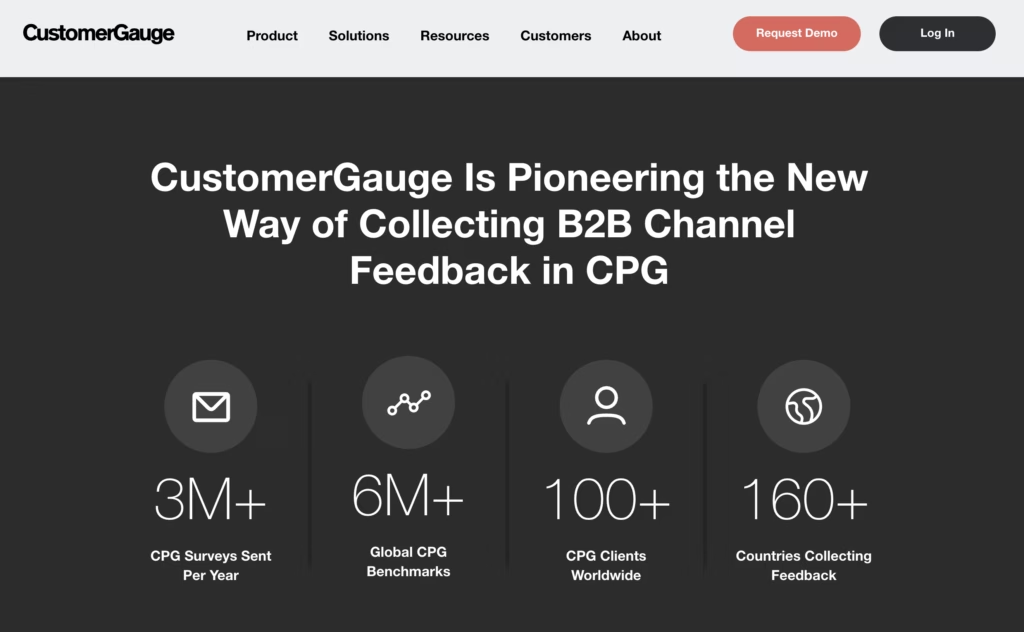
CustomerGauge is purpose-built for B2B organizations that want to connect customer feedback directly to revenue. It’s perfect for companies focused on retention, growth, and reducing churn.
Features & Usability
CustomerGauge uses Account Experience to tie CX data to upsells, referrals, and churn reduction. It offers account tracking and a high support rating on G2 (9.6 vs. Qualtrics’ 8.7). Specifically designed for B2B workflows with built-in revenue attribution.
Best For
Mid-sized to enterprise-level B2B companies in tech, manufacturing, and CPG aiming to grow accounts and reduce churn.
Compared to Qualtrics
- Where It Wins: B2B-focused, stronger support, built-in revenue tracking.
- Where It Falls Short: Less useful for B2C, limited pricing transparency and integrations.
12. Chattermill
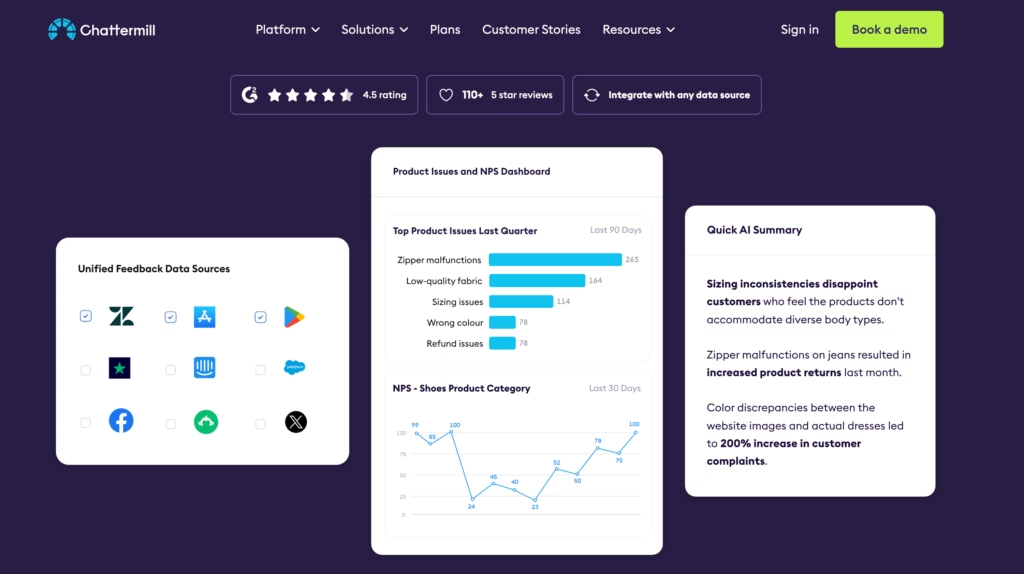
Chattermill is an AI-powered feedback platform for mid-sized businesses that want to turn customer feedback into revenue-driving insights without the steep learning curve of enterprise tools.
Features & Usability
Chattermill uses Aspect-Based Sentiment Analysis and Generative AI to analyze support tickets, surveys, and product feedback across channels.
It comes with onboarding support, a dedicated Customer Success Manager, and training via the CX Intelligence Academy.
Best For
E-commerce, tech, and hospitality teams aligning around customer feedback to improve products and drive growth.
Compared to Qualtrics
- Where It Wins: Stronger CX-focused AI, easier setup, and better suited for growing teams.
- Where It Falls Short: No support for employee feedback or complex enterprise-wide programs.
13. Retently
Retently focuses on core CX metrics like Net Promoter Score (NPS), Customer Satisfaction (CSAT), and Customer Effort Score (CES).
It’s a streamlined alternative to Qualtrics for teams that want to improve customer loyalty and customer sentiment without enterprise-level complexity or cost.
Features & Usability
Retently offers omnichannel feedback collection (email, SMS, in-app) and real-time dashboards. The no-code setup is fast, and filters allow for campaign-level analysis. It also integrates with Salesforce, HubSpot, Shopify, and more.
Best For
B2B and e-commerce brands in tech, fashion, and beauty looking to track loyalty metrics and customer sentiment without IT overhead.
Compared to Qualtrics
- Where It Wins: More affordable, fast setup, strong CX metric focus, easy integrations.
- Where It Falls Short: No predictive analytics or enterprise-level segmentation.
14. GetFeedback
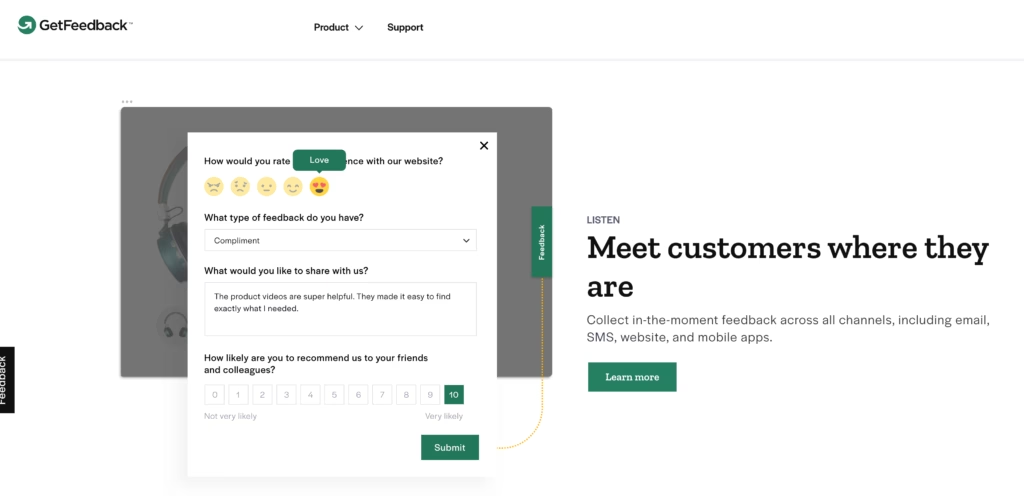
GetFeedback is a lightweight, Salesforce-friendly survey tool built for speed. It’s designed to capture customer feedback tied directly to CRM activity, making it ideal for Salesforce-heavy organizations.
Features & Usability
GetFeedback supports email, SMS, and website surveys with automated triggers tied to CSAT and customer milestones. Includes customizable branding and dynamic content.
While setup is mostly plug-and-play, Salesforce-specific options may need some extra configuration.
Best For
Mid-size to large B2C teams using Salesforce that want a quick, automated way to collect feedback linked to lead gen, recruiting, or onboarding workflows.
Compared to Qualtrics
- Where It Wins: Easier to use, cheaper, and tightly integrated with Salesforce.
- Where It Falls Short: Basic analytics, limited customization, and less value outside the Salesforce ecosystem.
15. HSD Metrics
HSD Metrics is an HR-specific survey platform built for mid-sized businesses focused on employee engagement, retention, and lifecycle feedback.
Features & Usability
HSD Metrics offers surveys for onboarding, engagement, exit interviews, stay surveys, and 360-degree feedback.
Reports include real-time results, demographic breakouts, benchmarks, and improvement priorities.
It integrates with HRIS systems using a REST API, allowing teams to sync survey data with existing HR tools.
Best For
Mid-sized companies in healthcare, hospitality, or education that need focused, easy-to-use HR survey tools.
Compared to Qualtrics
- Where It Wins: More affordable, HR-focused, real-time reporting, strong HRIS integration.
- Where It Falls Short: Lacks predictive analytics and enterprise-level scale.
16. Pisano
Pisano is a cost-effective platform for mid-sized teams collecting employee and customer feedback. It’s built for non-technical users and balances ease with flexibility.
Features & Usability
Pisano supports onboarding through exit surveys, with real-time dashboards and web widgets for live feedback. Includes REST API integration with HRIS platforms for seamless data flow.
Best For
Mid-sized businesses in banking, retail, and hospitality that need actionable insights without enterprise complexity.
Compared to Qualtrics
- Where It Wins: Lower cost, user-friendly, HR/CX hybrid focus, real-time dashboards.
- Where It Falls Short: Limited advanced analytics and scalability.
17. Mopinion
Mopinion is a feedback tool for mid-sized B2B and e-commerce brands looking to track customer sentiment across websites, email, and apps.
Features & Usability
Mopinion supports NPS, CSAT, and CES surveys with logic-based flows and real-time dashboards. It integrates with Salesforce, Google Analytics, and HubSpot.
While the UI is intuitive, dashboard navigation could be improved.
Best For
Mid-sized B2B or e-commerce companies that need fast, no-code tools to track customer satisfaction surveys and improve CX through web widgets and omnichannel surveys.
Compared to Qualtrics
- Where It Wins: Lower cost, easier setup, customer-focused tools, and solid integrations for small to mid-sized teams.
- Where It Falls Short: Lacks advanced analytics, benchmarking, and the scalability required for large enterprise environments.
How To Choose The Right Tool
There’s no one-size-fits-all survey solution. The right tool depends on your team size, your goals, and how you plan to use the feedback data.
Match your needs with the platform’s strengths:
- Size and budget – Mid-sized teams can thrive on tools like Mopinion or Survey Vista. Large enterprises may need a comprehensive experience management platform like Qualtrics.
- Integrations – Using Salesforce? Try Survey Vista or GetFeedback. Need to sync with a CRM or analytics platform? Look for data management and reporting capabilities.
- Analytics – Want to just track NPS and CSAT? Most tools can do that. Need to identify emerging trends across departments with predictive insights? You’ll want more robust reporting tools.
And finally, consider philosophy.
Some CX management software is designed to blast out customer feedback surveys to anyone with an email address.
Other options focus on respectful, thoughtful design that actually helps you improve the experience.
At Interaction Metrics, that’s our specialty.
Access the Best Qualtrics Alternatives With Interaction Metrics
Choosing a Qualtrics alternative is just the first step. But what if you didn’t have to choose (or learn) any new platform at all?
At Interaction Metrics, we believe great surveys are about more than just the tool.
They’re about getting clear, bias-free insights without burning time learning complicated software or paying extra for platforms you don’t even want to manage.
Think about it: buying Photoshop doesn’t mean you’re a designer. Similarly, just because you have survey software doesn’t mean you’re getting reliable, decision-ready insights.
That’s why we do things differently.
We handle everything—from survey creation to data analysis—with a level of scientific rigor you won’t find in off-the-shelf tools.
And because we already have licenses for platforms like Qualtrics, PowerBi, Alchemer, and SPSS, you get access to enterprise-grade software without the subscription fees or technical setup.
We believe that surveys should reveal truth, not create confusion. That’s why our approach is built on the three pillars of our TrueData system:
True-Facts: Proven Surveys
We uncover real insights with scientifically valid, bias-checked survey designs.
Every survey is custom-built around your goals—whether you’re measuring NPS, capturing open-ended feedback, or exploring loyalty drivers.
Our 20-point bias checklist eliminates skew so you hear what your customers actually feel.
True-Tech: Turnkey Technology
You don’t need to wrangle tools or manage software. We already have licenses for platforms like Qualtrics, SPSS, Power BI, and more. You never pay extra for tech when you work with us.
And because we manage every step of the process, you get seamless execution without draining your team’s time.
True-Insight: Actionable Analysis
Forget dashboards that gather dust. We translate feedback into real business intelligence using cross-tabs, correlation analysis, and text mining.
That means you get clarity on what’s driving loyalty, churn, and growth, so your next move is always backed by data.
Surveys done right can transform your business.
Done wrong, they’re just another email in the trash.
If you’re serious about customer insight, don’t settle for noise. Go for truth. Learn more about Interaction Metrics today.
Frequently Asked Questions
What’s the best free Qualtrics alternative?
If you’re looking for a no-cost option, Zoho Survey offers a free plan that lets you collect up to 100 responses per survey. They also offer free trials for their paid plans. Survey Vista also has a free plan that lets you collect up to 200 responses.
Zoho lets you create surveys with basic features and reporting, while Survey Vista comes with seamless integration with Salesforce and up to 200 survey responses.
Just keep in mind that free tools often come with limits on responses, features, or a lack of custom branding and advanced features.
What are the top Qualtrics competitors for small businesses?
For smaller teams, affordability and ease of use matter most. Top picks include:
- Typeform – Beautiful, interactive surveys that are easy to build, especially if you only really care about open-ended questions.
- SurveyMonkey – A familiar option with flexible pricing and solid mobile support.
- Alchemer – Great for advanced logic without the enterprise complexity.
These platforms balance power and simplicity without requiring a full IT team to run.
How do I compare data collection features?
Start by looking at:
- Question types – Do you need NPS, CSAT, CES, or open-ended responses?
- Logic & branching – Can the survey software adapt based on answers?
- Multichannel delivery – Can you collect data via email, SMS, web, and mobile apps?
Once you’ve nailed the basics, check for export formats, quota settings, and whether results can sync with your CRM or HRIS.
============================================
Care to discuss your next survey? Get in touch!
============================================
The post 17 Alternatives To Qualtrics: Key Features & Use Cases Compared appeared first on Interaction Metrics.
]]>Read more
The post 60+ Different Survey Types & Methods (and When to Use Them) appeared first on Interaction Metrics.
]]>A lot of businesses collect customer feedback—but do they turn it into real insight, or just a stack of random data?
An even bigger question: do they actually know which types of customer satisfaction surveys best match their goals?
When most people talk about “different survey types,” they focus on delivery formats: online surveys, phone surveys, mail surveys, or paper forms. That’s an important part of the picture, but if it’s all you look at, the picture is incomplete.
Survey research methods aren’t only about how you distribute your surveys.
They’re also meant to help you meet specific survey objectives and gain insight. Insight you can use to boost your brand reputation, improve customer sentiment, and drive customer success.
In this blog, we’ll explore the most widely used survey methods and designs before diving into the specific types of surveys you can use to achieve specific goals and improve the customer experience.
If you’re itching to start gathering better data (and put it to work), learn more about Interaction Metrics. We’re the leading customer survey company if you want to move beyond generic survey templates and steer your business decisions based on third-party, reliable data.
Let’s start with the basics.
Types of Survey Methods by Format
These are the most recognizable customer surveys—the physical or digital delivery methods you use to gather feedback.
If you’ve ever taken customer satisfaction surveys after speaking with customer service representatives or clicked a one-question poll on a website, you’ve interacted with one of these.
Here’s a breakdown of the most common survey formats and how they’re typically used.
- Online Surveys: Hosted on web platforms and sent via a survey link. Great for reaching large customer segments, but often ignored if not well-designed or personalized.
- Mobile & App-Based Surveys: Designed for smartphones or built directly into an app experience. Ideal for quick, on-the-go customer satisfaction feedback, especially after key actions (like a product purchase or feature use).
- Email Surveys: These are still popular for gathering detailed feedback, but response rates vary. Email surveys are most effective when tied to a specific event or personalized outreach.
- SMS/Text Message Surveys: SMS surveys are short and sweet, with high open rates. Perfect to measure customer satisfaction immediately after interactions—but not ideal for complex survey questions.
- Phone & Post-Call Surveys: These are live or automated calls that capture deeper insights. They’re often used right after a support call to gather feedback on how much effort it took to resolve an issue.
- Mail-In / Postal Surveys: These are used less frequently nowadays, but they’re still valuable for reaching an older target population or those less connected digitally (like healthcare or government services).
- Paper Surveys: These are similar to mail-in surveys, but distributed in person. They’re commonly used at events, workshops, or training sessions to capture feedback from survey respondents on-site.
- Kiosk Surveys: For these surveys, Kiosks are placed in physical stores or offices. Customers use them to quickly provide feedback before leaving, which lets you capture real-time customer sentiment.
- In-Person / Face-to-Face Interviews: These surveys offer the richest customer insights and highest data quality, but they’re resource-heavy. Great for qualitative research or major product and brand decisions.
- Intercept Surveys: These are quick in-person surveys that involve stopping shoppers in a mall to answer a few brief customer loyalty questions.
- Chat Surveys: Embedded in messaging tools or live chat systems to quickly collect customer feedback. Low friction, but depth of responses can be limited without thoughtful design.
- Pop-Up Surveys: These surveys are triggered by website behavior and ask existing customers about their satisfaction after they’ve spent time on certain pages.
- Embedded Surveys: These are surveys placed within content, like blog posts or help articles, to gather feedback right when the topic is fresh.
- QR Code Surveys: QR codes printed on receipts or physical signage let customers instantly provide customer feedback via mobile devices.
- Social Media Surveys: These involve sharing polls or survey links on social platforms to quickly gauge brand perception or customer sentiment, although results can vary in representativeness.
- Panel Surveys: These surveys are delivered long-term to groups that provide regular, consistent feedback. Ideal for measuring customer satisfaction trends and changes in customer sentiment over time.
- Focus Groups: These aren’t strictly for surveys, but are often grouped here. A facilitator leads small group discussions to explore deeper customer insights, uncover unmet needs, or test new ideas directly with your target audience.

Different Types of Survey Design in Market Research
So far, we’ve talked about how surveys get delivered. Now let’s explore why certain surveys are created—and how that shapes the questions you ask, the people you target, and the insights you uncover.
Survey design is about intent just as much as it’s about delivery format.
Choosing the right survey design helps to be sure you get accurate data that actually informs your business decisions.
Here’s a closer look at the five key survey designs used in market research.
Exploratory Surveys
Exploratory surveys are used when you’re just starting to learn about a topic.
Maybe you’re entering a new market, trying to understand customer sentiment around a new idea, or you’re not yet sure what questions you should even ask.
These surveys are often open-ended, asking broad questions like:
- “What do you think about our product?”
- “What features do you wish we offered?”
They typically gather qualitative data that helps you form hypotheses, refine your product concepts, or identify customer segments. They’re usually sent to a smaller group—often early adopters or existing customers who have experience with your brand.
Example: Starbucks famously used open-ended feedback channels (like its “My Starbucks Idea” platform) to explore what flavors, store layouts, and mobile-order options people wanted. Those exploratory insights led to new drink offerings and better features included in the app.
Descriptive Surveys
Descriptive surveys aim to measure or quantify a specific aspect of your market or customer base.
Unlike exploratory surveys, they use structured questions (usually multiple-choice or scale-based) to gather quantifiable data from a broader audience.
These surveys help you answer questions like:
- “How satisfied are customers with our online ordering experience?”
- “What percentage of our users are willing to pay more for faster shipping?”
They produce reliable, actionable metrics and help measure customer satisfaction, market share, brand perception, and more.
Example: Amazon often runs descriptive surveys to track Prime member satisfaction, shipping preferences, and what influences repeat purchases. Quantifying these data points regularly lets the company refine offerings like Prime while improving delivery times and content services.
Causal Surveys
Causal surveys help uncover cause-and-effect relationships. They’re designed specifically to test whether a particular action or change leads directly to an observed result.
They’re often paired with controlled experiments or A/B tests. Questions focus on comparing scenarios or conditions, such as:
- “Does offering free returns increase customer loyalty?”
- “Did our new online checkout process reduce shopping cart abandonment?”
These surveys usually require careful planning and rigorous statistical analysis to ensure the results are valid.
Example: Netflix frequently tests interface changes with a subset of users, then surveys those users to see if the new interface led to higher engagement.
If engagement scores spike, Netflix rolls out the change more broadly.
Delphi Surveys
Delphi surveys gather structured input from a panel of experts, often over multiple rounds.
Each round refines the previous round’s findings until the panel reaches consensus or highlights points of disagreement.
They’re frequently used for complex decision-making processes, forecasting, or strategic planning. Delphi surveys are ideal when uncertainty is high and informed consensus matters.
Typical questions include:
- “What technological trends will most impact our industry in the next 5 years?”
- “Which public health interventions are likely to be most effective in a new disease outbreak?”
Example: The Cleveland Clinic has used Delphi methods to forecast emerging healthcare trends, tapping specialists across cardiology, oncology, and digital health. After several survey rounds, they pinpoint which innovations deserve priority funding.
AI-Driven Surveys
AI-driven surveys leverage artificial intelligence and machine learning to dynamically personalize survey experiences in real time. These surveys adapt to respondents’ answers, analyze responses immediately, and even generate follow-up questions based on previous answers.
They’re best when you need highly personalized insights or when you’re analyzing sentiment, tone, or nuance at scale.
Common use cases include:
- Capturing detailed customer feedback on complex services.
- Quickly identifying dissatisfaction signals during product launches.
Example: Slack has experimented with AI-driven surveys that gauge user sentiment around new features. If early feedback suggests confusion, the survey adapts to pinpoint exactly where users get stuck, which speeds up product improvements.
Customer Satisfaction, Experience, and Market Research Surveys by Use Case
Let’s get to what really matters: why you’re surveying in the first place.
Sure, you can send a text survey or a link in an email—but format means nothing if you’re not collecting insight that actually helps your company.
That’s why we’ve organized 40+ different survey types based on business goals and use cases below.
These are the surveys that, when designed well, lead to better customer relationships, smarter products, happier employees, and clearer market positioning.

Customer Experience & Feedback Surveys
These surveys cover every customer touchpoint—online, offline, or somewhere in between. From post-transaction forms to comprehensive loyalty studies, you’ll see how customers feel about the entire journey. You can use this data to improve customer satisfaction.
Customer Satisfaction Surveys (CSAT)
Creating customer satisfaction surveys involves asking the classic question: “How satisfied were you with your experience?” They’re easy to fill out and offer a clear metric—often called your customer satisfaction score—for spotting areas that need improvement. If you’re looking for customer satisfaction survey examples, consider how retailers ask about store cleanliness or how SaaS platforms check in on feature usability.
Net Promoter Score (NPS) Surveys
NPS surveys measure loyalty with one question: “Would you recommend us?” They work best when you include a follow-up to learn why some customers are enthusiastic and others are not.
Customer Effort Score (CES) Surveys
CES surveys ask, “How easy was that?” They highlight friction points, such as confusing checkout steps, so you can remove barriers and keep people coming back.
Customer Service Feedback Surveys
These surveys go out soon after a customer interacts with your support team. They reveal whether reps solved the problem effectively and help you discover areas for coaching.
Post-Transaction Surveys
Post-transaction surveys capture first impressions right after a purchase. Quick tweaks based on this fresh feedback can improve future checkouts or deliveries.
Onboarding / Welcome Experience Surveys
Sent early in the customer journey, these surveys identify initial pain points before they grow. A smooth onboarding keeps new customers interested and engaged.
Customer Loyalty Surveys
These go deeper than NPS by investigating what drives people to stick with your company. Knowing the “why” behind loyalty or churn guides better retention strategies.
Voice of Customer (VoC) Surveys
VoC surveys collect open-ended thoughts from customers on a broad scale. They often reveal hidden themes you’d never uncover through closed-ended questions alone.
Churn / Exit Surveys
When customers leave, these surveys show why. Honest feedback from departing customers is a goldmine for preventing future losses.
Customer Expectations Surveys
Expectations shape satisfaction. These surveys discover what buyers thought they’d get, so you can refine marketing promises or adjust features to match reality.
Touchpoint-Specific Surveys
These mini-check-ins occur at key moments, like a delivery or renewal. Tracking satisfaction across multiple touchpoints helps you fix issues and boost consistency.
Follow-Up Satisfaction Surveys
After you resolve an issue, these surveys confirm whether the solution actually worked. They’re crucial for making sure you haven’t overlooked anything.
Customer Satisfaction with Resolution Surveys
These focus specifically on how well a problem was fixed. Use them to see if the solution truly addressed the original complaint.
Renewal Decision Surveys
These surveys let you ask, “What do you still need?” Finding unmet needs can shape your next product update or even reveal new market opportunities.
Customer Needs Assessment Surveys
Ask customers what’s missing. Identifying unmet needs early lets you stay ahead of competitors—and gives customers the experience they didn’t know they wanted.
Customer Relationship Health Surveys
Sent periodically, these track how people feel about your brand over time. Early warning signs of dissatisfaction let you intervene before customers bail.
Delivery Experience Surveys
These surveys ask about shipping speed, package condition, or overall handoff. Even small improvements can make a big difference when you deliver products.
Checkout Experience Surveys
These brief forms ask about ease of payment, clarity of pricing, and other transaction details. If checkout frustrates shoppers, you can fix the problem fast.
Subscription Experience Surveys
Check in with subscribers to learn about usability, perceived value, and any annoyances. Keeping a finger on the pulse of subscribers helps you reduce churn.
Technical Support Feedback Surveys
Technical issues can be complicated. These surveys confirm whether your support team explained the fix well and resolved the core problem.
Return / Refund Process Surveys
Returns matter to buyers. These surveys highlight how well your return policy works from the customer’s point of view, which helps you refine it and rebuild trust.
Digital Experience Surveys
Here, we focus specifically on digital interactions, like navigating your website, using your mobile app, or responding to emails.
If your customers primarily engage with you online, these surveys zero in on the unique challenges of digital environments. You can use insights from these surveys to reduce friction and make the purchase experience as simple as possible.
Website Experience Surveys
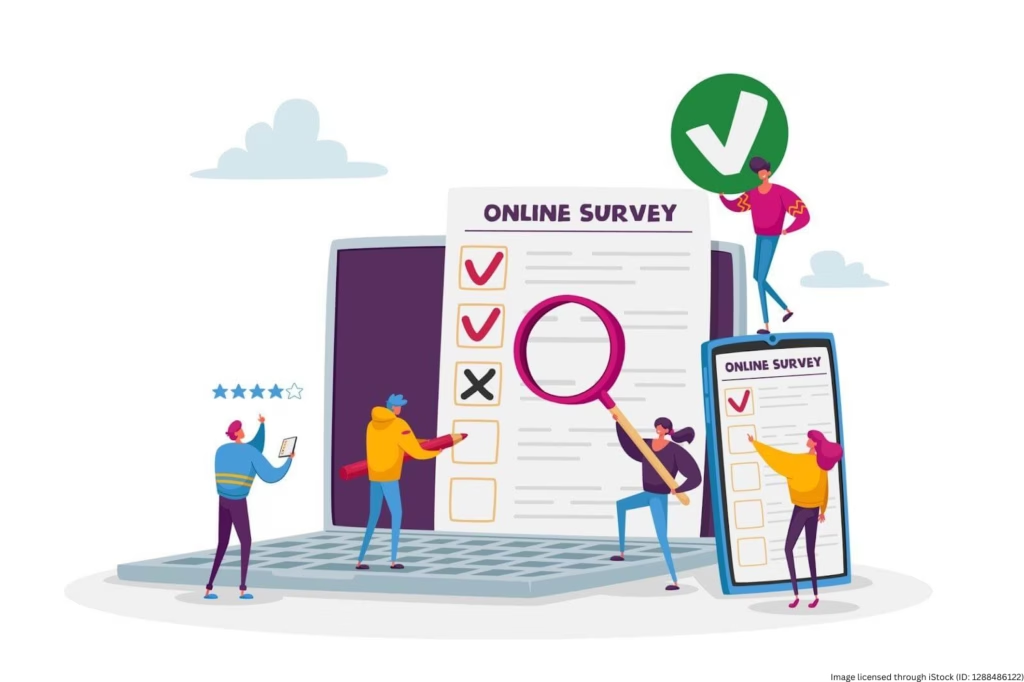
Your website is often your first impression. Website experience surveys ask about navigation clarity, content relevance, page speed, and ease of finding information.
These insights show you where visitors get confused or frustrated so you can streamline paths to purchase, increase conversions, and reduce bounce rates.
Mobile Application Experience Surveys
Mobile apps should feel intuitive and seamless. App experience surveys capture feedback on bugs, feature usability, design clarity, and overall user satisfaction.
Acting on this feedback boosts engagement, increases retention, and helps you measure how much value your app delivers to users.
Content Usefulness Surveys
These quick surveys typically ask readers, “Was this helpful?” after they engage with blog posts, FAQs, or help articles.
Gathering this direct feedback helps you understand exactly what content resonates, what’s missing, and how you can improve clarity. Ultimately, these surveys help you create content that genuinely helps your audience.
Newsletter / Marketing Preference Surveys
Email fatigue is real. Preference surveys make sure your newsletters and emails land with the right audience at the right frequency. They enable you to tailor content type, frequency, and tone based on subscriber preferences. The result is reduced unsubscribes and spam complaints—and often, boosted engagement and open rates.
Product & Innovation Surveys
If you’re launching something new—or improving what’s already out there—Product & Innovation Surveys keep you aligned with what your customers actually need.
They help you avoid expensive mistakes (like investing in a feature nobody wants), identify exactly what to build next, and confirm whether your product truly solves real customer problems.

Product Feedback Surveys
After customers have used your product, these surveys capture reactions about quality, satisfaction, feature gaps, and pricing. Understanding real user experiences helps you quickly fix problems, refine features, and keep your product relevant and competitive over time.
Concept Testing Surveys
Thinking of launching something new? These surveys test your idea before it hits the market. They confirm whether your concept addresses real customer needs—or just seems good in theory.
Early validation saves money, reduces risk, and helps you confidently build products customers actually want.
Feature Prioritization Surveys
What should you build next? These surveys ask customers to rank or prioritize potential features.
When you can see what truly matters to your users, you can focus your resources where they’ll lead to happier customers and faster growth.
Usability Testing Surveys
These surveys gather insights after users have tested your product hands-on. They uncover what’s intuitive, what feels confusing, and where users get stuck. You can use this feedback to create smoother experiences, reduce frustration, and boost product adoption.
Innovation Readiness Surveys
Not every audience is ready for every innovation. These surveys measure how receptive customers are to new ideas or technologies. Understanding innovation readiness helps you target early adopters first, tailor your marketing message, and smoothly introduce groundbreaking changes without alienating core users.
Employee Experience & Culture Surveys
Your team is the backbone of your business. Investing in their satisfaction builds a culture of excellence that benefits both the company and its customers.
These surveys reveal how staff members feel about the jobs they perform, where they see gaps in training, and whether there’s a disconnect between how they think they’re serving customers and how customers actually perceive that service.
When you understand these nuances, you can align employee actions with customer needs and build a workplace where everyone thrives.

Employee Satisfaction Surveys
These surveys check in at every stage of employment, from recruitment through exit. Regular feedback helps spot patterns, fix systemic issues early, and ensures your people feel heard. When you act on their feedback, you can boost retention, engagement, and morale along the way.
Employee Engagement Surveys
Are team members just going through the motions, or do they genuinely care about delivering great service? Engagement surveys reveal how employees feel about their roles—and how that impacts their interactions with customers. Higher employee engagement typically means more positive experiences, less turnover, and a culture of genuine care.
Manager Feedback Surveys
Good managers shape great teams. These surveys give employees a safe, confidential way to provide feedback on leadership. Managers get actionable insights to improve their style, and employees feel empowered knowing their voice matters.
Onboarding Experience Surveys (Employee)
The first weeks on the job set the tone for an employee’s entire journey with your company. These surveys reveal if your onboarding process clearly communicates expectations, builds confidence, and helps new hires succeed quickly.
Exit Interviews / Surveys
Finding out why employees leave is a great way to prevent future turnover. Exit surveys identify patterns and highlight hidden problems before they become bigger issues, making your workplace stronger and more attractive to current and future employees.
DEI (Diversity, Equity, Inclusion) Surveys
Is your workplace truly inclusive? DEI surveys capture honest employee perspectives on fairness, inclusion, and belonging.
Organizational Communication Feedback Surveys
Do your employees understand the “big picture” of your company? These surveys evaluate clarity, timeliness, and effectiveness of internal messaging. Better communication means less confusion, higher morale, and stronger alignment across teams.
Workplace Safety Perception Surveys
These surveys are critical for industries where safety matters most—manufacturing, healthcare, construction, and beyond. Safety perception surveys reveal gaps between perceived and actual safety practices. You can act on feedback to protect employees and reduce the likelihood of accidents in the workplace.
Training & Development Feedback Surveys
Do your employees feel well-equipped to succeed? These surveys check whether training is relevant, effective, and practical. Improving training based on feedback helps employees grow, feel supported, and boosts overall team capability.
Team Collaboration & Culture Surveys
Teamwork makes or breaks company culture. These surveys uncover how teams are working together—and what gets in their way. With these surveys, you can spot friction, foster better collaboration, and build a healthier workplace culture where employees enjoy showing up each day.
Brand & Market Understanding Surveys
A brand isn’t defined by your marketing copy. It’s defined by how your audience actually feels about you—whether they trust your reputation, believe in your products, or see you as an industry leader.
These surveys move beyond “Do people like our brand?” and dig into how brand perception impacts real-world decisions, like repeat purchases and word-of-mouth recommendations. Use them to understand and enhance your competitive position in the market.

Brand Perception Surveys
Do customers see you as trustworthy, innovative, affordable, or maybe overpriced? These surveys clarify exactly how your audience views your brand.
With these insights, you can sharpen your positioning, craft messaging that resonates with your audience’s desires, and create a brand perception that aligns with your goals.
Market Research Surveys
Want to stay ahead of competitors and industry trends? Market research surveys reveal valuable insights about your market, from pricing expectations and competitor benchmarks to emerging demands for new features. This keeps your products competitive, your pricing smart, and your decisions market-informed.
Pre/Post-Event Feedback Surveys
If hosting an event or webinar, these surveys capture attendee expectations beforehand and reactions afterward. Understanding what went right (or wrong) ensures every future event is smoother, more engaging, and more valuable for participants.
Advocacy Willingness Surveys
Advocacy surveys identify your biggest fans and clarify exactly why they’re enthusiastic. They reveal which customers are eager to recommend you—and who needs a nudge. Knowing this helps you replicate successful experiences and turn satisfied customers into active promoters.
Referral Interest Surveys
Referrals can drive growth, but only if customers actually want to refer you. These surveys gauge referral willingness and test incentives that would encourage more customers to share your brand. You can use insights from these surveys to build referral programs that actually work.
How to Choose the Right Survey Type for Actionable Survey Data
Knowing the different types of survey methods is one thing. Choosing the right one for your specific situation? That’s where most businesses get stuck.
Here’s how to make that decision easier—and more effective.

Start With the End in Mind
One of the biggest reasons surveys fail is that they lack a clear purpose. Before you send a single question, define your main objective and how you’ll use the results to drive real decisions.
Ask yourself:
- What do I need to know after this survey?
- What decision will this data help me make?
- Who am I surveying—and what’s the best way to reach them?
When you focus on the outcome, the right method becomes a lot clearer.
Consider the Audience
Many surveys flop because they’re not tailored to the people actually taking them.
Busy professionals may only have a moment for a quick poll, while your longtime loyal customers could be willing to share detailed feedback if prompted.
Adapting to each group’s needs and preferences can boost response rates and help you gather more useful insights.
If you want a head start, customer satisfaction survey templates can be adapted to fit your brand and objectives, but always make sure to customize them for your specific audience.
- Busy professionals? Keep it short and mobile-friendly.
- Longtime customers? Ask deeper questions—they’ll have more to say.
- Technical users? Be precise. No fluff.
Match Method to Moment
Don’t forget: quality almost always beats quantity.
You don’t need ten surveys to get good insight. You need one well-timed, well-written survey with questions that actually matter—and a plan to do something with the results.
Some quick pairings:
- Need fast, low-effort feedback after a purchase? → Go with SMS or Post-Transaction Surveys
- Looking for early input on a new product? → Use Concept Testing or Exploratory Surveys
- Trying to boost retention in a subscription model? → Deploy Churn, Renewal, or Customer Needs Assessment Surveys
- Want to improve internal culture? → Start with Employee Experience and Engagement Surveys
Design Your Next Survey With Interaction Metrics
If your survey program is even slightly off, you’ll miss issues that cost you customers. Surveys aren’t just a way to gather data; they also shape how customers perceive your company.
If they feel spammy or ask the wrong questions, customers will ignore them—or worse, stop doing business with you altogether.
As a top-tier customer survey company, we know that the real point of a survey is to collect high-quality data resulting in actionable analysis.
That’s why we developed TrueData—a system that prevents the pitfalls of bias, poor design, and dead-end analysis.
Instead of just automating more surveys, we combine scientific rigor, smart technology, and actionable insights to ensure every survey truly benefits your business.
Here’s what every survey should deliver under TrueData.
True-Facts: Proven Surveys
Get unbiased, scientifically valid feedback that aligns with your goals.
We customize every survey to your needs—be it NPS, open-ended feedback, or specialized metrics.
Our 20-point bias checklist removes skew and ensures you hear exactly what your customers feel and think.
By eliminating survey spam and unhelpful questions, we help you uncover the loyalty drivers and blind spots that most programs miss.
True-Tech: Turnkey Technology
Access all the premium platforms with zero technical headaches.
We already have licenses for Qualtrics, CRM integrations, PowerBI, SPSS, and more. You never pay extra for software, which means you save more money.
Our end-to-end campaign management ensures you send surveys at the right times, with the right tone.
Because we handle everything—from design and deployment to data visualization—your team stays focused on acting on results, not tech troubles.
True-Insight: Actionable Analysis
Understand metrics and correlations that drive growth. Forget dashboards that do nothing but gather dust.
We blend cross-tabs, correlation analysis, and text mining to reveal what truly influences customer loyalty.
You can choose from proven metrics like Net Promoter Score, Proactivity Score, Customer Effort, or a custom blend that fits your brand.
By surfacing root causes and hidden opportunities, we make it clear where to invest next for the biggest impact.
The bottom line is this: Surveys are an extension of your customer experience. When they’re poorly designed, you get worthless data and alienated customers.
With TrueData, your surveys are designed correctly every time. You gain the insights you need to grow your business and nurture lasting loyalty.
Ready to get started? Let’s make sure your surveys actually serve your business. Contact Interaction Metrics to learn how TrueData can transform your feedback into results.
============================================
Care to discuss your next survey? Get in touch!
============================================
The post 60+ Different Survey Types & Methods (and When to Use Them) appeared first on Interaction Metrics.
]]>Read more
The post Top Customer Satisfaction Survey Companies of 2025 appeared first on Interaction Metrics.
]]>Last Updated: January 31, 2025
Finding the right customer satisfaction survey company can make or break your ability to measure customer satisfaction and gain actionable insights.
The best firms do more than simply collect customer feedback—they help you interpret data, identify pain points, and enhance customer satisfaction.
This guide covers the top customer satisfaction survey companies of 2025. It covers their research services, their strengths, and how they can help businesses make data-driven decisions.
How We Picked
The selection process prioritized companies that deliver scientifically valid insights, ensure data integrity, and provide businesses with actionable feedback.
Each company provides in-depth insights to help businesses understand customers and make smarter decisions based on customer sentiment.
The top picks and honorable mentions explicitly offer customer satisfaction surveys and operate within the U.S., although not all are headquartered there.
Winner: Interaction Metrics
Interaction Metrics took the top spot in the list, but for good reason: It’s the only company on the list that provides 100% scientific, done-for-you customer satisfaction surveys with transparent online pricing.
Interaction Metrics handles everything from start to finish. That includes customer survey design that keeps your survey free of bias, data collection through multiple channels, text analysis for in-depth insights, custom metrics for clear reporting, and real-time dashboards—so you can monitor your data instantly and take action as insights emerge.
With real-time portals, you gain instant access to your survey results, allowing you to track trends, identify issues, and optimize customer experiences as they unfold. Interaction Metrics also writes and screens all survey questions for 20+ types of bias, ensuring scientifically reliable results.
This company also has multiple licenses with different survey software companies. That means it’s possible to program your survey in your preferred survey platform rather than being locked in and forced to use a specific piece of software.
Interaction Metrics approaches every project with a science-oriented mindset to keep results reliable, while needs-based survey services help businesses keep projects affordable and efficient.
Interaction Metrics can provide full-service survey design and implementation for as little as $850.
Runner Up: Beyond Feedback
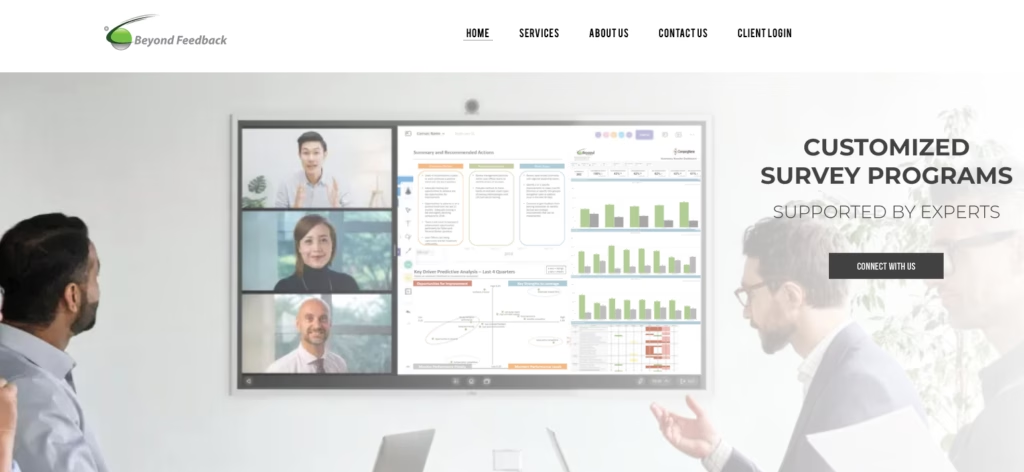
Beyond Feedback is one of the only firms offering fully customized customer experience survey programs.
They provide customized reporting and analysis, survey deployment via email, SMS, and phone, and national benchmarking to compare against competitors.
Beyond Feedback offers guidance on survey design and program development to help businesses refine their strategy. Clients can customize their survey program based on their available resources, but they must handle some question writing themselves.
The best feature from Beyond Feedback is that they provide online and offline reporting, which gives businesses flexible ways to monitor insights in real time.
Honorable Mentions
The honorable mentions below are ranked from most to least preferred providers. The order is based on how comprehensive their survey services are, whether they specialize in CX surveys and their online reviews.
Companies that provide more extensive survey services and focus heavily on customer experience ranked higher on this list.
Satrix Solutions
Satrix Solutions is an excellent option for businesses looking for expert guidance in B2B customer experience and voice of customer services.
Their CX consulting services are paired with unbiased market research, and they offer survey, phone, and interview programs.
They provide customized reports that break down survey responses by role, product/service, and persona. Their in-depth analysis of unstructured data and verbatim feedback provides valuable insights.
Like Interaction Metrics, they also use practices proven to improve survey response rates.
Confero
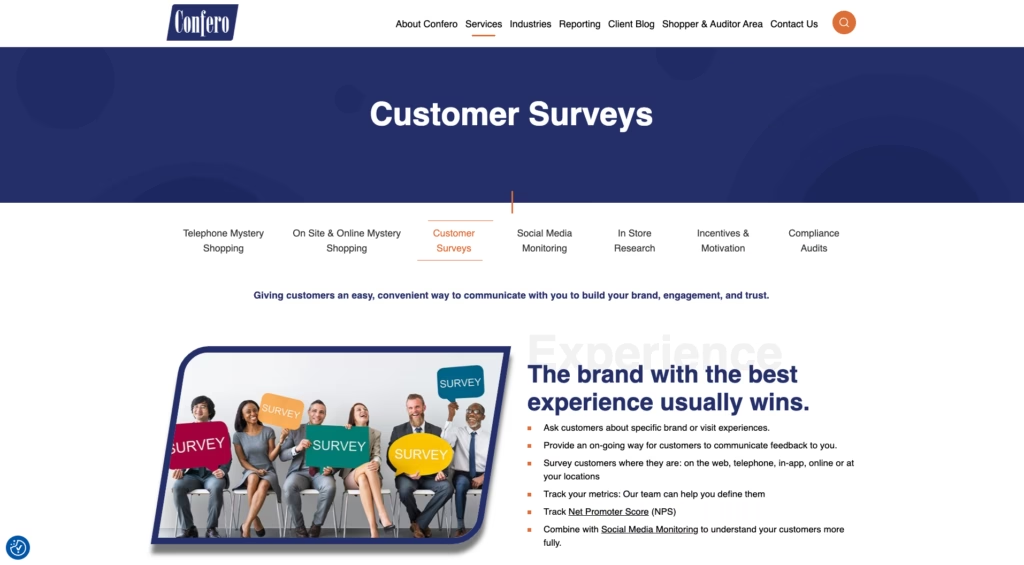
Confero has been around for nearly 40 years and specializes in mystery shopping and customer surveys.
Their platform allows unlimited custom dashboard views, which makes it easy for management to organize customer insights in the way that works best for them.
Confero supports multiple survey delivery methods, including in-app, online, in-store, and phone. However, their social media monitoring services are an add-on rather than an included feature, which may be a drawback for some businesses.
Confero recommends purchasing a social media monitoring package to complement your survey, so it would be great to see them offer social media monitoring as a part of their survey package in the future.
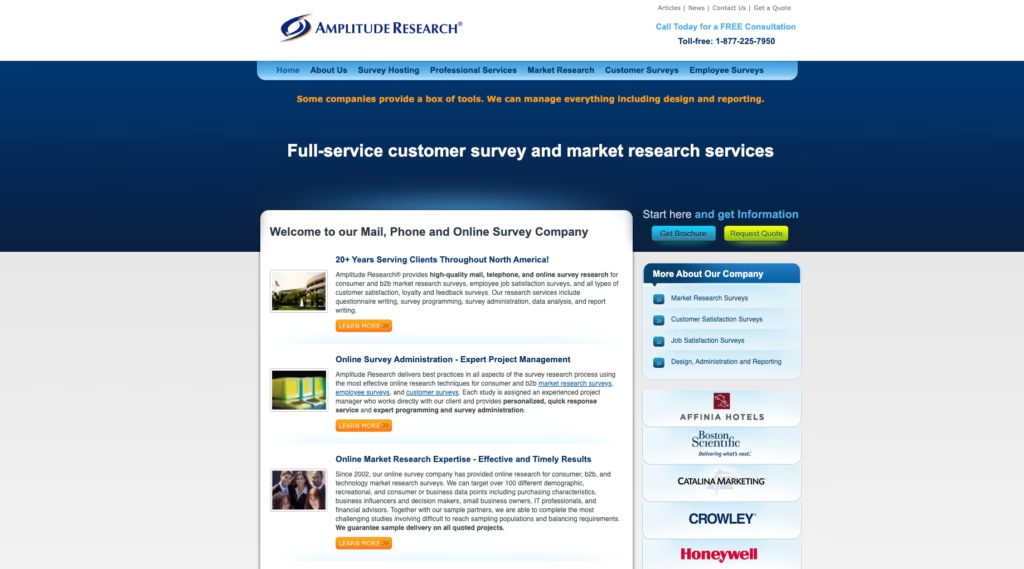
Amplitude Research
Amplitude Research offers full-service survey administration and diverse customer research surveys, including net promoter score (NPS) and client testimonials.
One unique feature that we love is how each client is assigned a Ph.D. statistician to help with analysis, so you know your customer satisfaction surveys provide in-depth insights.
They also offer support for businesses that want to manage parts of the survey design process independently.
Amplitude specializes in various survey types, including internal customer satisfaction surveys, CRM surveys, member satisfaction surveys, and more.
Drive Research
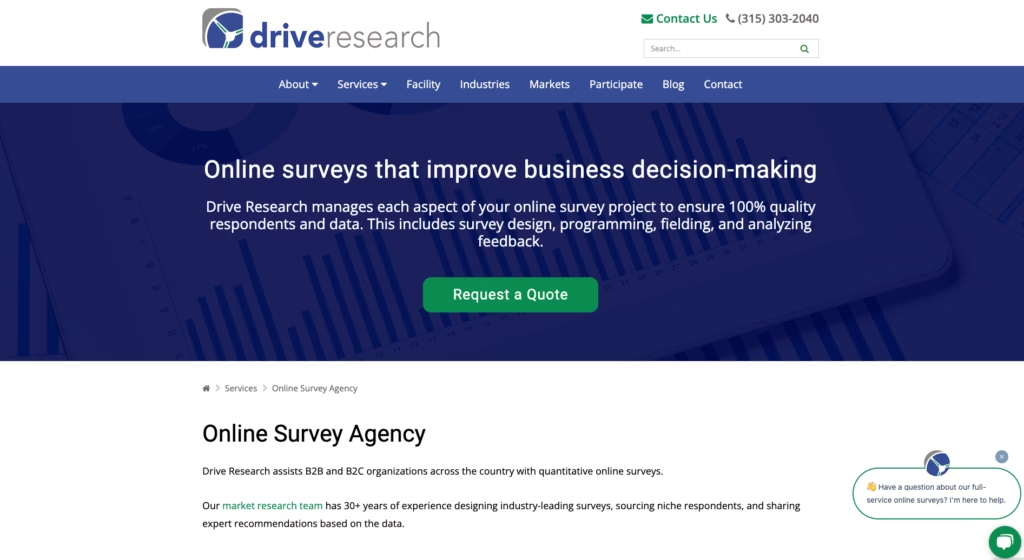
Drive Research works with major brands like Google, Apple, and Amazon to provide enterprise-level customer insights and market research.
They offer a broad range of surveys, including CSAT surveys. They also provide actionable insights rather than just data.
However, their pricing is not as transparent as it could be, and you must request a quote to get a clear idea of what you’ll pay.
OvationMR
OvationMR is known for its strong organization and responsiveness. The company provides end-to-end survey support and has experience using popular survey tools like Qualtrics and SurveyMonkey.
They offer sample design, survey question development, cross-tabs, PowerPoint reports, and custom dashboards.
One unique feature is their refusal to stop sampling when incidence rates drop, which can be beneficial for hard-to-reach customers.
That said, this feature may increase costs to continue sampling when incidence drops, and you risk reducing the quality of your responses. It’s worth considering whether or not this type of feature is beneficial before you decide to work with OvationMR.

NBRI
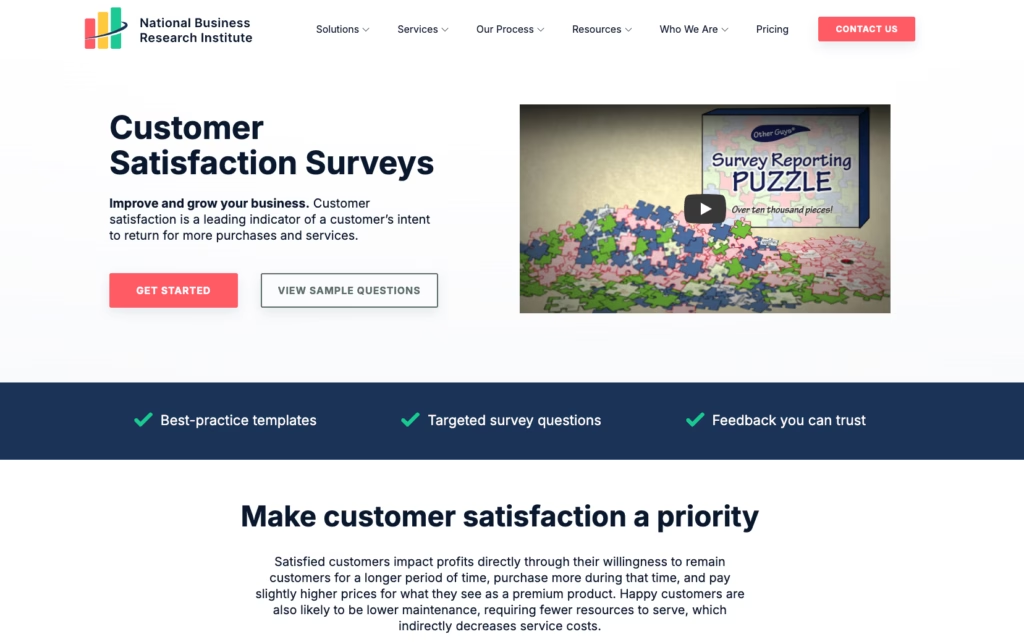
NBRI specializes in market research and customer expectations analysis.
Their surveys are available in over 75 languages and integrate historical survey data for trend tracking.
They have experience working with major brands like Toshiba, Cisco, and Audi.
However, the biggest drawback is that they rely heavily on survey templates rather than offering fully customized questions.
Snap Surveys
Snap Surveys offers survey software with outsourcing options.
They use their own software to design and administer surveys. Customers are also fans of how they offer an end-to-end solution or partial assistance, depending on your needs. In addition, they offer discounts for government, education, and nonprofit organizations.
SSRS
SSRS offers full-service customer research with unique features like estimating survey yield and response rates.
Their multi-language survey capabilities make them a good fit for businesses serving diverse demographics.
Luce Research
Luce Research focuses on market research with interactive surveys.
They offer full-service survey and questionnaire design, along with multiple modes of interview. These include online, phone, mail, and SMS surveys.
Luce Research provides some standout features as well. For example, they can translate surveys into any language and have the ability to use interactive media to create more engaging customer survey experiences.
They’ll also estimate your survey yield and response rates, which is a feature most companies don’t advertise as part of their survey package.
More Customer Satisfaction Survey Companies
These companies offer customer satisfaction surveys, but didn’t earn honorable mentions because they’re mainly known for selling software or providing research/market research services.
That means you may have to write your own questions and email campaigns, program your surveys, configure your user portals, and do whatever else they require you to do to get started.
Simply put, these companies have great products and services, but you have to do more work to get your surveys up and running if you choose to work with them.
Customer Satisfaction Survey Software Companies
Software companies make their money by selling software, not by designing surveys. That’s why if you work with a software company to develop your survey, you’ll likely be left to do most of the heavy lifting.
These companies don’t typically write survey questions, manage email campaigns, or analyze feedback for key insights. They supply the tools, but leave users responsible for setup, deployment, and interpretation of results.
Qualtrics
Qualtrics is best for enterprise-level survey programs. It is highly customizable but complex for beginners.
While it handles intricate routing instructions well, its pricing transparency could improve.
SurveyMonkey
SurveyMonkey is an affordable and user-friendly platform. It’s great for launching surveys quickly and integrates well with other tools. However, some users report its routing logic is not as advanced as Qualtrics.
Medallia
Medallia stands out because it supports both customer and employee feedback. It also offers more transparent pricing than some competitors.
Customer Experience Consulting & Market Research Companies
CX Consulting companies can be a great resource for information, inspiration, ideas, and advice. That said, we didn’t include them in our top picks because they tend to offer more “one-size-fits-all” solutions, and generic templates and pre-written survey questions aren’t always capable of yielding the insights clients are looking for.
They may be able to help you design a survey in a limited capacity, but you’ll still be left to do a massive portion of the work alone.
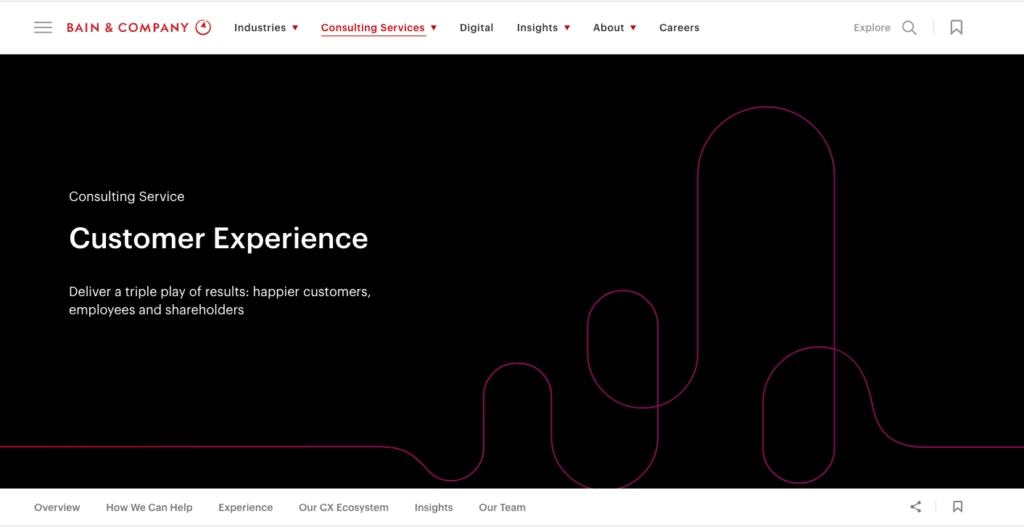
Bain & Company
Bain & Company is one of the biggest, if not THE biggest, name in customer experience because they’re the originator of the Net Promoter Score.
To be clear, large companies see Bain & Company as an incredible partner. This company is so highly regarded that some enterprises would consider working with them for the “bragging rights” alone, even though they don’t offer comprehensive implementation.
Bain & Company is worth working with (if you can afford to), but it likely wouldn’t be the right choice for small or mid-sized businesses.
Walker
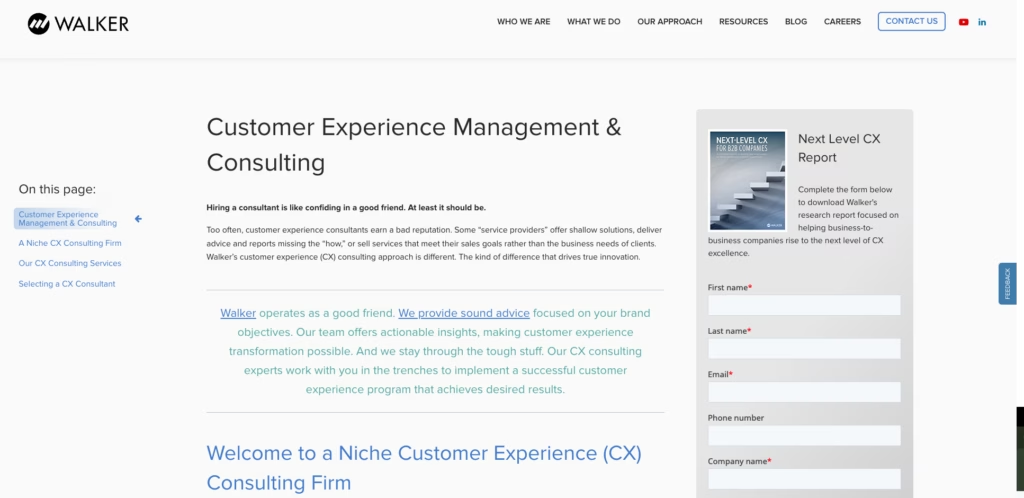
Walker provides customized CX strategies that are comprehensive beyond surveys, including journey mapping, strategic advisory, technology consulting, custom engineering, and more.
One key idea to keep in mind before choosing who to work with is that Walker is a partner of Qualtrics. That means if you work with them, they’ll probably encourage you to use Qualtrics—and while Qualtrics is great, it’s not perfect for every application. If you intend to use a different survey software, they may not be the ideal choice.
Forrester
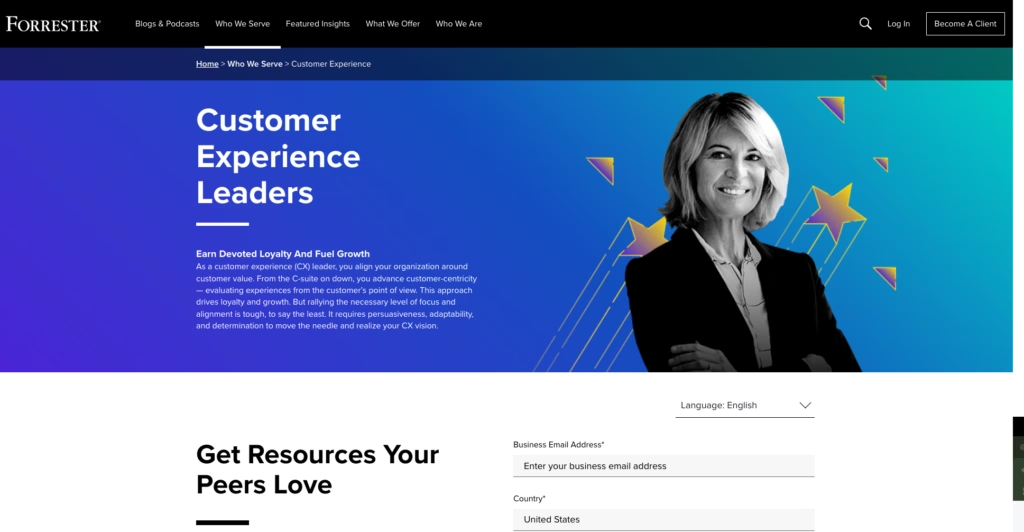
Forrester focuses on benchmarking and CX insights but does not manage surveys, which makes them more of a consulting partner than a survey provider.
Bellomy
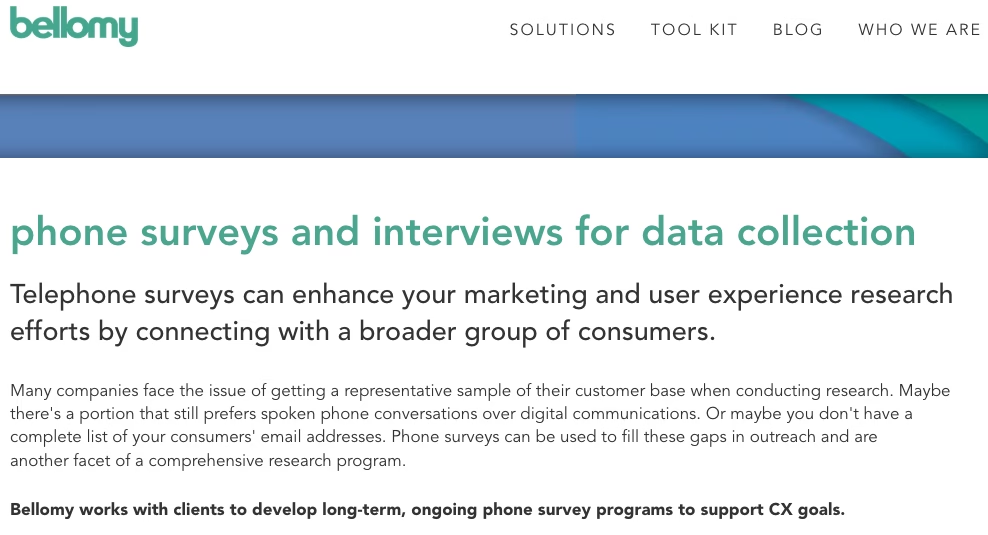
Bellomy is a full-service market research firm.
They offer a mix of qualitative and quantitative research methods that help businesses uncover trends and improve customer engagement through data-driven strategies.
One area they’re known for that stands out and sets them apart in the CX industry is their phone surveys. And if you intend to administer a phone survey, Bellomy is a fantastic choice.
Design Your Next CSAT Survey With Interaction Metrics
Choosing the best customer survey company depends on your needs. However, Interaction Metrics is the top choice if you want a comprehensive solution.
Interaction Metrics provides full-service, end-to-end customer satisfaction survey design using their own planning framework to simplify the development process and take as much work off your plate as possible.
All of their surveys are built from the ground up and screened multiple times to make sure they’re free from 20+ types of bias.
They also survey sub-populations from your customer base to ensure they’re represented accurately, and they’re the only customer satisfaction survey company that lists their pricing online.
For businesses aiming to improve customer satisfaction, Interaction Metrics offers the cutting-edge technology and deep understanding needed to drive meaningful improvements in customer experience.
No matter your industry, investing in the right customer insights firm can help you build brand loyalty, retain satisfied customers, and make better business decisions.
Schedule a call with the Interaction Metrics team to discuss your survey needs today. Biased questions are out. Representative samples are in. And objectivity is the standard.
Frequently Asked Questions
Which type of company is best to work with if my goal is to increase customer loyalty?
If increasing customer loyalty is your priority, working with a company that specializes in enhancing customer experience is best.
Full-service survey providers that offer enterprise feedback solutions and actionable feedback can help you analyze user behavior, uncover trends, and address key areas that impact loyalty.
Companies that have experience increasing retention rates and delivering business growth strategies are especially effective at helping brands build long-term customer relationships.
What is the best way to make sure my surveys are delivering actionable insights?
To ensure your surveys provide actionable feedback, focus on well-structured surveys that use a mix of open-ended questions and shopper insights techniques. To avoid designing flawed surveys, we recommend working with a 100% done-for-you partner like Interaction Metrics.
The best approach is to work with a company that aligns survey questions with your business objectives.
Working with a company that provides in-depth customer journey analysis and decision-making frameworks in addition to survey development will help you use survey responses to better understand your customer base.
Is it better to work with a full-service survey company or a market research company to develop surveys?
A full-service survey company is ideal if you need an end-to-end solution that includes online survey design, telephone interviewing, and data privacy compliance.
If you’re looking for high-level strategic analysis, a market research company may be better, as they focus on benchmarking satisfaction levels across various industries.
The right choice depends on whether you need quick turnaround surveys or long-term data-driven strategies to support your business goals.
How much does a customer satisfaction survey cost?
The cost of a customer satisfaction survey varies depending on factors such as the number of respondents, the complexity of the survey, and whether it includes enterprise feedback tools.
Basic surveys using popular platforms can be relatively inexpensive, while customized solutions that include customer journey mapping and in-depth data analysis can be more costly.
Companies looking for a cost-effective solution should assess pricing models that balance affordability with depth of insights.
Most companies don’t list their pricing on their website. Interaction Metrics does. We can develop your next survey program for as little as $850.
How do most companies track customer satisfaction?
Most companies track overall customer satisfaction through a combination of online surveys, telephone interviews, and enterprise feedback solutions.
They use data collected to measure satisfaction levels, identify customer needs, and evaluate key touchpoints in the customer journey.
Many businesses also leverage artificial intelligence and business analytics to process survey responses and gain a better understanding of trends that drive business growth.
============================================
Care to discuss your next Customer Satisfaction Survey? Get in touch!
============================================
The post Top Customer Satisfaction Survey Companies of 2025 appeared first on Interaction Metrics.
]]>Read more
The post How to Improve Surveys: Amas Tenumah Interviews Martha Brooke appeared first on Interaction Metrics.
]]>Is your survey a customer listening vehicle? Or could it be improved? On this episode of the ‘Amas Talks’ podcast, Amas and Martha agreed that if you’re considering how to improve surveys, a survey audit is the first step toward excellent survey design. The audit ensures your questions are sufficiently powered to achieve robust insights—and without a doubt, you need smart insights to steer your company!
How to Improve Surveys, Summarized:
Martha and Amas discussed the problems with how companies use surveys, particularly Net Promoter Score (NPS), and offered advice on how to improve surveys to gather actionable customer feedback.
Key takeaways:
- NPS has become a gamed system: Companies often prioritize the score itself over genuine customer feedback, leading to data that’s not meaningful.
- Gather real customer insights: Improve surveys by using a combination of well-crafted surveys, in-depth interviews, and careful analysis of customer behavior.
- Make sure your surveys are giving you meaningful data: Audit your existing surveys for any biases, tailor questions to specific interactions, and use a mix of quantitative and qualitative data.
- Poor feedback leads to bad decisions: Companies risk making poor decisions based on flawed survey methods.
- Go beyond NPS: Gather intelligence, embrace the scientific method, and value expertise over opinions.
Martha encourages companies to move away from simply chasing scores and instead prioritize truly listening to and understanding their customers. But here’s some of the pros and cons of NPS that Martha and Amas discussed.
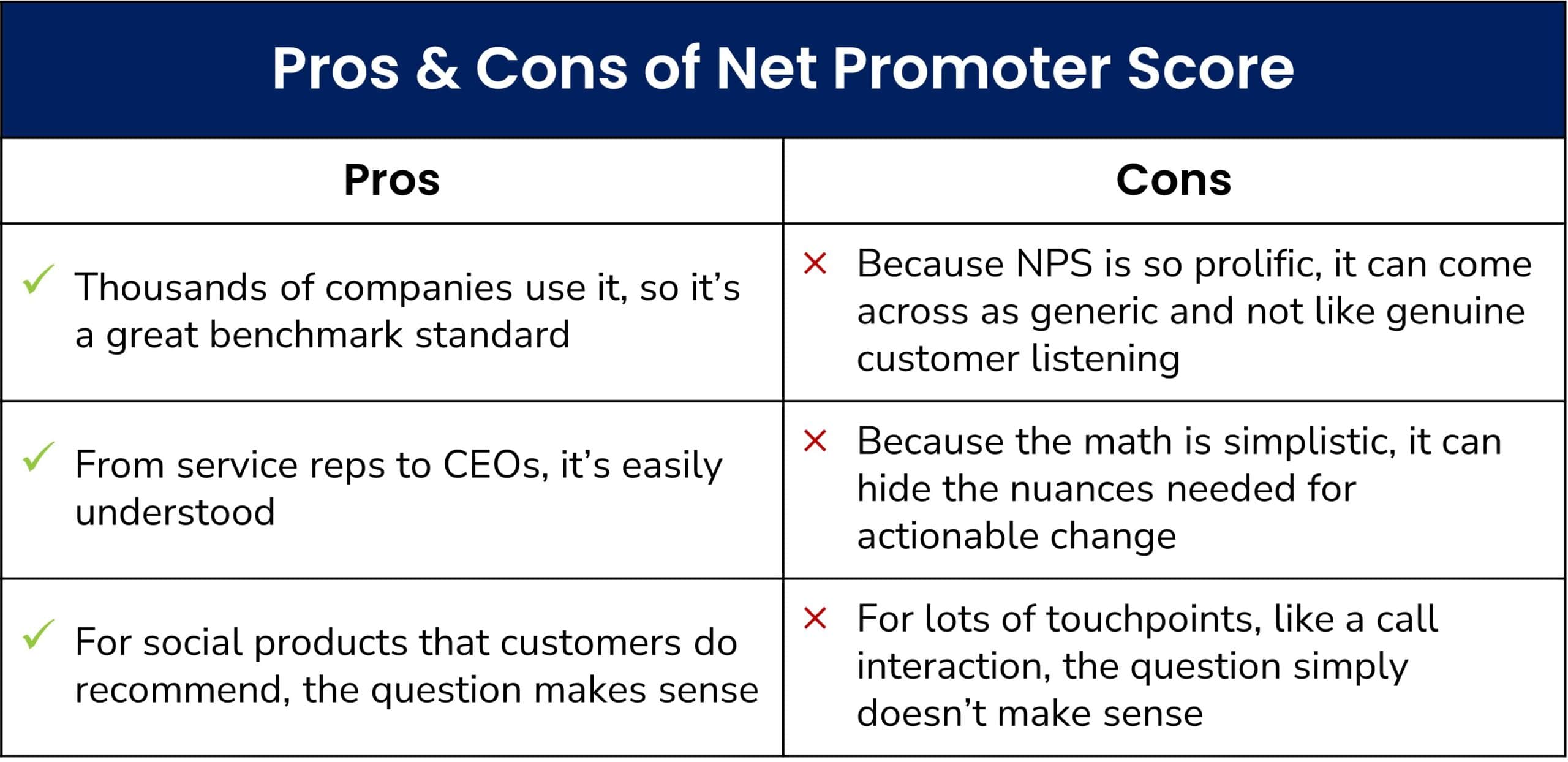
How to Improve Surveys: The Full Conversation
Here’s an AI-based transcript from Martha and Amas’s discussion about how to improve surveys.
Amas: You’ve been around this space forever. You lead one of those firms that I really admire because of some of the research you do. But let’s jump right in. I have a burning topic I want to chat with you about.
Um, so I stayed in Seattle a few weeks ago, and before I got in, I got the text from the hotel that says, hey, we see you’re coming. Is there anything you need? I’m like, oh, how nice this is. This is wonderful. I responded, I’m fine. I get in, it’s an uneventful stay. There’s a few things here and there, but I quickly realized what this text was all about.
A day before I left, the text was, hey, you’re checking out tomorrow? We want five stars. Is there any reason why you will not give us five stars? If so, speak now so we can fix it. Because by gosh, we are going to give you five stars. I didn’t respond the day of my checkout. Hey, I’m just checking in, making sure you’re going to give us. I’m like, what?
So I guess my first question out of the gate is should we bother as consumers with surveys because it’s getting so obvious what they’re doing here?
Martha: Okay, I think in most cases, as a consumer you shouldn’t because I think it’s just a completely gamed system. Yeah, I think when it’s B2B and there are some exceptions to that where consumer kind of overlaps B2B, but it’s I think the criteria set is are they truly a partner to you.
That’s first like are they truly I don’t mean enterprise rental car. I don’t think Hilton Hotel or I don’t think they’re you consider them a partner. You consider when you get the lowest rate. That’s the one I’m going with. Right. Right, right. Okay. So if they’re truly a partner where it’s a collaboration where you feel like you’re affecting their decisions in the same way they’re affecting your decisions okay. That’s criteria one. Criterion two would be that you feel like they’re truly listening.
So the question isn’t like, when will you give us five stars? Right? Right. It’s not that. It’s we’re here to listen. We want to know what you really think, right? And whether bad or good, all thoughts and opinions and perceptions matter. Right? So they have to, you know, really communicate that they’re truly thinking.
And three which kind of overlaps with the really thinking that they that they’re valuing you. Like, I just wrote something on LinkedIn about, you know, truly people consider incentives. You know, I just got paid $50 to do a survey, and I was I was happy to do it. You know, I was like, true, they were they were truly listening with me and they were signifying, we’ve we value you, you know, $50.
You know, it’s fine. Like I scan it in. I have $50 of buys in Portland that’s, you know, two glasses of wine. You know, it’s like, okay, that’s something it says. So I think and with many of our clients, we do Starbucks gift cards, you know, a latte on us. You know, something, you know, just to say, hey, we appreciate you as a customer. So and in B2B, come on, these relationships can be worth hundreds of thousands, if not millions of dollars. So come on, a latte or two on us like that should not be what breaks the bank.
So I think that would be that would be the set that they’re caring, they’re listening. And it’s a true partnership. And if all of that criteria set is met I think absolutely you should you should feedback or if at least two of those um, those that criteria set is met, you know, consider it. But you know, your enterprise your your Hilton I think it’s just American Airlines. Yeah. Oh, don’t get me started on them. Um, but really, I think it’s it’s BS.
Amas: Yeah. So. Well, let me ask you personally, do you fill out surveys?
Martha: Mhm. I did for American Airlines because I just couldn’t get them to respond. And so I wanted I like consumer affairs. Consumer affairs you know please. Like you delayed me for four days. Come on. Please respond. Give me some kind of compensation for this. That’s you know, I had a rental car and hotels and, you know, the whole thing. A delay of four days adds up. I mean, for me, it was just shy of two, $2,000. Um, and so it’s like, please. And then new, new, uh, tickets and Alaska Airlines just to get finally home in any event. Um, yeah.
They sent me their survey twice. Both times in that Net Promoter score zero with. Here’s why I’m giving you a zero. It still didn’t affect anything. I still didn’t get a response. But yeah, I in desperate times I’ve tried it. I’ve never actually seen it work, but it is sort of like, okay, is there any way you’ll listen to me? Anybody? Is there, is there anybody home?
Amas: Like it’s crazy. I think we just on in the last 30s came to the conclusion that surveys is just another channel. It’s an escalation channel. Right?
Martha: Right, yeah.
Amas: You’re not answering me and all of these other places. Maybe if I put it in survey, I would.
Martha: Maybe.
Amas: Maybe. Yeah. You got an answer? So not to pick on our friends at American Airlines. But I, too, have an American Airlines story, and I want to. So they canceled my flight. I now live in, you know, flyover state in Oklahoma City. So they take me to Dallas a lot. Right. So cancel my flight in Dallas. I’ve made this drive dozens of times. It’s about 3.5 hours. I get a rental because I’m just trying to get home.
So I drive home the next day. Get the survey. Amas, how did you enjoy the flight? You know, Mrs. Lincoln, how did you enjoy the flight? Right. One of those kind of. And then it goes on to ask me, how was the meal? Uh, how was the flight? It did all of that. And so I am struck by the fact that there was very little on that survey that they didn’t already know or should know. Right. It got me thinking when I was planning on talking to you today to go all right, what was the point of surveys when we started doing this thing at scale? What was the original intent?
Martha: Yeah. Yeah. Well, I mean, originally. So, you know, back in the 90s, I would say I think there really was an interest in listening and feedback. Mhm. Um, I think that it’s just become a very gamed system. I mean, just to kind of reflect on your point.
Um, companies should never bother you with information they already know. Like, never. Like time is precious. Like if their time is precious, guess what? Their customer’s time is precious, right? Especially business travelers. Time is precious. So don’t bother me with, you know, like, which flight were you on? They know, um, you know, which, you know, class were you in or, like, petty stuff about the meal? Like, they kind of. They should have a better way to QA the quality of first class meals, right?
Then, like, then asking you. Right. Right. So there are things that they should be able to QA, um, that have and things that they should just know in their CRM system that there’s no reason to bother you with. Um, but I, you know, originally pre 2003. Net promoter score taking off. I think there really was like an interest in market research, customer feedback. Um, it’s just gotten, you know, kind of bastardized is what I would say.
Amas: So so I want to I want to get into this whole NPS business. You’ve mentioned it a couple of times, 2003. So. 2003. Happens the famous HBR article. Right. You know, all of this deal and then we get NPS. I think Bain or one of them kind of made it into a thing. Tell me, and I’ll also, as one who lived through it, this was also the internet now had a foothold in society, right? Emails were now like mainstream. So paint the picture for me. 2003. Um, how did that moment that leads up, up to now change the way companies thought about service?
Martha: Right. So I think there’s a confluence of factors. First, that article in HBR by Fred Reichheld, it made a lot of sense. Like it was good. When I read it, I was like, ding ding, ding. That’s good. Because instead of hitting the nail on the head with, you know, rate this company or how satisfied were you? It’s like. Huh? Coming in on the side. Yeah. Would you recommend how likely are you to recommend? I was like, huh? At least an interesting kind of an interesting new question, right? Um, so I think there was a, like, an excitement about, like an interesting new question then, like you said, emails. Right. They become really cheap. Yeah. So it’s like, okay, asking this question by email, right. Costs us pennies on the survey. Right? Like not even penny like fractions of pennies on the survey.
Basically free. Yeah. Okay. So we have internet email. It’s all like exploding and free and memory is basically free. It’s all it’s free. And the question seems kind of interesting and new. And there is this kind of talk about, um, you know, we’re post Ralph Nader. Right? So there is this kind of like, huh? Could we learn from customers? Like, is there a possibility we could learn from customers that customer feedback is valuable? Because Ralph Nader had been, you know, hammering away on that through, I don’t know, the auto industry, the 70s, 80s, you know, and really for beginners.
From the beginning of this society of consumer affairs professionals, you know. So I think it’s like those factors where it’s like, huh, maybe we can learn from our customers. And now, you know, interesting people like Steve Jobs would kind of push back on that, right? He’d say, no, actually, we set the bar for the customer. Right. Which I think, you know, there’s some idea, good ideas there. I think Hertz set the bar. It’s not that. It’s they examined customer behavior. I don’t think this is a survey question and said, what? What are people like you and me care about. When we get to the rental car station. You know, we like the Martha Brooks car is in slot 91.
You know, we like that little personalization, and we want to get out quickly. Oh, the keys are right there in the car. I go, this is Martha Brooks, you know, slot 91. I’m gold. I’m acknowledged, I’m personalized. And I get out of the airport quickly. Like that’s what I care about. And that’s not something you surveyed about. That’s like examining customer behavior and saying, oh, let’s craft a customer experience around what the customer cares about.
I mean, you know, going back to the iPods, it seems like so long ago, but, you know, pre iPad, you know, it was like, well, what a what a customers care about. Like a cool interface where they can carry 25,000 songs with them anywhere. You know, it wasn’t like a customer who came up with that idea. So this is I get that I’m kind of going here and there with an answer to this question, but I think there is, um, you know, coming back to NPS and the pros and cons of it, there is this like, well, we could learn from customers. And yet there’s also a, you know, a path of but what exactly do we want to learn from our customers that’s worth thinking about.
Amas: Yeah. And I think I want to come back there, but I want to go to this point of purpose. Mhm. So purpose is I want research, I want insights. Um NPS came and I feel like the purpose is now changed. I, I feel like not, not just I feel like it’s clear to me now the purpose of NPS is NPS. Am I, am I off base on that? Like it seems like the score of it has become the idol now.
Martha: I think that’s like 98% of consumer companies. I mean, think about podcasts you listen to. It’s like, if you can give us five stars, give us, you know, by all means, rate us five stars. But it’s always prefaced like that. Just like with your hotel experience, when you’re ready to give us five stars, you know we’re ready to interact. But until that time, we’re we’re really not interested.
I mean, car servicing companies are famous for this, you know, just like, give us five stars, give us five, you know, pleading, begging. You know, it’s really. And you know what? It’s just annoying. Yeah, it’s just annoying. It’s not like we can smell like that’s not real. Like that’s not real. That’s not any kind of. And that’s not market research or customer listening. That’s just, you know, worried about employees feeling like, if I don’t get five stars, I’m going to get fired, which is a really that’s a bad system, right? That’s not fair.
Amas: I mean, is it is it Warren Buffett who said, like, show me the incentives and I’ll show you like, what the company’s goals are, right? I mean, I’m speaking as someone who, you know, when I ran, I was in charge of CX for, you know, big consumer goods company, the wonderful company. Um, I got a bonus from NPS, so guess what? You know, there were entire company organizations. So the the C-suite, they were entire programs.
Yeah, we wanted to improve the experience. But if the experience improved and NPS didn’t improve, there would be hell to pay. So very, very quickly it became about the NPS score and if tangentially, the experience improves. I mean, we hired outside parties and everyone does it. Like how do we improve, um, customer experience. So would you what would you say about this incentives of where we’ve gotten ourselves into not just about NPS, but as long as you have a culture that’s about the score in and of itself is a good financial thing. What do you tell companies who are contemplating this issue?
Martha: Yeah, fire the culture. You need a new culture. Yeah. Like that’s not that’s not good. Like I think there’s this and there’s this. Um, let’s just offload this to the customer. Well, what about Xiang? What about watching? What about listening to how the customer interacts with the customer and making decisions based on your brand promise and what you allege your company is about? After all, your customer doesn’t know.
Like maybe, maybe your brand promises about speed. So are you answering these questions quickly and efficiently? Maybe your company is about education. We educate the customer. Well, forget this then you should be the. The customer isn’t studying your brand promise. I promise you that right now. Um, so then then you’re listening for. And that can be through a I, but also through, you know, real research both, um, listening for like, are they informing the customer and proactively and giving ideas, you know, if that’s what your culture, if that’s what your brand promise is, is like, oh, we’re all about education and blah, blah, blah. Well, then listen for that. Um, so, uh, yeah, I don’t know if that answered your question head on or indirectly it does.
Amas: Um, I want to I want to go back for a second and go back to what you and your team does. How did you end up in this space of, um, you know, looking deeply into how did you how did you become this sort of expert around this topic?
Martha: Sure. So I work for two coms, you know, back in the day, both.
Amas: I can’t believe .com is back in the day now. But go on.
Martha: So food.com and then Lucy.com. Yeah. Um, so, uh, and then Lucy transitioned into work for Nike and Adidas, and it was actually I worked for a guy named Sam Braddock at Nike who was really cool. And he said, Martha, I really care about evaluating our customer service, our email, our chat, our calls. And honestly, I don’t care what our score is, as long as I have a hockey stick that I can prove to, our C-suite has shown that we’ve moved up. Right. Okay.
So it was kind of like, yes, measurement of aspects of the customer experience. In this case, it was customer service. And of course, customer experience is a lot more than customer service. But customer experience is everything. It’s the invoicing. It’s the pricing. It’s the supply chain. It’s everything. But this was specifically about customer service. And, you know, being able to have real metrics on that. And so that became and then Nike was a very early client that became metrics, Interaction Metrics.
So measuring the quality of interactions with real metrics. Um, and in the very beginning of the company, we were just about customer service evaluation. And then our clients pushed us into like, we’re really interested in beyond customer service, customer satisfaction.
And so we got into interviews. Interviews are still like a fantastic research tool that we love to use. They’re quite expensive, right? And so that transition transitioned of course into surveys. And so now those really are our methods, our workshops, customer service evaluations. And then, you know, genuine customer listening interviews and mostly surveys because they’re less expensive. And but you know, the way we do them is none of this BS about like give us a five stars and we’ll, you know, blah blah blah. You know, it’s.
Amas: Like we’ll bribe you for it.
Martha: Yeah, yeah.
Amas: I am fascinated to see this journey we’ve been on where we started at one place, and now we’re bribing people into giving us five stars. Um, but to get back to NPS Net Promoter Score, for anyone listening who doesn’t know what NPS is, this is the old famous questions, what have you. But I’ll. I won’t butcher it. I’ll let you. Um, what are your thoughts on the question to begin with? The one that says so the again, it is how likely are you to recommend XYZ to your friends and family? I believe some version of that, or.
Martha: Friends and colleagues sometimes if it’s a business.
Amas: Yeah, exactly. Yeah. What are your thoughts on it?
Martha: Well, like I say, back 20 years ago, I was like, oh, interesting. Um, and then it became clear, you know what? It’s a leading question.
Amas: What do you mean by that?
Martha: How likely are you to recommend assumes you’re somewhat likely to recommend. Right. So it’s like huh? Now, what I will say about NPS is if you want to benchmark. And so we and many of our, if not most of our clients want some version of NPS, right? Um, you know, the pro about it is that you can benchmark against other companies in your sector, right? Right. So I like that about it. Um, sometimes I think it requires some tweaks, right. Um, you know, the empirical question is, have you recommended yes or no.
Amas: How likely I never yeah. I hadn’t thought about that until you mentioned it. But but I also want to point out for me what rubbed me wrong about NPS. The question is I think the bar is way too high, especially because they now put these questions on service interactions. So you’re saying I am going to recommend your company to my family because I spoke with, uh, Joe on the one 800 number.
Martha: No, like, that’s just not like. It’s just not how humans work, right? Like, you didn’t have a phone call or you didn’t receive a package that was packaged correctly, and now you’re like, hey, Bob, gotta buy from this company. You know, like, no, it’s like it’s really off kilter and you want good listening. Has is in concert with how humans actually, you know, conduct themselves. Right. So it’s. Yeah. But you know, I don’t think Reichheld originally intended it. It was like at the end of your interactions, right about the entire company. Like, how likely are you to recommend ABC to a colleague? So it was at the end, it just became again butchered and bastardized. So it’s like, you know, you got a package at your doorstep. How are you going to recommend, you know, call center or how likely are you to recommend every, you know, every five minutes?
Amas: Right. Like every five minutes I’m recommending. I’m recommending. Um, here’s here’s a thought that I want to get your, your kind of perspective on. I think because I was kind of living it in the moment and that. 0507i think when NPS first came, I ran most of my background is in service. We didn’t even get to ask the question. We still had our old school customer satisfaction, what have you.
But what would happen would be there was this sort of usually lived in marketing or what have you consumer analysis that was doing NPS and we’d say our score is X, Y and Z. Well, inevitably they would say, well, amass you’re the problem. Well, you’re the VP of whatever. So customer service needs to. And then I remember we went from that to well, let’s just ask the same question across the board because they were struggling with connecting my. Csat scores. That was going up and down. There was just no correlation whatsoever.
So the thinking then became, well, let’s bring that in. And from day one, I just want to tell you, as someone who led contact centers, it was always war because I would go to that representative and my supervisors and managers will sit next to this poor person and say, hey, listen, um, your NPS score was this. And they would go, no, I had a great interaction. The QA scores were fantastic. This customer has no issue with me. They were not recommending the company.
Because of that. And so it never got any buy in because to your point, I think the real thing that sunk NPS. And I want to get to what you think we do about MPs going forward. Here is it became too popular for its own good, right? Every department, it became just bastardized. So I guess I will ask you a question of as you work with companies who are trying to just understand the genuine ones who are like, I need to connect. I want the MPs to benchmark, but I need to be able to measure these interactions along the way. What do you say to those guys?
Martha: Sure. I think as you know, as long as it’s the end of interactions and you’re very clear that this is at the end of the journey, and now it’s like, how likely are you to recommend I’m good with that.
Now, along the way, you want to know how did that touch point go? Yes. Um, please rate your experience with James Brown. Yeah. Martha Brooke, please rate your experience with, based on his or her politeness. Based on her his or her knowledge. Like, there are some very specific questions simply about that interaction and being very clear.
Like, was Martha polite and courteous and courteous? Did Martha know what she was talking about? And keep it on that so that you can actually train to that data? Does that make sense? Like train to that because maybe Martha was very courteous, but she didn’t have any answers. Right? Well, okay. Great. Now we need to train. Martha’s good on the polite, but let’s do an, you know, a good training class to give her some more, you know, knowledge about the product or service. Um, and so, you know, the takeaway here is tailor your questions to the interaction and don’t be sloppy and just have one question, does it? This is crucial to how to improve surveys and ensure you’re getting useful data.
Amas: I agree you can’t, you can’t MPs everything and we’re going to move on from MPs. But I do have one final question for you around this topic. The long knives are out for MPs and I, I, I am I am wielding one of the knives. Um, where do you stand on. We now have this then it’s ubiquitous. It’s the standard. It has flaws. You just pointed out a new one. It’s like I hadn’t heard your take on it before. The person, the people who came up with the score are writing mea culpa letters on. Hey, we screwed up, what have you. What are you saying to folks who just genuinely ask you what to do with NPS?
Martha: Yeah. Um, I would say, you know, make sure you’re benchmarking it so that there’s a true point. Yeah. Right. That you’re not just assaulting your customers with something that they’ve heard over and over again. Um, and really study the journey and make sure you’re asking NPS at the right time, in the right place, which again is at the end of a journey, and consider how you might want to tweak it. Like so often, it’s just how long do you recommend friends and family?
Like, um, say you’re a B2B company working with distributors? Well, a distributor shouldn’t be recommending you to others, right? Because it’s their it’s their job to sell you. Right? So of course they’re going to recommend you. Do you know what I mean? It just doesn’t make sense. So in you know, in that case you’re going to need to tweak the question. So just be very selective about your audience as, as much as you’re selective about, you know, the touch point itself. Does that make sense?
Amas: So it does. I think that nugget about at the end of the journey, not every touch point, I think I think these are way to reform it because to your point, can’t throw the baby away with the bathwater. We need to come up with a better, um.
Martha: That is a pretty ugly.
Amas: Like, who was doing this, by the way? Was that a thing in the 1600s? Um, but, you know, I think you’re giving folks some really important tips. Um, so I’ve got Martha Brook on the podcast. I’ve been looking forward to having this conversation.
I’m going to ask you a bit of a fun question here, uh, to get people to get to know you. So, um, I’m going to ask you what was a purchase under $50 that has impacted your life the most? And while you’re thinking about it, I’ll give you mine. Mine is the neti pot. I you know, I, I can have bad allergies. And when things get really, really bad, I mean, I’m not graceful with the thing. I end up like I’m waterboarding myself, but my gosh, does that thing work? It works like it clears the whole thing, and I can I get some relief. What would be. What would be yours?
Martha: Yeah. One thing I just want to kind of reflect on the question and say, you know, sometimes it’s the small splurges in life that really make a difference. Like, of course we love the big fancy resort vacations. You know, that’s terrific. But sometimes it’s just little stuff.
So I took up tennis a year ago, a little over a year ago, and recently bought slow balls. Not the slowest balls, but slower than the green balls. And it’s just a really it makes it really in terms of getting into the technique, you know, because it’s all about technique, right? Um, just it helps really slowing down the ball. They’re called orange balls. It really helps you get into the right form. Right. So I like that one. Um, kind of in the neti pot world of things, I have this thing I think it’s called like a back arch. Huh? Anyway, you lay on it and it like, like goes into your entire spine and kind of curves it. Maybe it’s called a back curve or. I don’t know, it’s really it kind of opens up the chest. It relaxes the spine. I don’t know, maybe it was $12 on Amazon or something. It’s like, oh, I kind of like this, you know, for a minute. I don’t want to spend my life on this thing. Um, but it’s it’s kind of neat. So those are, those are some a couple things.
Amas: Yeah. That’s cool. Um, so I do want to get back to we now live in a world. And again, correct me if I am exaggerating here. I think that many organizations, particularly consumer facing organizations, are just not gathering feedback the right way, feedback specifically from consumers. What are the real world ramifications of us continuing? Most companies continue to live their lives without gathering real good consumer feedback.
Martha: Oh, that I love that question. That they lead their company astray. So you think that everything’s great because you’ve begged and pleaded and coerced or downright coerced for those five stars? And so you’re like, hey, we’re good. Things are awesome. And yet, meanwhile, you’re, you know, you could be losing market share. Your revenue could be crumbling like any number of things. And so you’re sitting in this self-satisfied seat and meanwhile, things are going.
I mean, coming back to our American Airlines, you know, it’s like, well, you think things are good, but maybe they’re really not. And if you listened to those conversations or read the emails pleading for please respond to me, you’d you might say, you know what, we need to change this, that and the other thing so that we don’t lose market share so that we protect our revenue over the long haul. You know, beyond the quarter. So I think that that, you know, the old expression in the 70s is garbage in, garbage out. So you bring in garbage data. You’re not going to make good, smart, strategic business decisions. And hey, guess what? You and I are both in that space of helping companies improve strategically, right?
Amas: I couldn’t agree with you more. I think from the fall in survey rates, the sample size is already problematic. The way you’re asking the questions is leading. As we learned today. There’s all of this. And honestly I’ve when you said about doing other kinds of things like live interviews and what have you, at the end of the day, if it’s information, you want data intelligence to make a decision and you’re not a slave to the score. I think it’s very, very much worth it to at least find some other ways to get the pulse of your true customers. Um, given that the whole survey complex has been a bit bastardized.
Martha: Yeah, yeah, the military industrial survey complex. Right. Um, you know, you you just used a great word, and that’s intelligence. Yeah. Are you gathering intelligence or are you chasing a score? That’s right. And if you’re chasing a score, you know, and maybe you need to know. Right. Come on. We work with a lot of clients. Maybe you need to chase the score. That’s fine. Right. Don’t confuse it with intelligence. Like, have your team that chases a score. Have at it. But let’s also consider, you know, another aspect of your company which is gathering really good intelligence so that you can, you can grow so that you can steer your company correctly. Right.
Amas: What is surprised you the most? I have just a few a few more questions for you. What surprised you the most in your research lately. Let me let me kind of give you a little hint. I’m there’s lots of breaks in the data. Mhm. Um, like a CSI American customer satisfaction index was on the uptrend. And then we’ve done this reversal and we’re back to where we were in 2003. It’s more it’s like something is breaking in in my world of service and overall in the world of customer experience. And I can’t put my hands on it. So as someone who is looking at data all the time, if I were to ask you, what have you seen where you’re like, this is a dramatic or significant change over the last few years, what would you pinpoint?
Martha: Yeah, I would look at our culture, which is not valuing science and expertise. And I mean, like, I don’t want a car salesman to do my heart. God forbid, God forbid, I need heart surgery. But, you know, like, there’s you want the excellent cardiac surgeon to do your your heart surgery and you should be valuing their opinion. And maybe that seems like way out of line, but I just feel like with social media sometimes there’s this devaluation of the experts and everybody can weigh in on whether, you know, vaccines are good or bad or actually there are medical professionals who have a more informed opinion than I do about vaccinations. And I think that this kind of devaluing of expertise and science, both.
And they’re a little bit of a different lens, but both of that devaluing has kind of devalued how businesses operate. Yeah. And that’s not a good thing. And so coming back to like what are good you know, what are good values that you want to teach your children. Uh, what are good values for companies to have. And I think it’s like going back to the ABCs of, of not everybody’s opinion is equal. It should be equally weighted, like experts should get more value with regard to their expertise and science.
The scientific method. After all, it goes back to the Renaissance. It goes back hundreds of years. And back then, you know, it was considered a really excellent, like way to conduct oneself in the world. Right? And it’s worked for hundreds of years. And we should continue to embrace the scientific method where you come up with a hypothesis, but then you’re willing to deny that you ran good experiments that mean you measured the results and you learned, you know what, that wasn’t such a good hypothesis or that was a great hypothesis.
So, um, so anyway, getting beyond, you know, the medieval world was all about beliefs, right? And gods and all of that. And then Francis Bacon came along, you know, and Galileo and there’s this whole, you know, complex around building out a new way of thinking, the scientific method. And it’s a really good method that really I don’t think can be beaten.
Amas: I agree. We’ve tried we’ve tried other things. And so, you know, this happy go lucky, let me use my emotions to get you to give me five stars. Let me bribe you. Let me do all of this. That’s not you’re now. It’s witchcraft again. You’re just sort of. You’re no longer. You have to be willing to have bad answers if you want the truth, right. Or unpleasant answers. So you cannot live in a world where a customer I do not feel comfortable being.
I don’t hardly ever feel surveys, but I find it hard to be honest. I mean, I think you should comment about that a little bit. This notion of we are all kind of I feel a little I don’t want to penalize that, you know, poor representative. Sure. Because I don’t trust what you’re going to do with the data. How is this all of us all being fake, nice and pressured? How has that impacted this whole profession?
Martha: Right. So if I had one question, I was just, you know, every day I could have a different question. But the question that came to mind as you were talking is, if I just had one question, I’d say, what could we improve? What could we what assumes some now. Now it is leading. Yes. Right. It assumes that something could be improved. But I think it’s a better leading than how likely, you know, but just like, hey, what could we improve. Yeah, that would be I think that’s a that’s a good question. I love that because it’s leading, you know, in a place of humility. It assumes that something’s broken. We’re not perfect. And it could be small. It could be something small.
Amas: So you release that. That makes sense. My last question for you would be sure, um, in your work with leaders who are interested in doing this correctly, I assume? Sure. If you’re anything like me, most people are checking the box or doing a project or what have you. But then you meet these leaders who are like, I really want to do this thing correctly. What do you tell those guys? What do you tell that person who shows up and goes, I want to really fix this and do this whole gathering feedback and intelligence. Well.
Martha: Sure. Um, I would say let’s start with and we do it for free audit. Let’s audit your survey. Let’s audit the deliverables out of that survey. And honestly we’ll tell you if you’re in a good place meaning you don’t have to be perfect. But at the point of diminishing returns we’ll tell you and like go on with what you’re doing. And if we find there’s some, some gaps in how you’re asking your questions or how you’re bundling up those results, we’ll tell you that too and tell you how to get that fixed.
So I would start with audit. Audit what you’re doing. Does that make sense. Like really like have that intellectual curiosity I would start with that. Like that’s a good place to begin is I’m just intellectually curious. Could are we asking a survey that’s maybe we again maybe we need to do this like gaming, blah, blah, blah. That’s one side of our company. But maybe there’s also, ah, maybe there’s space to listen to our customers as partners and tweak some things, or maybe make radical shifts in things. Or maybe we need to. Maybe everything’s great. Our price point is good, our supply chain is good, but our communication around those isn’t great.
So, um, and, you know, honestly, we could talk about this for hours, like I do a workshop on how to improve the survey invite so it’s less leading, right? How to improve surveys themselves, how to bundle up and run analysis like correlation analysis, is almost always fascinating finding out what variables are moving together, right? Because those can become if it’s a really high correlation drivers. This is a key aspect of how to improve surveys and extract meaningful insights.
Well that’s really interesting. Um so and then text analysis you know getting I we love it. I mean we use a lot of AI. In fact, I think we’re posting something about AI on my LinkedIn today. But you have to use it selectively. It’s not like this one tool that does it all, because it’s not. Understanding the nuances of AI is becoming increasingly important to how to improve surveys and ensure accurate data interpretation. It will be at the point of general intelligence, but right now it’s large language models. And so you really need to kind of work your research arm alongside AI. Um, so, you know, there’s examination of how you’re using AI for customer experience and are you getting truly accurate information because we’ve worked with companies where even like with their unstructured data. So that’s the, you know, open ended text or the conversations they’re running AI, they’re like, we’re great. We’re in a good place. It’s like, okay, well, we’ll audit some of that for free. Like, you know how you’re doing because we’ve found cases where even the sentiment was wrong.
Which is the easiest thing to measure, like the center. But it was wrong because, you know, customers would say something like, I really like this about company XYZ. Um, however, when they do, um, ABC, I’m really kind of dismayed. And what the what the I got was the very first part and not the second. Yeah. And not the second part. And so if a human is listening to that or reading that, it’s like it’s a mixed reaction. It’s not positive, it’s not negative, it’s mixed, which is a very different kind of a very different kind of sentiment. But that’s the easiest part of any kind of, you know, coding, decoding of unstructured data. Then there’s the whole, you know, around content, um, you know, what are the themes anyway? We truly I mean, this is I love talking about good data and how to get it.
Amas: We have to do a part two to this. I just I just got to say, um, I didn’t know this field existed. Most companies, they want to do surveys or what have you. They just copy what everyone else does. People bring all of their practices from. I used to work here. We set the thing up, we start firing it off. And even just the audit you just talked about, like I used to scream at the quality of our data around surveys and who was getting surveys and the triggering. And I just thought, this is not science at all. And I but I was just another guy screaming in the void.
I am so happy to learn that, um, people like you and your team exist who are who can really help people do this thing the right way. It is science, ladies and gentlemen. That’s what we’ve forgotten because we’re asking a question about feelings. How would you feel about it? Is it is science, right?
Martha: Right, right. And you touch it. I think this would be a great part to sampling techniques, you know, like that’s really interesting. That’s part of it. It’s like there’s the questions you’re asking to capture data, but then it’s like, which audiences are you going out to and how are you going out to those audiences to ensure that you’re getting representative response? Because if it’s not representative, that’s another kind of like, well, that data is it’s gained in its own way. So that that would be a really interesting topic to deep dive into.
Amas: I can’t wait to have you on. Martha. This was fantastic. Thank you so much for coming. Uh, your info will be on. So folks, if you want to engage with Martha even more and her team, um, contact her on LinkedIn. But thank you so much for doing this.
Martha: Yeah, I appreciate it. Love it. Thank you.
============================================
Would you like to learn more about how to improve surveys to help you steer your company? Get in touch!
============================================
The post How to Improve Surveys: Amas Tenumah Interviews Martha Brooke appeared first on Interaction Metrics.
]]>