Read more
The post Email Survey Best Practices appeared first on Interaction Metrics.
]]>Your Reply-To Address Matters!
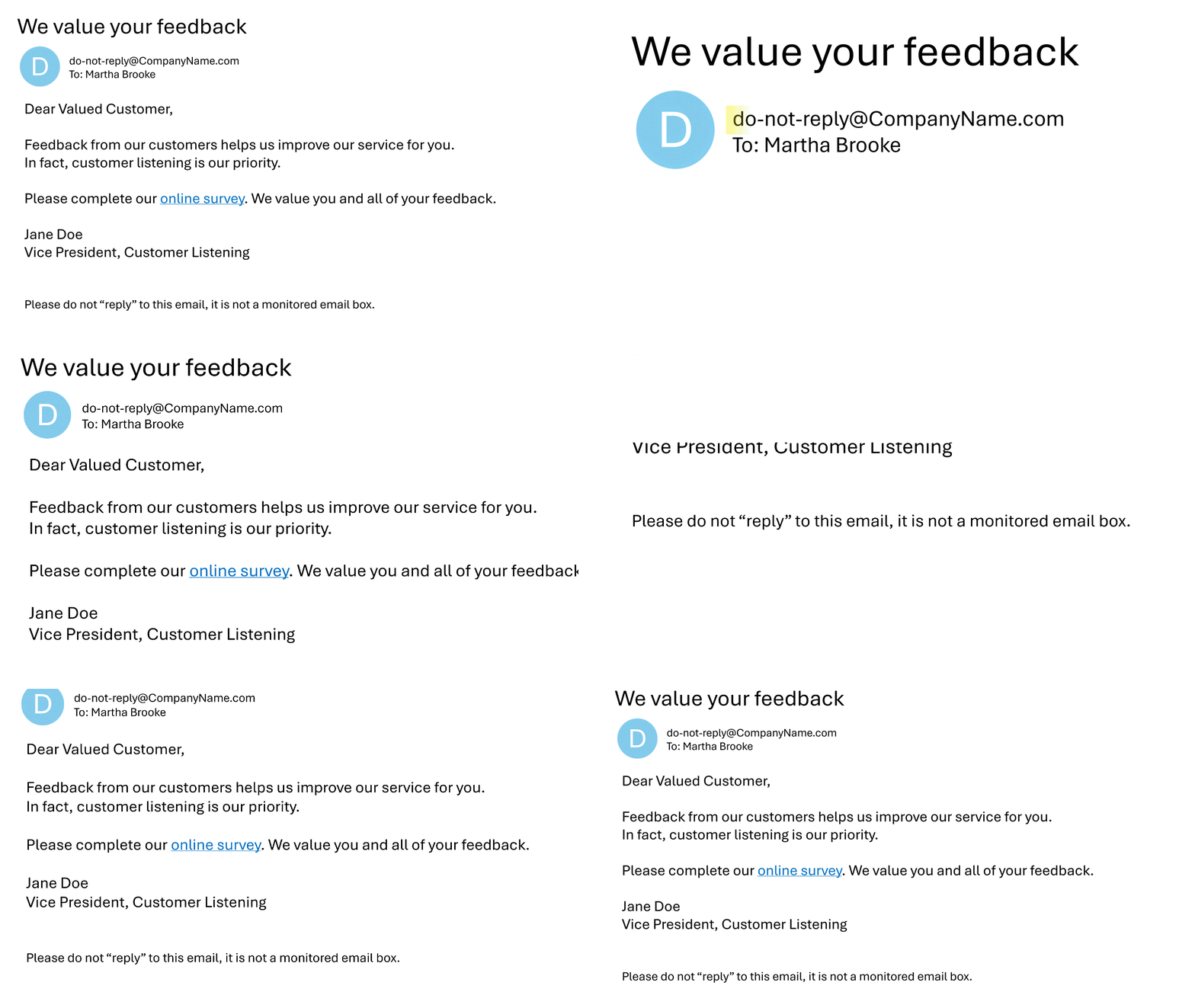
An essential email survey best practice is this: Use a Reply-To email address that actually works. Too many companies send surveys from a Do-NOT-Reply address which frustrates customers and lowers response rate.
Here’s What NOT to do:
Most companies don’t want to collect customer feedback in all its various forms, so they send their survey from a ‘do-not-reply’ platform. The problem is that a Do-Not-Reply Email signals that customer listening is not a priority.
Instead, Use a Real Email that Customers Can Respond To
At Interaction Metrics, we always include a ‘reply to’ address, and we always hear from some customers who want to give feedback but don’t want to take the survey. Additionally, we help our clients keep their databases fresh by capturing the list of auto-replies showing a customer has changed their email address.
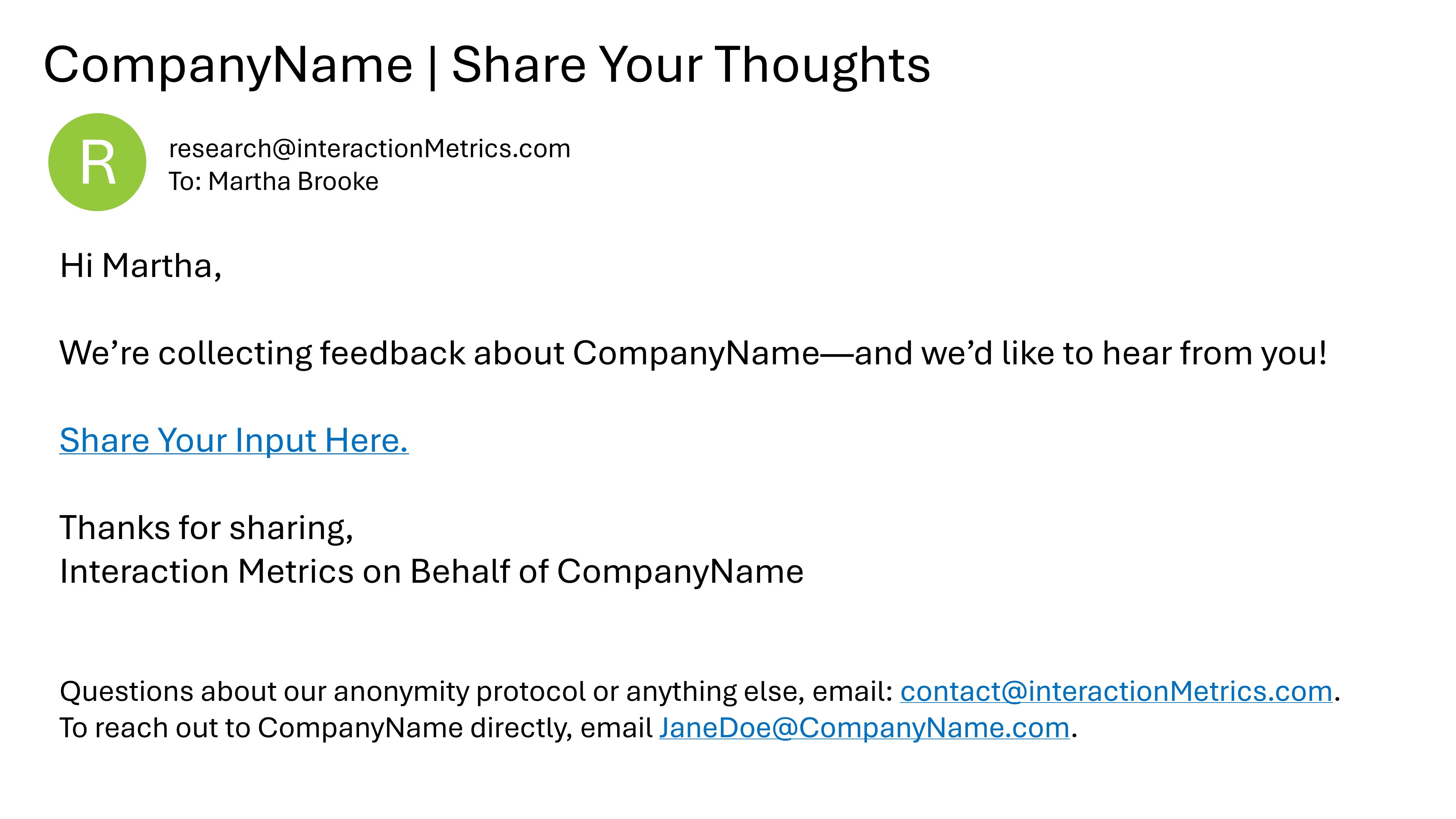
The entire point of your survey is to interact with customers and employees, inviting them to share their thoughts. You want to signal to your customers that you are listening to them and will take their opinions seriously. Listening doesn’t mean that you have to agree with each of your customers’ views, but it does mean that you sincerely want to know how things went and what happened.
Unfortunately, the survey industry is plagued by a ‘worst practice’ that fundamentally undermines surveys as listening vehicles. The worst practice I am referring to is sending surveys directly from a survey platform using a DO-NOT-REPLY email address. While this might be cheap and easy for you, it signals deaf ears that, deep down, don’t value feedback.
Examples of what shows in a DO NOT REPLY email address line are:
- “no reply,” followed by a string of numbers
- (simply) “do-not-reply”
- “no-reply@nameofcompany”
Sometimes, the email address might look like you could reply to it, but then the signature fine print will say, “This is an automatically generated email. Please do not reply.”
Aesthetically, a DO-NOT-REPLY email communicates you don’t want to interact and that your priority is to send surveys, but the listening part is not necessarily your concern.
Functionally, DO-NOT-REPLY means you won’t hear from customers who want to share their opinions outside your survey. With any survey, at least some customers have meaningful things to say but don’t feel that a survey is the best way for them to share what’s at the top of their minds.
Furthermore, if you use a DO-NOT-REPLY address, you’ll fail to capture the list of customers who have a new role with a new address such that the email is automatically returned.
Email Survey Best Practices Have Outsized Impact
At Interaction Metrics, we use a real email address that customers can respond to because that IS the email survey best practice.
How do we do this? The back end of our surveys incorporates engineering logistics to link survey platforms (we use Qualtrics, Alchemer, and others) with an email platform.
Basically, we’ve created a mini-survey software stack that results in the best email practice for our clients.
The benefits are not just that we can do more listening; we’re also able to compile a complete list of incorrect email addresses and recently changed email addresses.
This helps our clients keep their databases fresh.
Plus, it drives a higher response rate because, from the outset, we’re signaling that we care. Screaming at customers with an all-caps DO-NOT-REPLY email address is distancing and impersonal.
Surveys that Stand Out from the Clutter
Email survey best practices may seem like a small thing, but they make a huge difference. Think of it this way.
If you have a door that is ¼ inch off, it’s a pretty small thing. Nevertheless, your door won’t open properly. Same thing with email survey best practices. Small things can have outsized importance that affect your response rate and that influence how customers perceive the authenticity of your customer listening.
================================================
Interaction Metrics builds scientific surveys that result in decisive outputs and actions. Interested in more detail about email survey best practices? Get in touch!
================================================
The post Email Survey Best Practices appeared first on Interaction Metrics.
]]>Read more
The post How to Increase Customer Retention: 15 Proven Strategies That Work appeared first on Interaction Metrics.
]]>What Is Customer Retention and Why Does It Matter?
Customer retention may sound like business jargon, but really, it’s just the art of keeping your customers happy enough that they stick around.
Think about your favorite coffee shop. Maybe they offer you a punch card where you earn a free coffee after ten purchases. That’s customer retention at work—using incentives and positive experiences to keep you coming back.
Customer retention matters because keeping your customers is easier than chasing new ones. When you look at how quickly advertising costs, introductory offers, sales pitches and tools add up, acquiring a new customer typically costs way more than retaining an existing one.
But why?
Because your existing customers have already said “yes” to your brand at least once.
If you keep them smiling, they’ll keep saying yes, without the need for costly courtship.
And the payoff is massive. According to Harvard Business Review, bumping up your retention by just 5% can boost profits by 25% to 95%. That’s a huge return on investment for simply treating customers a little better.
Plus, loyal customers do more than just give you their money. They often become your best marketers, recommending you to friends, posting reviews, and championing your brand. That’s powerful, free advertising you just can’t buy.
You can easily track retention using your customer retention rate—the percentage of customers who stay with you over a given time period.
But if it’s low, what can you do to improve it?
At Interaction Metrics, our approach to increasing customer retention is informed by the real problem with most customer feedback surveys: they’re impersonal, ineffective, and often ignored. Unlike the typical survey approach, our surveys are built on three key principles: reciprocity, real listening, and scientific rigor.
If you’re ready to genuinely listen to your customers and turn their insights into lasting loyalty, contact us to learn more about how surveys built with our key principles in mind boost your customer retention. For specific strategies you can use, keep reading.

The Psychology Behind Retaining Customers
Now that you understand why customer retention matters, let’s take a step back and explore the psychology behind it. This is what allows you to build deeper connections and boost customer loyalty with your buyers.
At its core, customer retention taps into basic human nature. If you can understand what makes people tick, you can keep your customers loyal without breaking the bank.
First, let’s talk reciprocity. This is a way of saying that when you do something nice for your customers, they’re likely to do something nice in return.
It’s why your local ice cream shop offers you a free scoop after 10 visits. By rewarding you, they’re subtly encouraging you to keep coming back.
Then there’s social proof. People naturally follow the crowd. If everyone’s talking about a particular restaurant or a hot new product, you’ll probably want to check it out, too. Why? Because when you see 500 other people loving a product, you’re more likely to love it too, and stay loyal to the brand.
Finally, don’t underestimate emotional connection. Brands that make you feel something (like excitement, comfort, or belonging) are the ones you stick with. Think about why people line up for the latest Apple product. It’s not just technology; it’s about feeling part of something special.
When you understand these simple psychological principles, customer retention boils down to creating genuine connections and memories.
It’s about making customers feel valued, understood, and emotionally invested in your brand.
15 Proven Customer Retention Strategies
Below are 15 strategies that leverage these psychological principles to help you increase customer retention and turn you into an expert.
1. Personalize Customer Interactions to Boost Customer Satisfaction
Ever get a birthday email from your favorite store? Or have Amazon suggest a product that’s exactly what you wanted, even though you didn’t realize it yet?
That’s personalization in action. And it works.
People crave feeling seen and understood. When your brand takes the time to learn about each customer’s preferences, it feels special. It’s like the difference between getting a generic birthday card versus a handwritten note from your best friend.
Here are some easy ways you can personalize customer interactions:
- Use customer data to offer tailored recommendations (think Netflix’s personalized viewing suggestions).
- Address customers by name in emails and messages.
- Celebrate milestones like anniversaries or repeat purchases with personalized messages or special deals.
The more personal you get (without being creepy, of course), the stronger your customers’ emotional connection becomes.

2. Use Customer Feedback Effectively
Here’s the truth: most customer surveys are terrible, and most companies aren’t using them properly. You fill one out, send it off, and never hear about it again. That’s as ineffective as it is annoying and wastes your customers’ time.
But when done right, customer survey feedback is pure gold. It helps you spot problems early, seize opportunities, and shows customers you genuinely care about their experience.
At Interaction Metrics, we believe surveys must meet three key standards:
- Reciprocity: Respect your customers’ time by clearly showing that their feedback leads to actual improvements or rewards.
- Real Listening: Actively engage with customer responses, and don’t treat surveys as a one-way street.
- Scientific Rigor: Make sure your surveys aren’t biased and that your data is genuinely meaningful, not just flattering.
When customers see their feedback making a real difference, their loyalty grows exponentially. So, ditch the meaningless surveys. Instead, listen carefully, respond genuinely, and make changes based on what customers really want.
3. Create Exceptional Onboarding Experiences
Think about your first day at a new job. A warm welcome and clear guidance set you up to succeed.
The same idea applies to onboarding customers. First impressions really do matter. Use the tips below to create a smooth onboarding experience for every customer.
- Clearly guide new customers through their first interaction: Help customers feel comfortable by giving simple, clear steps during their first experience. Don’t assume they’ll figure it out—show them exactly what to do and where to go next.
- Use friendly check-ins to ask if they need help: Sending a quick email or chat message saying “How’s everything going?” shows you genuinely care. These brief touches make customers feel supported and heard.
- Anticipate common questions and provide proactive answers: Customers appreciate it when you proactively answer their questions before they even think to ask. It saves them time and makes you look attentive.
Slack does this exceptionally well. New users get clear, friendly prompts and helpful tips as they navigate the platform, ensuring they never feel overwhelmed or lost during their first interactions.

4. Deliver Prompt, Empathetic Customer Support
We’ve all had frustrating experiences with robotic customer support. Great customer support feels human: it’s fast, genuine, and personal.
When a company provides great customer service, this is how they do it:
- Respond fast—within hours, not days: Fast responses make customers feel respected and valued. Quick solutions reduce frustration and boost satisfaction significantly.
- Empower support teams to solve issues creatively: Allowing your team freedom means customers get faster solutions that solve their actual problems. Empowered employees create happier customers.
- Use real conversations, not scripts, to empathize genuinely: Genuine conversations build trust. Customers notice when you’re authentically engaged versus reading canned responses, and it makes a huge difference.
Zappos sets the standard by empowering their team to genuinely delight customers.
They’ve even sent pizzas to customers having a rough day—something customers remember and reward with continued loyalty.
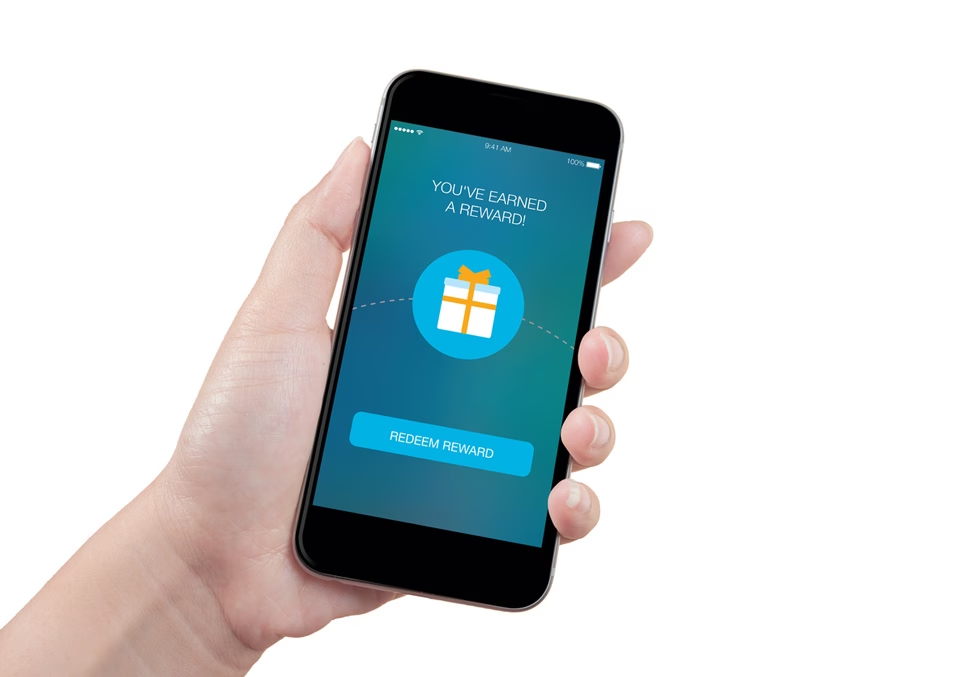
5. Develop Reward and Loyalty Programs
Loyalty programs aren’t just about offering punch cards or reward points (although sometimes, they can be). They’re really meant to create excitement that keeps customers engaged.
There’s tons of room for creativity when you offer a loyalty program. Here are some common rewards models you can consider offering to your customers:
- Points-Based Rewards Programs: Points accumulate toward free or discounted items to motivate repeat business (Starbucks does this brilliantly through their My Starbucks Rewards program).
- Tiered Rewards: Customers earn status as they make more purchases. As their status increases, they unlock increasingly valuable perks. These incentivize them to stay loyal. Airlines and hotels use this strategy all the time.
- Surprise Rewards: Unexpected gifts, discounts, or bonuses create memorable experiences that customers can’t wait to take advantage of.
Loyalty programs work because they tap into the principles of psychology mentioned earlier. People love feeling special and rewarded. And when you build a good loyalty program, customers feel truly valued.
6. Provide a Seamless, Easy Customer Experience
The simplest truth about retaining customers is that it needs to be easy for them to buy. Really easy.
A confusing or frustrating experience sends customers running to competitors, no matter how good your product is.
Here’s how to make sure your customer experience is seamless:
- Keep your checkout process ridiculously simple: Customers want buying to be effortless. Amazon’s one-click checkout revolutionized online shopping because it removes friction.
- Clearly communicate your pricing, shipping, and return policies: Transparency builds trust. Customers appreciate clear information upfront, especially when it eliminates doubts and unpleasant surprises (like expensive return shipping) down the line.
- Regularly test your website or app for speed and ease of use: Small glitches cause frustration and lost sales. Regularly test your site to make sure it offers a smooth experience with as little friction as possible.
7. Make Returns and Refunds Easy and Transparent
Customers love a good return policy, but it’s also great marketing. It makes people confident to buy, knowing they won’t be trapped if things go wrong.
Make sure you offer a simple and transparent return policy. Here’s how:
- Clearly display your refund and return policies on your website: Customers should easily find and understand your policies. Clear communication removes anxiety about purchasing decisions.
- Make returns by providing prepaid shipping labels: Customers dread the hassle of returning items. But they hate the idea of having to pay for returns even more. Removing friction from returns earns loyalty and encourages repeat purchases.
- Process refunds quickly and communicate proactively: Quick refunds show buyers that you stand behind your products and are willing to work with them to make sure they’re satisfied customers.
Nordstrom built their entire reputation around easy returns, even accepting items without receipts. Customers return repeatedly because the process feels fair, easy, and respectful.

8. Build a Community Around Your Brand
More often than not, great brands have great communities behind them. Here’s how to create a community around your brand:
- Set up online spaces like groups, channels, or forums: Provide dedicated spaces where customers can engage, interact, and support one another. Connections with other users help customers understand everything your product or service is capable of, and make them reluctant to leave your brand.
- Host exclusive events, Q&A sessions, or live chats: Exclusive experiences create excitement and encourage customers to become active community members who feel like insiders. If you create high-quality content that offers lots of additional value, customers are more likely to stick around and take advantage of them.
Look at Peloton. They created a product, but they also built thriving communities where users can compete and interact with one another. Their customers stick around because they don’t want to lose access to the community.
9. Align Your Brand’s Values with Customers’ Values
Today’s customers choose brands that reflect their values. Taking clear, meaningful stands on issues your customers care about creates lasting emotional connections.
- Clearly communicate your brand’s values: When customers clearly see what you stand for, it helps them align their own values with your brand, fostering deeper loyalty. The about page of your website is a great place to do this.
- Back up messaging with genuine action: Customers quickly see through empty promises. If you say your company will do something, put your money where your mouth is. Actions that reflect your stated values show your customers you’re there to make a difference, not just a quick buck.
Patagonia does a great job of this. The company openly advocates for environmental causes and takes action their customers believe in. Customers who share those values passionately will continue to buy from Patagonia because they see alignment between their personal goals and the company’s.
10. Implement a Referral Program
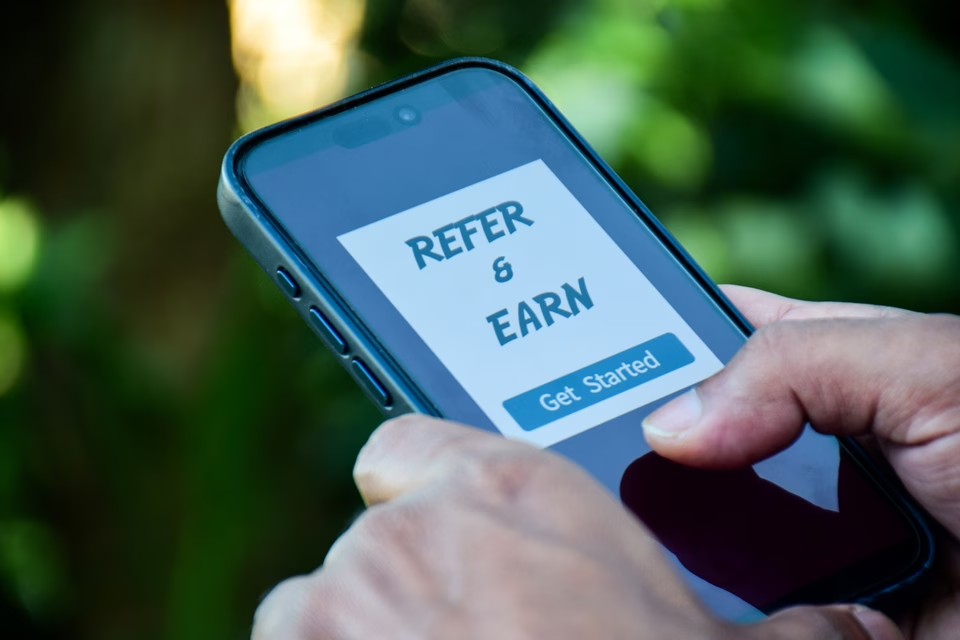
Word-of-mouth marketing is just as effective (if not more effective) than advertising. Referral programs harness customer trust to create a self-sustaining cycle of growth and loyalty. Here are a few tips to implement your own referral program:
- Make referring simple (share buttons, referral codes): Simplify referrals so customers can actively promote your brand without feeling burdened by complex processes. Add one-click social media share options to product pages, blog posts, and press releases on your website.
- Offer compelling rewards for referrals: Motivating customers with meaningful incentives (discounts, perks) turns them into brand advocates. You can offer discounts, credits, or cold, hard cash rewards for referring friends and family.
- Regularly remind customers about the program in fun ways: Nobody can take advantage of a rewards program if they don’t know it exists. Send reminders via email to keep your program top-of-mind without being pushy, and watch as steady new referrals roll in.
Dropbox rapidly expanded by offering free storage to customers who referred friends. It’s easy, rewarding, and it motivates customers to continue referring friends and family to Dropbox.

11. Provide as Much Value as Possible
Customers keep returning to brands that consistently provide extra value. Offering more than just your product, like tips, insights, or education, creates deeper loyalty.
- Offer helpful guides, blogs, or videos: Practical resources enhance customers’ lives, making them appreciate your brand far beyond individual products. Create content that actively helps them solve the problems they’re facing right now.
- Share exclusive industry insights: Giving customers insider knowledge creates a feeling of privilege and reinforces their loyalty. Especially when it’s an actionable insight that helps them make more money.
Look at HubSpot as an example. They regularly publish valuable free resources, and customers use them all the time.
12. Offer Exclusive Deals and Early Access
Everyone loves feeling special. Exclusive offers or early access create excitement and foster customer loyalty by giving them something others don’t have.
Try providing early access to sales or products. Customers appreciate feeling like insiders who see things before everyone else.
You can also offer exclusive discounts for repeat customers. Special pricing not only incentivizes repeat business but also makes loyal customers feel rewarded and appreciated.
Finally, you can create limited-time, exclusive offers to build urgency. Urgency and exclusivity make offers feel exciting and special, and often push customers to take immediate action.
13. Celebrate Customer Successes and Milestones
Recognition strengthens relationships. Celebrating milestones like birthdays, anniversaries, or loyalty achievements makes customers feel valued personally. Here are a few ways your company can celebrate your customers:
- Send personalized messages or small gifts: Small gestures like personalized notes or tokens of appreciation create memorable connections.
- Publicly recognize loyal customers: Highlighting customers publicly (social media shoutouts, customer spotlights) makes them feel celebrated and recognized, fostering deeper loyalty.
- Reward loyalty milestones with surprises: Offering surprises for anniversaries or key milestones reminds customers how valued they truly are.
Spotify’s yearly “Wrapped” campaign is a great example of this. The program summarizes each user’s listening habits throughout the year and gamifies the listening experience. Users can see how much they listened to their favorite artists, how their tastes change throughout the year, and where they rank in each artist’s list of top listeners.
It’s a subtle yet powerful way to celebrate the time users spent listening in the app, but it also creates a sense of competition that makes them want to stick around for more.
14. Leverage Technology to Anticipate Customer Needs
Customers love it when brands anticipate their needs. It makes interacting with a company feel thoughtful and intuitive.
The easiest way to keep your customers feeling well cared-for is to use technology to predict their needs.
- Use analytics to predict future interests: Predictive analytics allows you to proactively suggest products or services, impressing customers with your insightfulness.
- Use CRM tools to identify churn risks early: Technology helps identify at-risk customers so you can proactively reach out and address concerns before they leave.
- Use automation to proactively offer help: Automated alerts or reminders can make your customer interactions feel personal and timely, and improve the overall experience for your customers.
Netflix is the perfect example. They use sophisticated algorithms to anticipate user preferences, which is what allows them to recommend movies you’ll love that you’ve never heard of!
15. Prioritize Employee Satisfaction
It’s simple: employees who feel valued and supported naturally provide better service and create stronger customer relationships.
In other words, happy employees create happy customers.
Invest in regular training and growth opportunities for your team. Employees who continuously learn and grow feel happier and provide better customer experiences.
For the same reason, you should empower your employees to solve problems independently. Reducing red tape and allowing your team autonomy to make customer-focused decisions improves service speed and customer satisfaction.
A great workplace culture makes employees feel valued, which translates directly into higher-quality customer experiences.
Key Metrics to Calculate Your Customer Retention
Before diving into the strategies, let’s get familiar with three key metrics that’ll show you exactly how well you’re doing when it comes to keeping customers happy.
Customer Retention Rate (CRR)
First up is the customer retention rate. This basically lets you calculate the number of customers you’re holding onto over a certain period.
Here’s the super-simple formula:
Customer Retention Rate = [(Customers at end of period – New customers during period) / Customers at start of period] × 100
Let’s say you started January with 100 customers, added 20 new ones, but ended the month with 90 customers total. Your retention rate would look like this:
(90 – 20) ÷ 100 × 100 = 70%
Not bad, right? Tracking your CRR regularly lets you see clearly if your retention strategies are working or if there’s room for improvement.
Customer Lifetime Value (CLV)
Next, we have customer lifetime value—or as we like to call it, “the big-picture metric.” CLV measures the total value each customer brings to your business during the entire time they’re your customer.
Here’s why CLV matters: Not all customers are equal. Some may spend small amounts often; others may spend big but rarely. Knowing your customers’ lifetime value helps you identify who your most profitable customers are—and how to keep them happy.
To calculate a simple version of CLV:
CLV = Average purchase value × Purchase frequency per year × Average customer lifespan
If your average sale is $50, your customers buy from you four times a year, and stick around for about five years, your CLV would be:
$50 × 4 × 5 = $1,000 per customer
This number shows why retention pays off: each customer you retain has a substantial long-term impact on your business.
Net Promoter Score (NPS)
Finally, let’s talk about Net Promoter Score. This score tells us, “How likely are your customers to recommend you to a friend?”
You’ve probably filled out a survey like this: “On a scale from 0 to 10, how likely are you to recommend us?”
Customers answering 9 or 10 are “promoters“—your biggest fans.
Those giving 7 or 8 are “passives” (indifferent), and anyone below that are “detractors,” who might even actively discourage others from buying from you.
Your NPS is calculated as:
NPS = % Promoters – % Detractors
A high NPS usually means you’re doing a great job keeping customers satisfied. A low NPS suggests something’s off, and it’s time to dive deeper into customer feedback.
By regularly tracking these three key metrics—Customer Retention Rate, Customer Lifetime Value, and Net Promoter Score—you’ll have a clear, actionable view of your retention efforts. And that’s how you set yourself up for success!
Next, we’ll explore specific, proven strategies to help you improve these metrics and turn more customers into lifelong fans. Ready? Let’s dive in!
Common Mistakes Companies Make When Trying to Retain Customers
Retention isn’t just about what you do right—it’s also about avoiding common pitfalls. Often, companies lose customers because they unintentionally overlook simple but critical factors.
Ignoring Customer Feedback
One of the biggest mistakes is ignoring customer feedback. When customers take the time to provide insights, failing to act—or even acknowledge their comments—sends a damaging message. It tells your customers that their opinions aren’t valued, leaving them feeling neglected. Showing genuine interest in their input, by contrast, builds trust and loyalty.
Sending Too Many Messages
Another common misstep is overwhelming customers with irrelevant or overly frequent communications. No one likes feeling bombarded. Sending customers constant emails, offers, or notifications that don’t align with their interests creates frustration and fatigue. Communication should feel thoughtful, personalized, and valuable—not generic or intrusive.
Treating Customers as Data Points
Finally, treating customers as transactions rather than as individuals damages retention significantly. Customers immediately sense when they’re viewed solely as a source of profit. Genuine, personal interactions strengthen relationships, creating an emotional connection that encourages ongoing loyalty.
Tools and Technologies to Help Increase Customer Retention
Improving your retention doesn’t require reinventing the wheel. Leveraging the right tools and technologies makes creating loyal customers simpler and more effective:
- CRM Software (Salesforce, HubSpot): CRM systems organize and manage customer interactions, allowing you to personalize communication effectively. You can track past purchases, preferences, and even predict future needs, all in one convenient location.
- Analytics Tools: Predictive analytics allow you to anticipate customer behavior and needs before they occur. Tools like Google Analytics or Mixpanel provide insights into how customers engage with your brand, empowering you to proactively address potential problems or opportunities.
- Interaction Metrics’ Scientifically Rigorous Surveys: Customer feedback surveys can dramatically enhance your retention—if they’re done correctly. Interaction Metrics creates surveys rooted in reciprocity, real listening, and scientific rigor. Unlike typical surveys, ours deliver actionable insights that genuinely improve your customer relationships.
Utilizing these tools equips you to understand your customers deeply and respond effectively, significantly boosting your customer retention.
How to Increase Customer Retention and Grow Your Business with Interaction Metrics
Boosting your customer retention is absolutely essential for long-term success. Keeping your existing customers engaged and happy directly translates into higher profits, lower churn, and sustained growth.
That’s where Interaction Metrics can help. Our scientifically rigorous surveys take customer feedback to the next level, providing clear, actionable insights that fuel loyalty and retention. Unlike ordinary surveys, ours are built on three essential standards: reciprocity, real listening, and robust, meaningful data.
If you’re ready to turn casual buyers into devoted customers, Interaction Metrics is your go-to partner. Let’s work together to create lasting relationships that grow your business sustainably and profitably. Schedule a call today to explore our scientifically designed surveys.
Frequently Asked Questions About Customer Retention
What exactly does customer retention refer to?
Customer retention refers to your ability to keep customers coming back after their initial purchase.
Why is customer retention important for businesses?
Customer retention matters because it’s cheaper and more profitable than constantly acquiring new customers.
What is considered a good customer retention rate?
Typically, anything above 70-80% is good, but it varies by industry. Improving your own historical rates matters most.
How can I accurately measure customer retention?
Use this formula:
(Customers at period end – New customers gained) ÷ Customers at period start × 100 = Retention Rate (%)
What factors lead to poor customer retention?
Poor customer service, unmet customer expectations, and not addressing complaints promptly all cause churn.
How does exceptional customer service impact retention?
Great service exceeds expectations, turning customers into repeat buyers and enthusiastic promoters.
Can customer education help improve customer retention?
Absolutely! Educated customers experience fewer frustrations, directly improving long-term satisfaction and loyalty.
What role does a strong customer community play in retention?
Community builds emotional connections, making customers reluctant to leave your brand.
How can mapping the customer journey help improve retention?
It lets you identify and fix points of friction, creating smoother, happier customer experiences.
=================================
Let’s discuss how to increase customer retention.
=================================
The post How to Increase Customer Retention: 15 Proven Strategies That Work appeared first on Interaction Metrics.
]]>Read more
The post The Best CX Software Of 2025 appeared first on Interaction Metrics.
]]>Just as customer satisfaction surveys reveal gaps in happiness, the right customer experience software bridges them; It helps you meet customers where they are and deliver personalized support every step of the way.
Today’s rising CX demands mean AI, omnichannel engagement, and deep personalization are no longer “nice-to-have” in your customer data platform—they’re essential features that any software worth its salt will include.
But even the flashiest software fails if it drowns you in meaningless data or frustrates customers with yet spammy survey invitations from do-not-reply addresses.
That’s why at Interaction Metrics, we help companies cut through the noise and make meaningful improvements in the customer experience. We reject the industry’s obsession with survey spam and vanity metrics—and instead champion CX tools that:
- Respect customers’ time
- Turn feedback into dialogue
- Analyze data with scientific rigor
We’ve seen firsthand how selecting the best customer experience management platform for your company’s needs can transform brand loyalty, reduce support costs, and build long-term customer trust.
In this guide, we’ll walk you through our favorite customer experience platforms that deliver on these promises in 2025 so you can boost loyalty, and build trust.
What Is CX Software?
Many people think of customer experience (CX) software as just another dashboard portal that lets you view customer experience data. But really, it’s the engine that drives improvements in the customer experience.
By analyzing feedback across every channel—surveys, social media rants, support calls, and even subtle shifts in app behavior—you can use CX software to uncover what customers really want.
Think of great CX software as a truth-teller: it lets you spot friction in real time, personalize interactions, and turn existing customers into die-hard fans.
Sounds like a CRM, right? Close, but not quite.
- CRM (customer relationship management): Primarily focuses on managing customer experience from a sales or support angle—tracking leads, storing customer data, and logging customer communication for future reference.
- CX software: Digs deeper into analyzing customer feedback, pinpointing customer pain points, and orchestrating improvements across all channels—not just at the lead or deal stage. It’s more about optimizing experiences and customer loyalty than organizing contact info and sales pipelines.
In short, the best CX platforms do more than simply report problems—they solve them.
They arm teams with AI-driven insights, automate fixes for common hiccups, and map journeys so seamlessly, that customers forget that the experience is being managed.
That’s why we didn’t just list “the most popular” tools in this article. We hunted for platforms that turn feedback into action and scale with your business.
Why Would You Need CX Software?
Not every company needs customer experience software.
If you have a CX team and are going to be running your own customer surveys, then you’ll want to choose the best software. Keep reading and see our top picks in the list below.
If you don’t have a team focused on customer experience, or you’re not looking to run your own surveys, then customer experience software probably isn’t the answer—instead, consider hiring a customer survey company.
A good customer survey company will be able to:
- Design surveys that get the insights you need
- Already have the best customer experience software—so you don’t need to buy it
That’s where we come in. At Interaction Metrics, we already have the best CX software—and we know how to use it. We have decades of experience in designing surveys to get the information you need, then interpreting the data so that you can take action to improve the customer experience easily.
How We Picked
In order to make the cut, each piece of software on the list needed to include at least 3 out of 5 of the following features:
- Omnichannel listening: Beyond collecting customer feedback from surveys, the best software lets you track every interaction, from heated support calls to subtle shifts in customer behavior on your app. If feedback exists, these tools capture it, turning whispers and shouts alike into actionable insights.
- AI that thinks like your team: We prioritized software that uses AI to spot patterns humans might miss, so you can easily glean insights that might otherwise go overlooked.
- Closed-loop systems: The best customer experience management software lets teams assign tasks, automate follow-ups, and resolve customer inquiries fast. No more “Oops, we missed that email!”—just smoother resolutions and happier customers.
- Journey mapping: We favored tools that visualize every step of the customer experience, from first-click excitement to post-purchase hiccups.
- Scalability and security: Whether you’re a startup or a Fortune 500, your software should grow with you. So we looked for software with data encryption and role-based access capabilities.
We scoured the web for dedicated CX tools that make customer feedback management efficient, insightful, and above all, impactful.
Without further ado, here are our top picks for Customer Experience Management Software in 2025.
Winner: Medallia
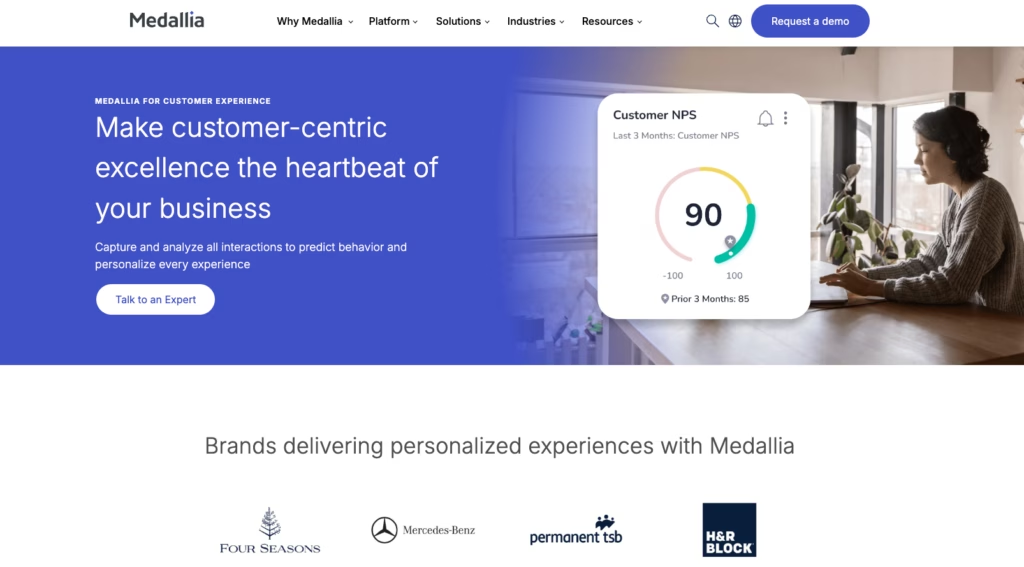
Medallia sits at the forefront of all-in-one enterprise CX because it unifies just about every feedback channel—surveys, social, web, video, call centers, text analytics—into a single, comprehensive platform.
Its AI-powered analytics can handle billions of signals (2 billion conversations analyzed and counting) and support millions of frontline users across 100+ countries. This level of scale makes it invaluable for large enterprises that need to rapidly sift through massive data streams.
At its core, Medallia focuses on real-time insights that reveal overarching sentiment and pinpoint specific touchpoints influencing NPS, CSAT, or loyalty. Notably, it captures video feedback for richer emotional insight—an extra edge in understanding the “why” behind survey scores.
The platform even analyzes employee feedback to tackle service gaps and drive cultural changes that improve both frontline retention and customer satisfaction.
What really sets Medallia apart is its closed-loop action management: real-time alerts, automatic case creation, and intuitive dashboards ensure that no issue slips through the cracks.
Leaders can see exactly where friction points exist, assign owners, and track resolution across thousands of stores or regions.
All these factors make Medallia the strongest end-to-end CX solution on the market—if you have the budget and resources to implement it fully.
Pricing
Medallia uses a complex pricing structure that includes an EDR-based model, where costs depend on the number of data records you process; for specifics and a custom quote, contact Medallia.
Runner Up: Qualtrics XM
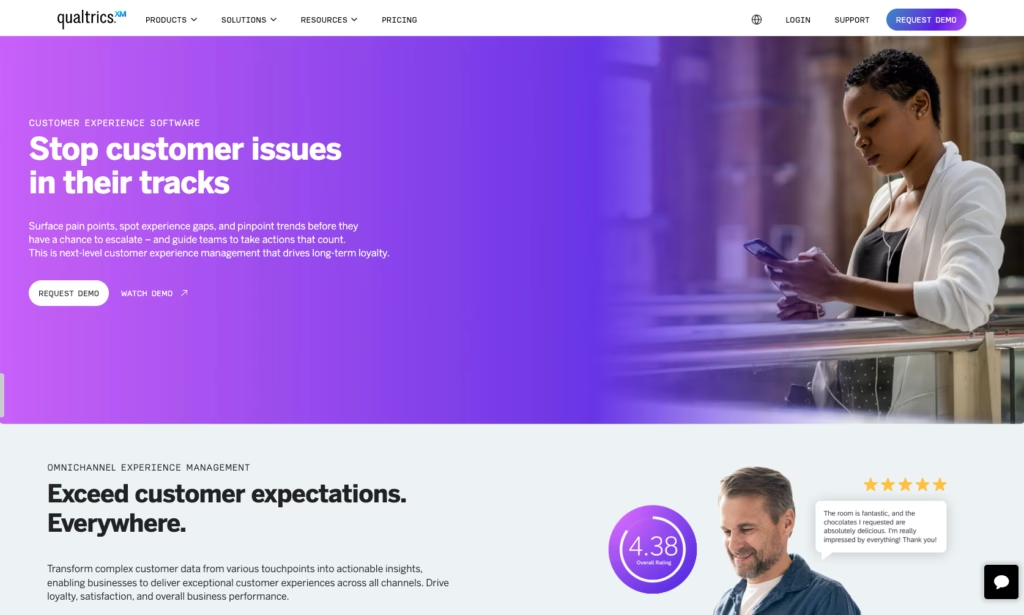
Qualtrics XM is a power tool for measuring all your customer, employee, and market touchpoints across over 20,000 global brands in 100+ countries.
Founded in 2002 (and famously acquired, then re-acquired, in multi-billion-dollar deals), Qualtrics has analyzed billions of conversations and supports 3 million frontline users, showcasing how it scales to meet enterprise-level needs.
Its AI-driven insights and broad feature set—including dedicated suites for customer experience, employee engagement, and advanced market research—give large organizations the real-time data to make big decisions fast.
If you have complex feedback channels, want a single, scalable hub for surveys and analytics, and have the budget to match, Qualtrics XM delivers. Just be aware of the steep learning curve that accompanies such a robust platform.
Pricing
Full XM solutions require custom quotes—to learn more, contact Qualtrics for exact pricing.
Honorable Mentions
While these platforms didn’t snag our top spots, they’re far from benchwarmers. Each excels in niche areas—think razor-sharp social listening, hyper-scalable contact centers, or AI that predicts customer needs before they’re spoken.
They might lack the end-to-end polish of our winners or cater to narrower use cases, but if your priorities align with their superpowers, they’re worth a closer look.
Genesys Cloud CX
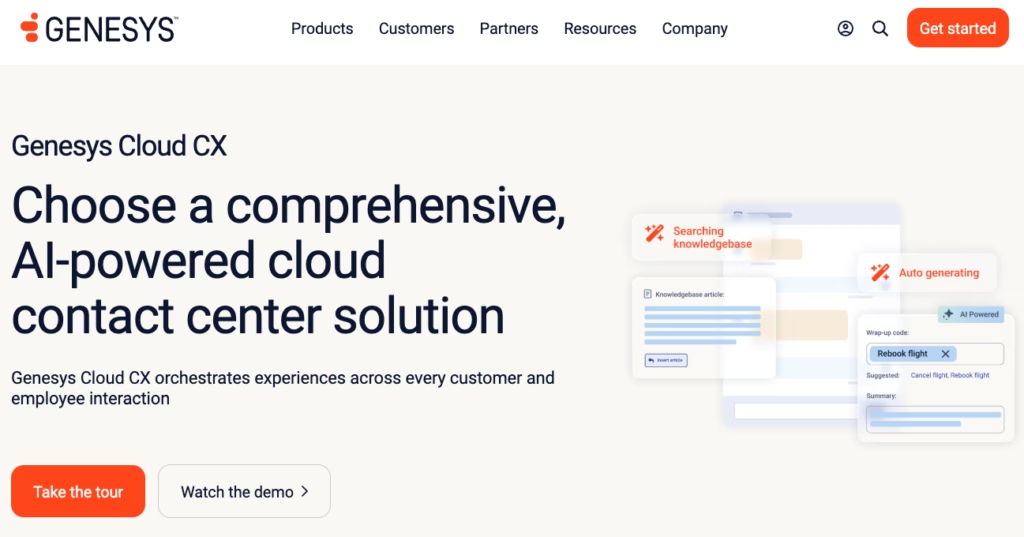
Genesys Cloud CX is a contact center workhorse built for mid-sized organizations that need a powerful, AI-infused solution.
With over 7,500 customers in 100+ countries, it unifies voice, email, chat, text, and social under one roof.
The platform continuously innovates, rolling out 400+ new features annually, and even offers AI Experience tokens so you can add AI-driven capabilities without extra infrastructure.
If you’re juggling multiple channels and need advanced routing plus workforce management, Genesys Cloud CX is a strong contender that easily scales with your team.
Pricing
Plans start at $75/user/month for the basics (voice, IVR, AI), rising to $155/user/month for advanced AI and workforce engagement. For a full quote, contact Genesys directly.
Sprinklr
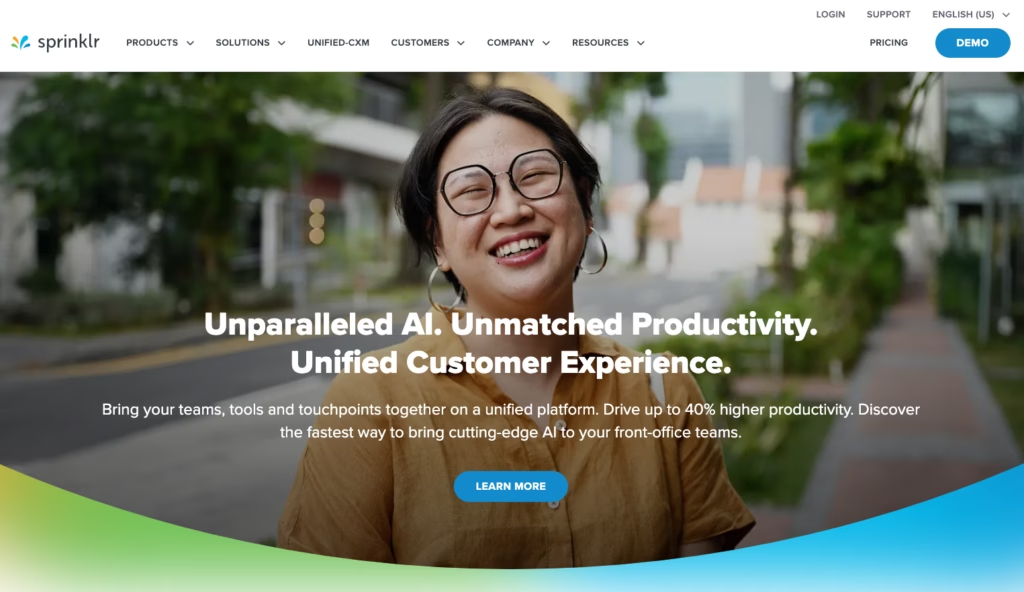
Sprinklr is a unifying force for social, chat, email, and SMS interactions.
With AI annotation refined over five years, Sprinklr can handle 23 social channels and 11 messaging channels. This makes it ideal for maintaining brand consistency, providing 24/7 customer care, and launching effective social marketing campaigns at scale.
If you need an integrated approach to marketing, service, and insights complete with dedicated product suites (Service, Social, Insights, and Marketing), Sprinklr is your everything-in-one-place solution.
Pricing
Sprinklr typically provides custom, enterprise-focused quotes; prices can start high, so contact Sprinklr for a tailored plan if you’re ready to invest in centralized CX management.
NICE CXone
NICE CXone is a cloud-based contact center solution that merges voice, email, chat, and social channels under one AI-driven umbrella, trusted by 25,000+ organizations (including 85 of the Fortune 100) across 150 countries.
NICE CXone uses Enlighten AI to automate routine tasks, predict customer needs, and give agents real-time guidance to agents.
If your contact center requires omnichannel coverage, built-in workforce management, and advanced security (GDPR, HIPAA, PCI DSS), NICE CXone stands out as a scalable choice for handling high volumes of interactions.
Pricing
Plans generally start around $71/user/month and can reach $209/user/month based on usage and features. Contact NICE to get a custom quote for your exact needs.
InMoment
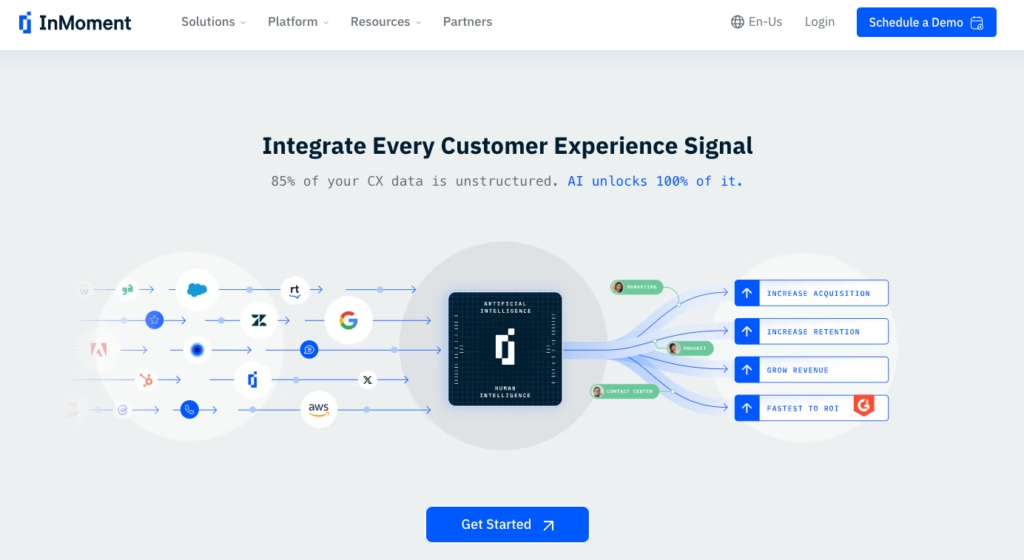
InMoment transforms unstructured, multi-channel feedback into quick, actionable insights, that slash ROI timelines down to about half the industry norm.
Trusted by 1,000+ global brands (including Foot Locker and Jack in the Box), it uses an in-house LLM to unify surveys, social media, call logs, email, and chat transcripts in one place.
If you’re wrangling multi-channel feedback and need AI-driven analysis to highlight high-priority issues, InMoment is a prime option for mid-sized to large enterprises aiming for rapid, data-driven CX transformations.
Pricing
InMoment’s rates are customized for each organization’s data volume and features. Contact InMoment to schedule a demo and get a tailored quote.
Forsta (Formerly Confirmit + FocusVision)
Forsta (formed after the merger of Confirmit and FocusVision) helps global brands like eBay unify customer feedback data from surveys, video interviews, and social media.
Its AI spots trends quickly and efficiently, and can reduce manual work by 75%. Teams can use predictive alerts to fix issues before they escalate and dashboards that sync with enterprise tools like Salesforce.
Forsta is ideal for companies that need guidance. They have a dedicated team that helps design surveys and strategies. Recognized as a leader by Gartner, it’s built for complex, global operations.
Pricing
Contact Forsta directly for custom pricing based on your business needs. Learn more at the Forsta website.
Alida
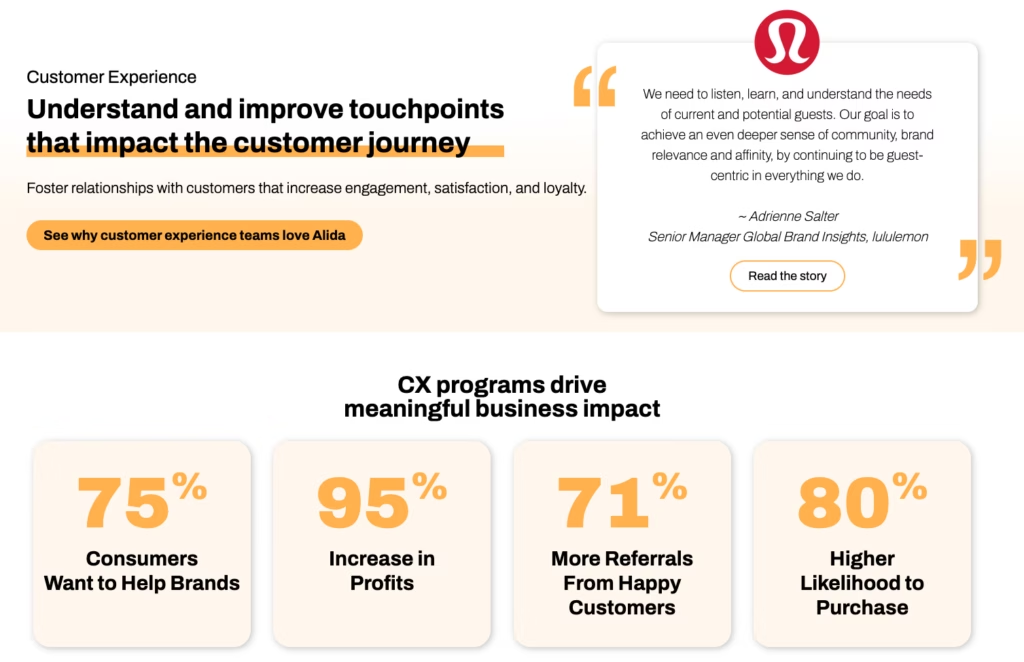
Alida focuses on turning customer conversations into actionable insights. Brands like Foot Locker use its Active Listening® tool to gather 2.4x more feedback via chatbots and social media.
The platform’s AI automates analysis, which frees teams to focus on implementing high-impact fixes. Real-time dashboards highlight urgent issues while community-building tools foster loyalty.
Alida is praised for fast results, with clients often reporting positive ROI in 12 months or less.
Pricing
Contact Alida for custom pricing tailored to your business. Learn more at Alida’s website.
Verint Experience Cloud
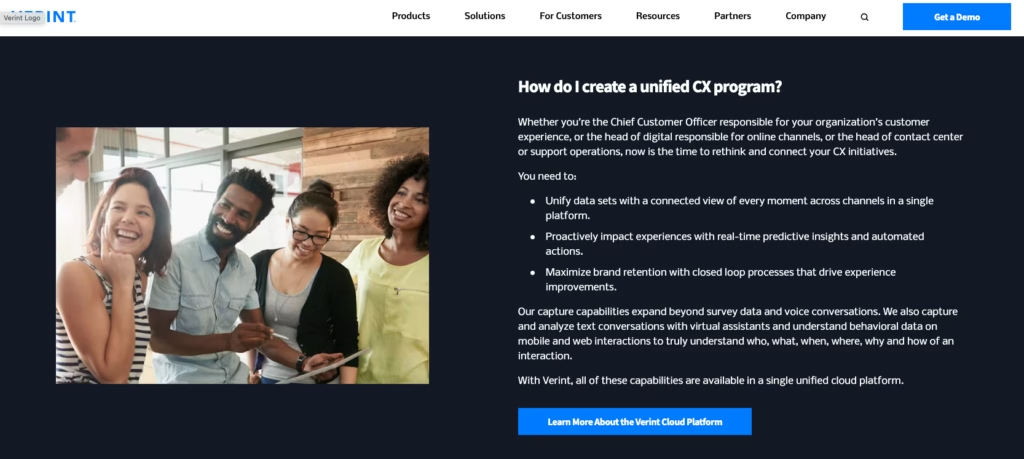
Verint helps regulated industries like healthcare and finance unify customer data from calls, chats, surveys, and apps.
It bridges older on-premises systems with modern cloud tools, which makes it ideal for organizations transitioning gradually to the cloud.
The platform’s AI automates 40% of repetitive tasks (like call transcriptions), so agents can focus on resolving issues. It also includes predictive analytics that spots customers at risk of leaving and identifies upsell opportunities.
Verint meets strict compliance standards (GDPR, HIPAA) and scales for large enterprises. Recognized as a leader by IDC, it’s trusted by Fortune 100 companies for secure, flexible CX transformation.
Pricing
Custom plans for hybrid cloud and compliance needs. Learn more about Verint and their solutions on their website.
Cisco Webex Experience Manager
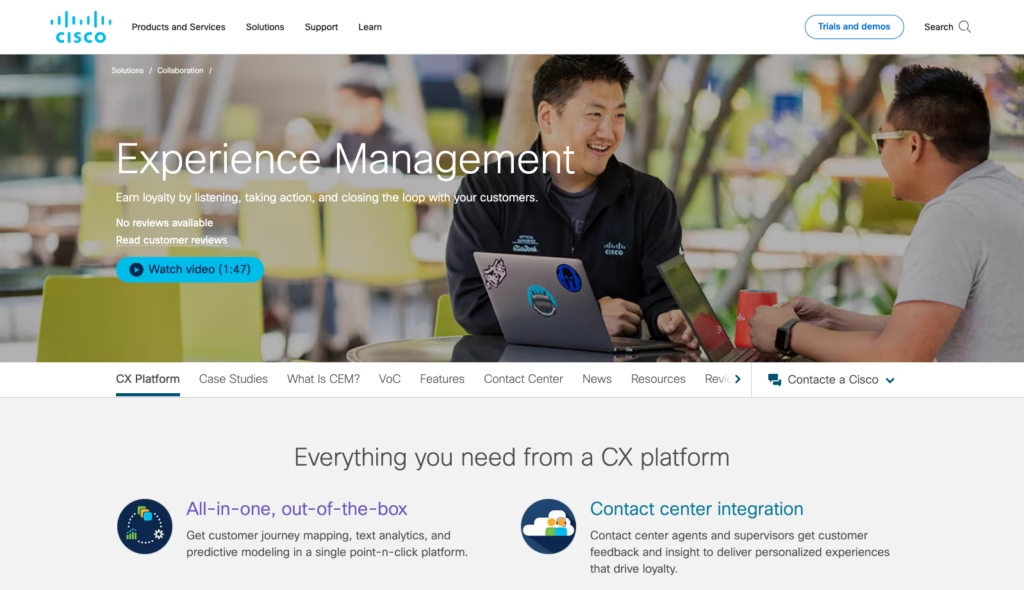
Cisco Webex Experience Manager (formerly CloudCherry) is a hybrid CX platform that bridges on-premises systems and cloud-based AI, built for enterprises entrenched in Cisco’s ecosystem (e.g., Webex Contact Center).
It integrates inline post-call surveys, voice-of-customer analytics, and collaboration tools to unify data from 30+ channels.
Its hybrid model lets businesses in regulated industries retain legacy infrastructure while deploying AI-driven sentiment tracking. This reduces the need for manual analysis by 60% and in some cases, can boost NPS scores by 10+ points in as little as 6 months.
Features include GDPR/HIPAA-compliant dashboards, predictive employee experience analytics, and Cisco Security integrations for threat detection.
Recognized for 12-month ROI and seamless scalability, it’s ideal for mid-to-large firms prioritizing compliance without sacrificing real-time CX agility.
Pricing
Cisco provides a free tier, multiple paid tiers, and custom enterprise pricing based on hybrid deployment needs and user licenses. Explore options at Cisco’s website.
Oracle CX Cloud
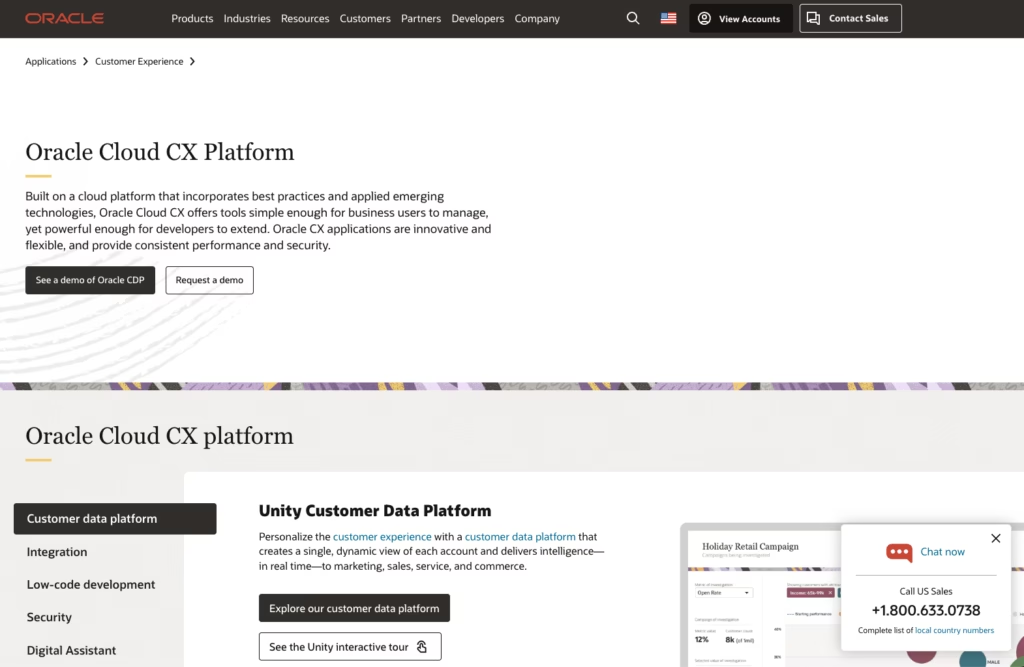
Oracle CX Cloud is a unified CX suite that merges sales, marketing, service, and commerce data for enterprises in Oracle’s ecosystem.
It uses AI-driven personalization to analyze 50+ interaction types and predict churn risks with 92% accuracy, and claims to be capable of boosting conversions by 20% via real-time offers.
Features like Experience Data Records (EDR) pricing, predictive employee engagement analytics, and pre-built integrations for Salesforce/SAP let global brands unify siloed data into GDPR/CCPA-compliant workflows.
Recognized for 20% faster campaign ROI and 15% lower customer attrition, it’s built for complex enterprises needing seamless Oracle Fusion integrations, not SMBs.
Pricing
Oracle offers usage-based pricing tied to EDRs (Experience Data Records). Contact Oracle for a custom quote based on data volume and modules.
Emplifi
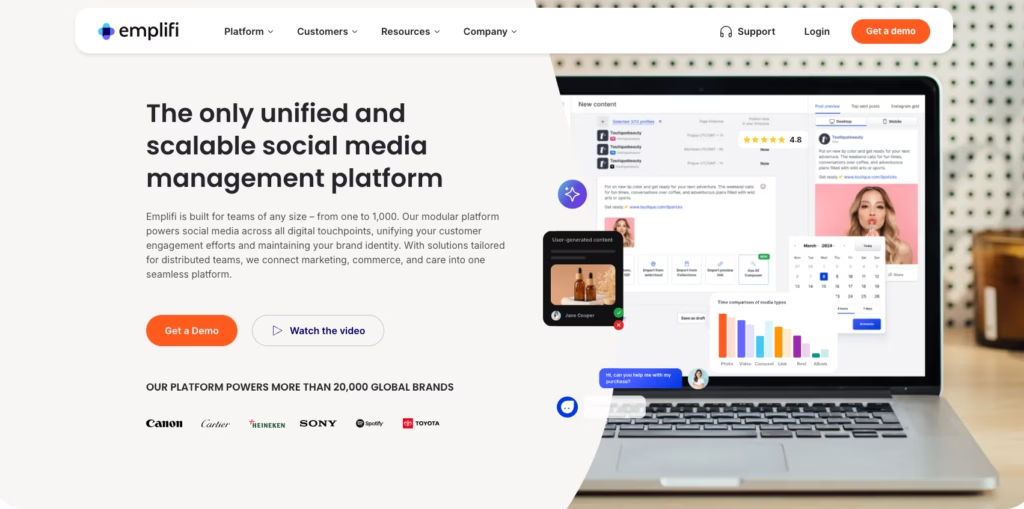
Emplifi (formerly Khoros) unifies marketing, commerce, and customer care into a single AI-driven platform trusted by Delta Air Lines, Ford, and 7,000+ other global brands.
Unlike siloed tools, it combines social media management, AI chatbots, and personalized commerce tracking to map customer journeys from ad engagement to post-purchase support.
Features like sentiment-based theme detection and predictive churn scoring boost retention by 25%, while GDPR/HIPAA-compliant dashboards centralize data from 50+ channels.
Notable for its empathy-driven analytics, Emplifi identifies emotional pain points in feedback so you can refine campaigns in real-time.
Ranked #1 in G2’s Social Suites category, it’s built for enterprises needing to scale CX without fragmenting teams.
Pricing
Emplifi uses custom pricing based on Experience Data Records (EDRs). Contact the Emplifi team for a quote tailored to your social, commerce, and care needs.
Calabrio
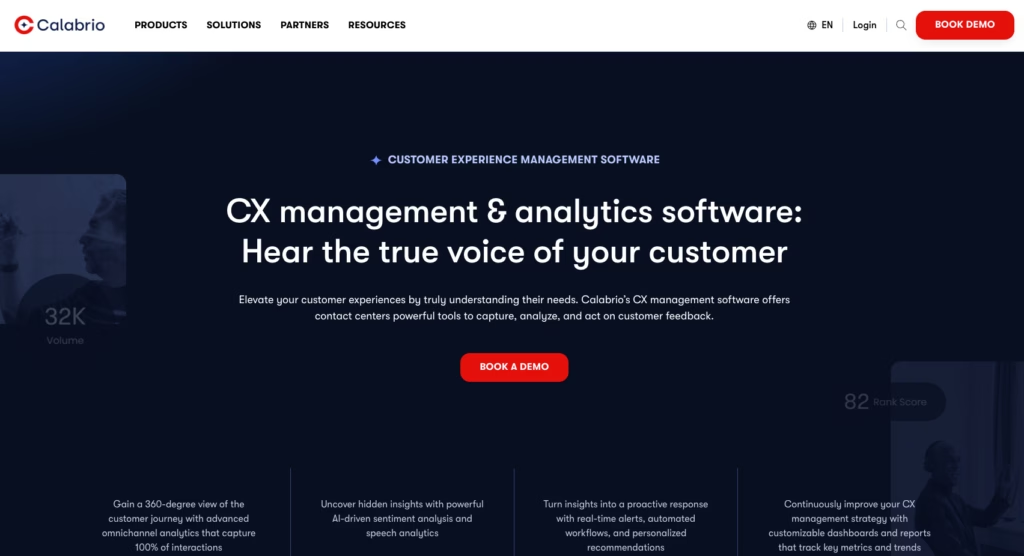
Calabrio merges workforce optimization (WFO) and CX tools in one platform, boosting agent performance with scheduling, coaching, and AI-driven insights.
It’s ideal for contact centers that want total transparency in terms of agent performance and customer satisfaction. If you need a single system for forecasting, recording, and analytics, Calabrio stands out.
Pricing
Calabrio offers custom pricing based on agent count and interaction volume.
Upland Rant & Rave
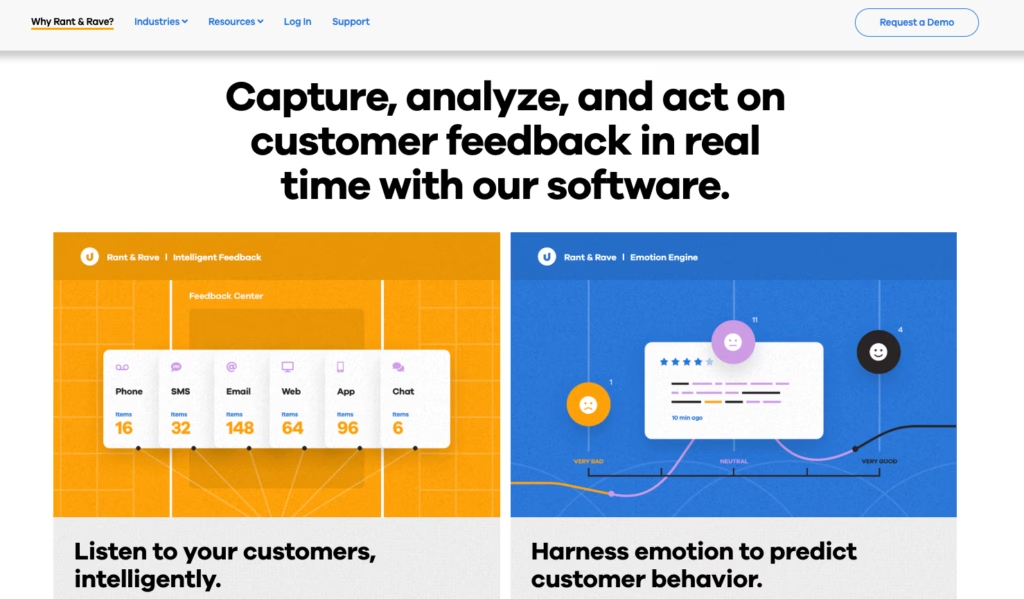
Upland Rant & Rave is a real-time CX platform specializing in emotion-driven insights for retail, finance, and utilities.
Unlike traditional survey-focused platforms, its NLP-powered sentiment engine includes sentiment analysis capable of decoding frustration, delight, or indifference in feedback from SMS, in-store kiosks, and 20+ channels.
Key for frontline teams, Rant & Rave turns employees into CX champions with gamified feedback dashboards that reward staff for resolving issues flagged by AI-driven alerts (e.g., angry social media comments).
Features like automated recovery workflows slash response times by 50%, while Voice of the Employee tools tie internal morale to customer satisfaction.
Built for FTSE-level scalability, it integrates with BlueVenn and CRMs to balance GDPR compliance with actionable empathy.
Pricing
Upland Rant & Rave offers custom pricing based on feedback volume and users.
ConcentrixCX
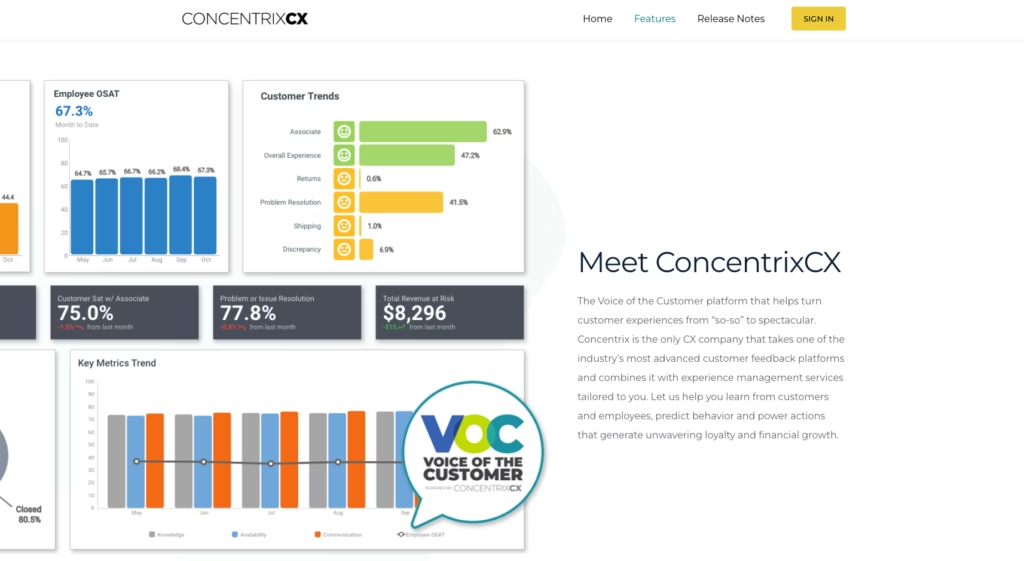
ConcentrixCX is a voice of the customer (VoC) platform capturing feedback from email, web, chat, and video.
It uses AI to surface sentiment, predict needs, and empower mid-sized to large enterprises to deliver end-to-end exceptional experiences.
Got a global footprint or high customer volumes? ConcentrixCX may be exactly what you’re looking for. It provides a single system that unifies data from multiple sources.
Pricing
Concentrix offers custom enterprise pricing based on interaction volume and AI features. Request a quote at ConcentrixCX.com.
OpenText Experience Cloud
OpenText Experience Cloud is an enterprise CX suite blending content management, AI-driven personalization, and composable architecture for industries like public services, utilities, and communications.
Its modular design lets global brands like Siemens and government agencies reassemble digital experiences on the fly by integrating web content, digital assets, and customer data into GDPR/HIPAA-compliant workflows.
Notable for industry-specific agility, it powers public sector digital services and telecom CX hubs, using predictive analytics to slash response times by 30%.
Pricing
OpenText offers custom pricing based on modules, users, and data volume.
Talkdesk CX Cloud
Talkdesk CX Cloud weaves together AI-based contact center tools, workforce management, and real-time analytics.
Designed for regulated industries, it offers GDPR/HIPAA-compliant workflows, Industry Experience Clouds (financial, healthcare, retail), and a Workspace Desktop App to unify 20+ channels into a single agent interface.
Talkdesk excels for enterprises modernizing CX with predictive analytics, low-code customization, and scalability supporting millions of daily interactions.
Pricing
Starts at $85 per user, per month. Scales to $225+ per user, per month for industry-specific tiers. Explore plans at Talkdesk’s pricing page or try a 14-day free trial.
Five9 Intelligent Cloud Contact Center
Five9 merges AI, omnichannel customer engagement, and analytics to unify every customer touchpoint.
Aimed at mid-sized to large enterprises looking for robust contact center capabilities, Five9 stands out for its Intelligent Virtual Agents (IVAs) that automate routine inquiries and real-time AI coaching that boosts agent performance.
Tailored for regulated sectors, it offers HIPAA/GDPR-compliant workflows, financial services-grade security, and industry-specific editions (healthcare, retail) with pre-built CRM integrations.
Pricing
Pricing starts at $119 per month for the most basic plan, with custom pricing available for enterprise packages. Learn more about Five9’s pricing here.
AskNicely
AskNicely is a frontline-first CX platform trusted by 1,300+ service businesses.
Recognized as the #1 solution for service industries on G2, it uses AI-powered micro-surveys (delivered via SMS, email, or in-app) and gamified leaderboards to keep teams engaged in real-time.
With SOC2/GDPR compliance, Slack and Zapier integrations, and automated review generation, AskNicely empowers franchises, healthcare providers, and field services to scale feedback loops so frontline workers can make sense of customer insights and address their needs on the spot.
Pricing
AskNicely starts at $449/month for core features. Explore plans at AskNicely’s pricing page or request a demo to tailor your plan to your team size.
Avaya OneCloud
Avaya OneCloud is a cloud-based CX suite that fuses communication, collaboration, and experience tools into one AI-powered platform.
Designed for mid-sized to large enterprises handling high interaction volumes or distributed teams, it unifies both CX and EX under one umbrella.
Coupled with predictive insights and flexible deployment, it’s perfect for modernizing communication infrastructure and optimizing the customer experience.
Pricing
Avaya offers custom quotes based on users, modules, and deployment models—explore options at Avaya’s website or contact sales to learn more about tailored UCaaS/CCaaS bundles.
Chattermill
Chattermill is an AI-driven CX analytics platform trusted by Amazon, Uber, and HelloFresh to decode unstructured feedback from 50+ sources into actionable insights.
Using deep learning models, it auto-tags themes, predicts churn risks, and prioritizes issues impacting NPS/CSAT, helping enterprises like HelloFresh achieve 300%+ ROI.
Features include real-time sentiment alerts, Qualtrics integrations, and dashboards that analyze billions of interactions to pinpoint CX gaps.
Pricing
Chattermill offers custom enterprise pricing. Visit their pricing page to learn more about what’s included with available plans.
SANDSIV
SANDSIV consolidates feedback from surveys, tickets, social, and more into an AI-driven platform that highlights sentiment trends in real-time.
Its proprietary NLP engine identifies high-impact pain points (e.g., shipping delays, product defects) and auto-prioritizes them by NPS/CSAT impact.
The result is that you can reduce the time it takes to perform a root-cause analysis by 50%.
Trusted by telecom and retail giants, SANDSIV offers GDPR-compliant dashboards, predictive churn models, and seamless SAP/Salesforce integrations to align CX insights with operational workflows.
Pricing
SANDSIV provides custom enterprise pricing. Learn more on the SANDSIV website.
SogoCX
SogoCX, part of the Sogolytics suite, is an omnichannel feedback platform that unifies surveys, support tickets, and social media data into AI-driven dashboards.
Designed to help mid-sized enterprises exceed customer expectations, it identifies urgent CX issues with real-time sentiment alerts. It also pinpoints top drivers of NPS/CSAT scores so your service teams know where to focus on improving service quality.
Features include QR code feedback collection for in-person interactions, HIPAA/GDPR-compliant analytics, and seamless CRM integrations (Salesforce, HubSpot) to align insights with frontline workflows.
Pricing
SogoCX offers custom plans based on data volume and integrations.
How to Choose the Right Customer Experience Platform
Picking the perfect CX software isn’t about ticking boxes—it’s about finding a partner that grows with your goals. Here’s how to cut through the noise:
Start by defining your goals. What’s really driving your software purchase? Maybe you’re drowning in customer calls and need smarter self-service tools. Or perhaps your customer feedback surveys are gathering dust, and you crave AI that turns rants into action plans.
Nail down your non-negotiables first and figure out exactly what it is you’re looking for.
Remember that size matters (in data, at least). If you’re a high-volume brand with sprawling customer behavior data, you’ll want enterprise-grade muscle, like AI that spots trends in real-time and data encryption that keeps compliance airtight.
Smaller teams should focus on simplicity. Don’t just opt for the biggest, flashiest piece of software you can find. Consider exactly what you need and whether or not you’re choosing software that’s more extensive than you really need.
Play nice with others. Great CX tools don’t live in a silo. If you’re already using a CRM or help desk, prioritize platforms that slide into your tech stack like the last puzzle piece. Bonus points if you can find software with pre-built integrations that save your IT team from migraines.
Demand more than pretty dashboards. Basic reporting is so 2020. Nowadays, you’ll want to look for tools that map entire customer journeys instead of just taking snapshots. Look for platforms that use AI to serve up the “why” behind the “what.”
Try before you buy. If it’s offered, never skip a demo. Involve your customer service teams in testing—if they groan at the interface, run. The best tools feel intuitive, not like you need a PhD to use them.
Find Your Ideal Customer Experience Management Platform With Interaction Metrics
Choosing the right CX software isn’t only about choosing software with the most advanced features on the market. It’s really about finding a solution that fits your team, your goals, and your customers’ quirks. With so many options (and hidden complexities!), it’s easy to feel overwhelmed.
That’s where we come in.
At Interaction Metrics, we’ve helped hundreds of businesses cut through the noise and land on platforms that actually work instead of buying the software that looks good on paper, only to find out it’s not actually what they need.
Whether you’re streamlining customer feedback surveys, taming chaotic customer calls, or scaling AI-driven insights, we’ll match you with tools that turn headaches into high-fives.
Contact us to discuss your customer experience goals. We’ll provide personalized recommendations, compare top contenders, and craft a roadmap that turns your customer experience into a competitive edge.
Customer Experience Management Software FAQs
Is a CRM the same thing as CX software?
Not exactly. They overlap, but they’re not identical.
A CRM (customer relationship management) focuses on organizing customer data, guiding sales teams, and tracking customer interactions from a lead perspective.
CX software digs into customer feedback, sentiment, and behavior across every channel—helping you collect feedback, pinpoint customer pain points, and deliver personalized experiences.
How much does the best customer experience management software cost?
Costs vary widely based on feature depth, data volume, and whether you need advanced AI or basic reporting.
Many enterprise solutions start around $75-$100 per user monthly, but custom quotes can climb higher. Especially if you handle large data sets, require enterprise-grade security, or want extra automation.
What is the best customer experience software for small businesses?
Most top-tier CX platforms are built for mid-sized to large enterprises with robust budgets and support team resources.
That said, smaller businesses might consider simpler customer service software or basic feedback management solutions with fewer bells and whistles (and lower costs).
These typically aren’t comprehensive solutions, but they include tools like SurveyMonkey, Zendesk, and Freshdesk among others.
Look for tools that let you start small and scale as your customer lifecycle grows. Need help choosing the right one? Contact Interaction Metrics to discuss your options. We already have licenses for the top CX platforms, so you can focus on insights—not software costs or setup—as you optimize the customer experience.
=================================
Let’s discuss which CX platform is best for your company.
=================================
The post The Best CX Software Of 2025 appeared first on Interaction Metrics.
]]>Read more
The post New & Improved: Customer Survey Program Costs appeared first on Interaction Metrics.
]]>We just updated our Customer Survey Program Costs guide with even more insights and detailed breakdowns!
What used to be a high-level overview is now a comprehensive resource covering:
- How survey costs vary by size, complexity, and methodology
- The 7 key factors that impact pricing—and how to optimize them
- How to measure the ROI of your survey investment
And much more!
 Click here to read the updated guide.
The post New & Improved: Customer Survey Program Costs appeared first on Interaction Metrics.
]]>Read more
The post Mastering Customer Journey Mapping: Strategies for Success appeared first on Interaction Metrics.
]]>Looking back on 2024, one question stands out in the world of customer experience (CX): How do companies get to the bottom of their customers’ journeys—in ways that spark bottom-line success?
In December’s CXPA B2B Roundtable hosted by Martha Brooke, and featuring Dave Seaton, that very question took center stage. The discussion highlighted the synergy between scientific customer feedback and customer journey mapping, likening these two tools to the “left foot and right foot” of an effective CX strategy.
Analysts (like us) who take a rigorous approach to customer experience research know that solid data means:
- Removing bias
- Sampling correctly
- Testing for replicability
- Using multiple CX methods
- Applying rigorous analysis
Bottom Line: By fueling your journey maps with research-based facts, you will be positioned to improve everything from customer onboarding to brand identity.
With over 75 CX practitioners joining the conversation, we dove into the heart of customer journey mapping—as a tool for creating experiences that drive ROI. To watch the recording, click here.
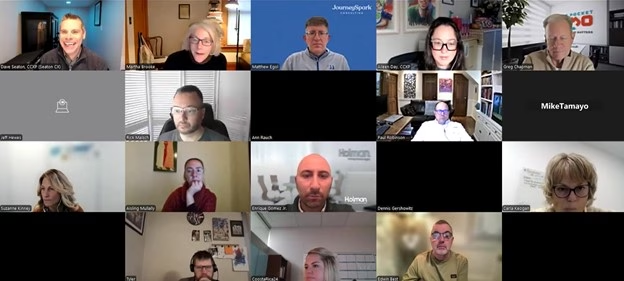
Because many of you listen on the go, you can find the audio here:
Below, we break down key themes and insights shared during the Roundtable.
And if you’ve ever wondered how to create a journey map that drives strategy or been curious as to why half of all journey maps fail, this blog post will give you the answers.
Takeaways from the Customer Journey Mapping Roundtable
Takeaway #1. Customer Journey Mapping Is Not Just a Pretty Picture
Journey mapping isn’t about creating colorful diagrams to hang in your conference room. Instead, a successful customer journey map:
- Uncovers friction points,
- Identifies pivotal moments,
- Pinpoints opportunities for growth.
When tied to strategic goals, it can help you:
- Improve onboarding processes
- Reduce churn
- Increase sales
Takeaway #2. Why Many Journey Maps Fail
According to Dave Seaton, roughly 50% of journey maps fail because they:
- Aren’t tied to strategic business goals.
- Don’t lead to meaningful action.
- Overload teams with unnecessary details instead of clear insights.
As Dave emphasized: “If your journey map doesn’t drive change, it’s just an art project.”
Takeaway #3. The Power of Personas and Critical Moments
Effective journey maps focus on key customer personas and highlight the “moments of truth”—the interactions that have an outsized impact on the customer’s experience and loyalty.
Takeaway #4. Customer Journey Mapping Consultants Drive Impact
Partnering with customer journey mapping consultants ensures that companies follow a proven process, prioritize research, and align insights with company-wide goals. Instead of winging it, you’ll align your efforts with strategic business goals—setting up a journey map you can use for years.
Takeaway #5. The Future of Journey Mapping is Dynamic
Best practices in customer journey mapping are evolving rapidly. Rather than creating a static asset that quickly goes stale, businesses are harnessing real-time data to continuously refine and adapt their journey maps as customer needs shift.
What is Customer Journey Mapping?
Customer journey mapping visually documents the steps a customer takes to achieve a specific goal from their perspective. Dave Seaton defined a customer journey map as “a visualization of the experience that a customer has as they interact with your company to accomplish their goal.”
Best practices in customer journey mapping focus on critical moments and ensure alignment with customer and business goals. By combining research, customer feedback, and organizational insights, journey mapping identifies:
- Key interactions (touchpoints): Moments where the customer directly engages with your company.
- Pain points: Friction or challenges that disrupt their journey.
- Opportunities: Areas where improving the experience can drive loyalty, revenue, or efficiency.
Effective customer journey mapping requires deep research (the kind that we do) and a clear understanding of customer needs, emotions, and critical moments. Done well, it can bring your teams together around your customer experience objectives.
How Customer Journey Maps Reveal Pain Points and Opportunities
The research that goes into journey mapping provides a structured approach to uncovering areas where customers may face challenges or where companies can improve.
While not discussed in the roundtable, here’s a case study widely seen as a customer journey mapping success:
Starbucks Case Study
Objective:
Needing to pinpoint areas for enhancing its in-store and digital experiences, Starbucks used journey mapping.
Key Pain Points Uncovered:
Long Wait Times: Customers were frustrated by delays during peak hours.
A Disconnected Loyalty Program: Starbucks Rewards lacked integration with digital touchpoints, reducing engagement.
How Starbucks Addressed the Issues:
Mobile Ordering: A new app allowed customers to order and pay ahead, minimizing wait times and streamlining service.
Personalized Experiences: Starbucks leveraged rewards data to offer tailored recommendations and promotions, boosting customer engagement.
Results:
Wait times improved, increasing customer satisfaction. And, Starbucks Rewards participation surged, fostering loyalty and repeat business.
This real-world example highlights how journey mapping helped Starbucks create a seamless, personalized experience that delights customers and drives growth.
The Five Essentials of Customer Journey Mapping
Back to the roundtable learnings, Dave highlighted five core elements that every journey map should include:
1: Customer Personas
A representation of various customer segments based on needs, goals, and values—not demographics.
For example: “David the Work-from-Home Professional” values reliability and will pay a premium for uninterrupted internet service.
2: Customer Goals
The overarching objective the customer wants to achieve.
For example, with tax software, a predictable customer goal is to file taxes quickly while maximizing refunds.
3: Steps in the Journey
The actions a customer takes to reach their goal, including indirect steps like waiting, researching competitors, or asking for referrals.
4: Thoughts and Emotions
What the customer is feeling at each step of the journey.
That could be frustration during a lengthy onboarding process or confidence after resolving an issue quickly.
5: Moments of Truth
Critical interactions that disproportionately impact the customer’s experience and perception of the company.
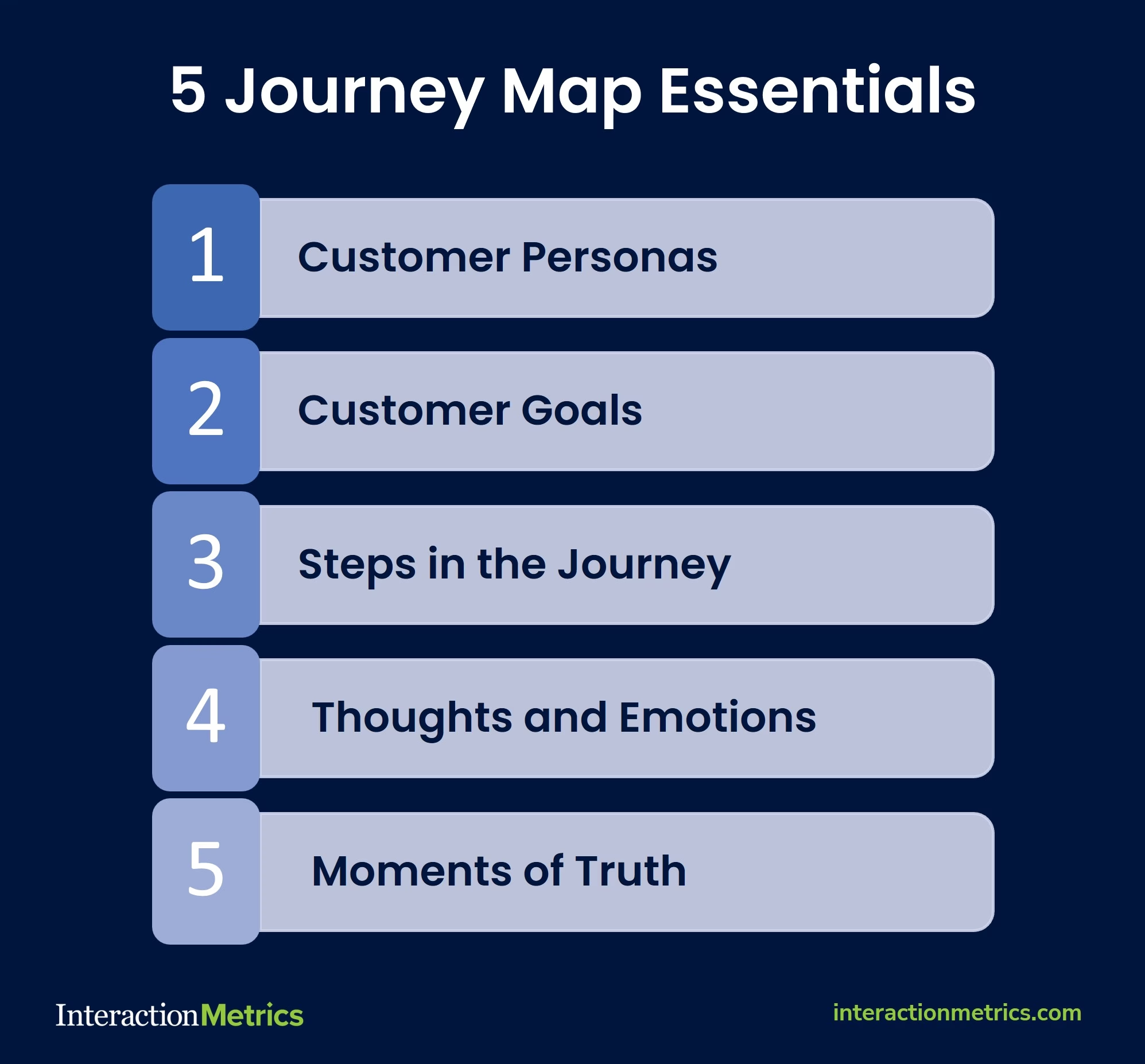
When these components are woven into a coherent journey map, you gain not only a visual but also a strategic narrative that directs your improvement efforts.
Dave Seaton’s DARMA Method: A Framework for Customer Journey Mapping
As Dave explained during the roundtable, a structured approach can make all the difference. Enter the DARMA Method:
Define the opportunity: Why are you mapping this journey? (e.g., reduce churn, improve onboarding).
Analyze the current state: Use existing data to understand what you already know.
Research the customer experience: Conduct interviews (he finds that 20–30 customers are typically sufficient) to uncover meaningful insights.
Map the experience: Visualize the findings into a journey map.
Act on the insights: Prioritize improvements and measure outcomes.
Without scientific CX research that leads to action, journey mapping risks becoming an “art project” with no real business value.
Aligning Journey Maps with Business Goals
If you’re wondering how to create a customer journey map that delivers ROI, start by anchoring your journey map to the objectives that matter most. Dave Seaton says that usually, these objectives fall into four broad categories:
- Customer-Focused Goals: Reducing churn, improving satisfaction, and enhancing the overall customer experience.
- Employee-Focused Goals: Attracting and retaining top talent by addressing employee needs and engagement.
- Operations-Focused Goals: Streamlining processes, increasing efficiency, and reducing friction in service delivery.
- Financial Goals: Boosting revenue by increasing share of wallet, reducing costs to serve, and improving profitability.
Example:
A B2B software company struggles with high churn due to a confusing onboarding process. By identifying pain points, such as delays or lack of clear communication, they can streamline the experience, making it easier for customers to adopt the product. Fixing these friction points leads to fewer cancellations, happier customers, and a smoother path to upselling additional features.
By aligning journey maps with these strategic objectives, businesses can prioritize actions that deliver measurable outcomes, ensuring the journey map is a practical growth-minded tool.
Common Pitfalls and How to Avoid Them
Overloading the Map with Data
Dave advised keeping journey maps concise and focused. While supplementary details can be stored in reports, the visual map should serve as a high-impact storytelling tool for executives.
Neglecting Organizational Alignment
“One of the reasons journey maps fail is that they don’t align with the company’s strategic plan,” Dave noted. Start by identifying whether the goals are customer, employee, operations, or financially driven.
Underestimating the Importance of Personas
In B2B contexts, journey maps often require multiple personas to capture the varying goals of buyers, users, and decision-makers. Consultants can help businesses clarify these nuances.
From Static Maps to Dynamic Models
One of the roundtable’s most compelling insights was a preview of where journey mapping is headed. With new technologies emerging—think Qualtrics dashboards or Salesforce integrations—customer journey maps are becoming living, breathing models. Businesses can overlay real-time metrics, bridging the gap between static planning and dynamic CX optimization.
But even with top-tier software, the magic lies in how your teams respond. Data without action is just noise, so building a culture that prioritizes CX improvements is imperative.
The Role of Customer Journey Mapping Consultants
Customer journey mapping consultants play a pivotal role in ensuring that companies maximize the value of their journey maps. Their expertise ensures alignment with best practices in customer journey mapping, making the process more efficient and impactful.
While some companies may attempt to handle this process internally, consultants bring a unique set of skills, tools, and objective methodologies.
During the roundtable, Dave emphasized three key responsibilities of skilled customer journey mapping consultants:
- Strategy: A good consultant ensures that journey maps are not just insightful but also actionable, tying directly to outcomes like reducing costs or increasing revenue.
- Engagement: Consultants help make the journey map a collaborative tool by providing insights that resonate with teams across the organization.
- Research: By collecting well-sampled, robust data, consultants ensure the journey map reflects the truth of the customer experience.
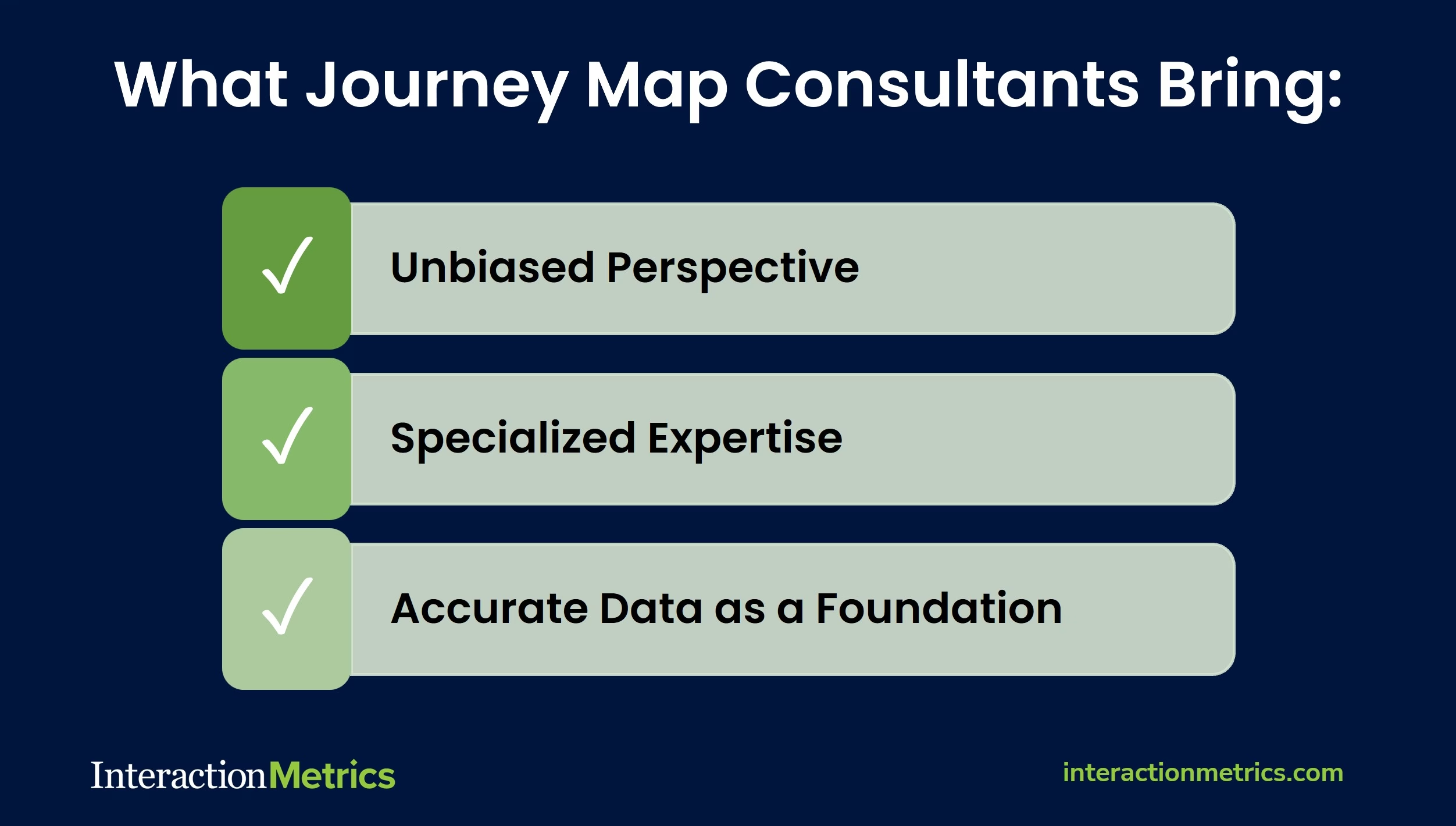
Benefits of Working with Customer Journey Mapping Consultants
Unbiased Perspective: Consultants provide an external, objective view of your customer experience. This impartiality helps identify blind spots that internal teams might overlook.
Specialized Expertise: With extensive experience across industries, consultants know how to craft maps that lead to actionable insights.
Accurate Data as a Foundation: High-quality data collected through surveys, interviews, and customer service evaluations is critical to the success of any journey map.
Tools and Methodologies Consultants Bring
Survey-Driven Insights: Customer surveys and service evaluations provide the foundation for a strong map. Tools like customer service surveys offer clear, actionable data that consultants can integrate into platforms like Qualtrics or Salesforce.
Journey Mapping Software: Advanced tools allow for dynamic, real-time mapping when combined with robust survey and evaluation data.
Frameworks and Processes: Proven methodologies, like the DARMA Method mentioned by Dave, ensure the mapping process aligns with both customer needs and business goals.
Bringing Customer Journey Maps to Life: Your Blueprint for CX Success
Customer journey mapping is far more than a one-off exercise—it’s an evolving process that empowers companies to understand and improve their CX. By partnering with experienced customer journey mapping consultants, you’ll reduce complexity and be best positioned to transform insights into impact.
Mapping + Scientific Data = Success
Customer journey mapping and scientific customer feedback are the “left foot and right foot” of CX—they work in tandem to move your strategy forward.
This depth of insight transforms your journey maps into actionable tools, enabling you to identify pain points and opportunities for improvement.
Reliable, insightful data doesn’t just support your journey map—it makes it a cornerstone of your strategy.
When we tap into the emotions, frustrations, and needs of your customers, you gain a clear path to crafting experiences that drive loyalty and growth.
Remember: Without good data, a journey map is just a static visual, disconnected from the reality of your customers’ experiences.
Turning Insights into Results
Whether you’re a CX leader aiming to reduce churn or an entrepreneur looking to maximize sales, a research-driven approach to CX ensures your customer journey maps will translate into measurable results that matter.
With the right data in hand, you can move beyond assumptions and craft journeys that delight your customers and boost your bottom line.
============================================
At Interaction Metrics, we provide the research behind journey maps, and we work with consultants who develop journey maps for their clients. Let’s discuss whether customer research is right for you.
============================================
The post Mastering Customer Journey Mapping: Strategies for Success appeared first on Interaction Metrics.
]]>