Read more
The post New & Improved: How to Avoid Survey Fatigue appeared first on Interaction Metrics.
]]>We’ve completely updated our blog on how to avoid survey fatigue. The problem has only grown—but now we go deeper, showing:
-
Why millions more surveys are being sent today than ever before
-
How long, repetitive surveys drive customers away
-
Why no-reply emails and lack of anonymity kill response rates
-
Where incentives and better timing make a real difference
-
When third-party surveys deliver more honest, actionable feedback
If you’re seeing lower response rates or flat data, this post shows how to break through—and get feedback you can actually use.
 Click here to read the updated post.
The post New & Improved: How to Avoid Survey Fatigue appeared first on Interaction Metrics.
]]>Read more
The post New & Improved: Survey Text Analysis appeared first on Interaction Metrics.
]]>We’ve completely updated our blog on how to analyze open-ended survey responses. The core ideas still apply—but now we go further, showing:
-
Why sentiment analysis alone is misleading
-
How AI overcounts repeated comments
-
Where qualitative research truly shines
-
What a good tagging and dashboard process looks like
-
When human researchers are essential for accurate insights
If you’ve been relying on theme summaries or sentiment scores, this post shows how to go deeper—and get the clarity your customer feedback deserves.
Click here to read the updated post.
The post New & Improved: Survey Text Analysis appeared first on Interaction Metrics.
]]>Read more
The post New & Improved: 9 Core Customer Service Principles appeared first on Interaction Metrics.
]]>Our Most Popular Blog, Rewritten for the Feedback Era
Back in 2013, we published a blog on the 9 Core Customer Service Principles—and it struck a chord.
It laid out what great—and bad—service looks like, and why so many companies miss the mark. But in the decade since, customer expectations have evolved—and so has our perspective.
That’s why we’ve completely updated the blog. The foundational principles still apply (for instance, don’t force customers to repeat themselves—something many companies still do), but we’ve added a critical dimension: how to listen.
Specifically, how to use well-crafted customer service surveys to measure human performance separately from the policies that shape those interactions.
We’ve also added guidance on how to refine rating scales to uncover functional, relevant ‘next steps’.
Customer service today isn’t just about training reps—it’s about building a system that learns, adapts, and improves.
Key Takeaways from the Updated Blog
- Surveys and principles go hand in hand. You can’t improve what you don’t understand—and a smart, bias-free survey gives you that understanding.
- Don’t conflate rep performance with your organization’s policies. For instance, as one real-life example shows, a great employee might be courteous and helpful, but if your policies get in the way, she might get a terrible review. As mentioned above, but worth repeating, good surveys distinguish between human performance and organizational rules.
- Protocols matter—but flexibility matters more. Customer service isn’t black and white. Principles should clarify when to adapt and personalize each interaction. For example, it’s essential to give reps guidance on how to end their interactions on a high note, so that every conversation doesn’t end with a generic “Sorry for the inconvenience.” Or “Have a good day.”
- Embedding context into surveys boosts accuracy. Including elements like case numbers in surveys improves response rates and reveals actionable insights—so teams can quickly prioritize what matters.
If you’re looking for core customer service principles and measurement strategies in one place, this updated blog is for you.
The post New & Improved: 9 Core Customer Service Principles appeared first on Interaction Metrics.
]]>Read more
The post B2B Customer Experience Research—Latest CXPA Roundtable appeared first on Interaction Metrics.
]]>Customer experience research is evolving rapidly—especially for B2B companies, where their high-value relationships demand precision insights.
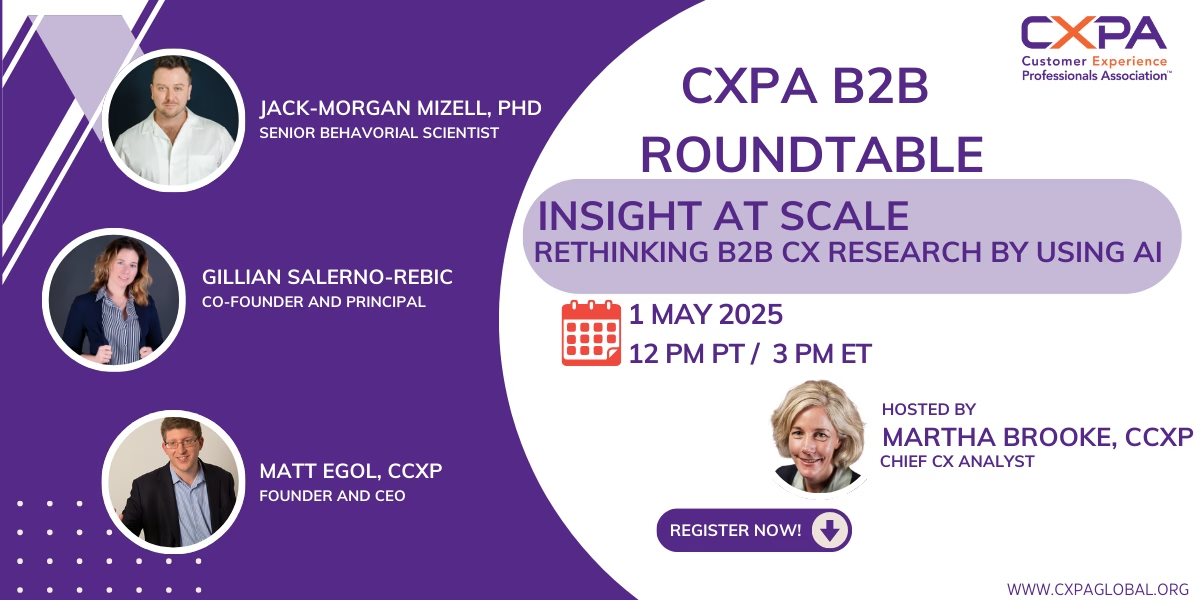
That’s why earlier this month, for our B2B CXPA Roundtable, I hosted Matt Egol, Jack-Morgan Mizell, and Gillian Salerno-Rebic to explore the possibilities and limitations of using AI for research.
I posed questions to the group to get their take on whether AI enhances human research or replaces humans altogether? And can AI decode customer behavior in complex B2B environments?
About the B2B CXPA Roundtables
I host the B2B CX Roundtables every six weeks. They’re open to all B2B professionals, although members of the CXPA (Customer Experience Professionals Association) get priority for all sessions in which the audience size is capped. Our Roundtables are 55 minutes and highly interactive. If you’d like to be included in our Notifications List, add your name here.
The B2B Customer Experience
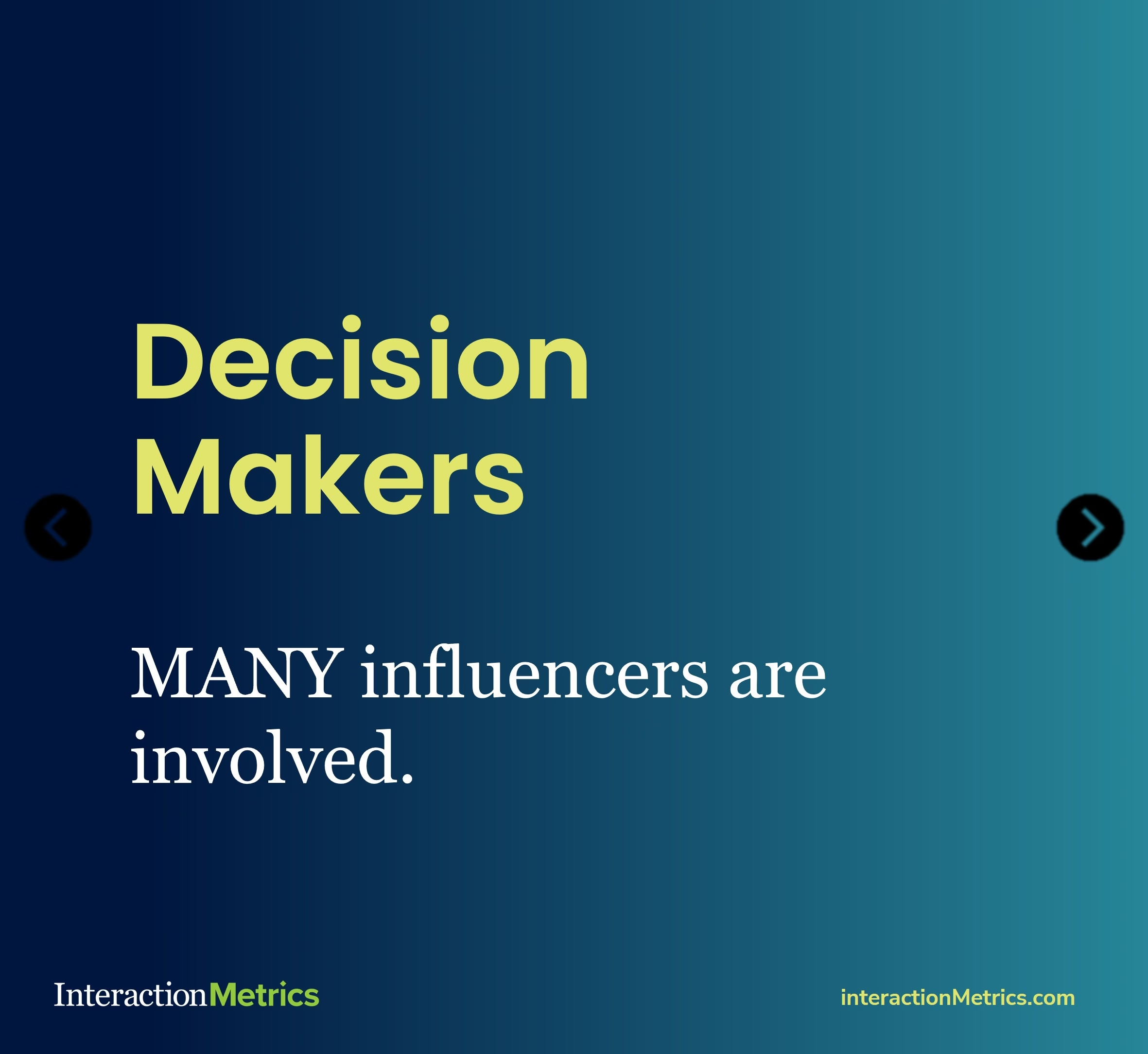
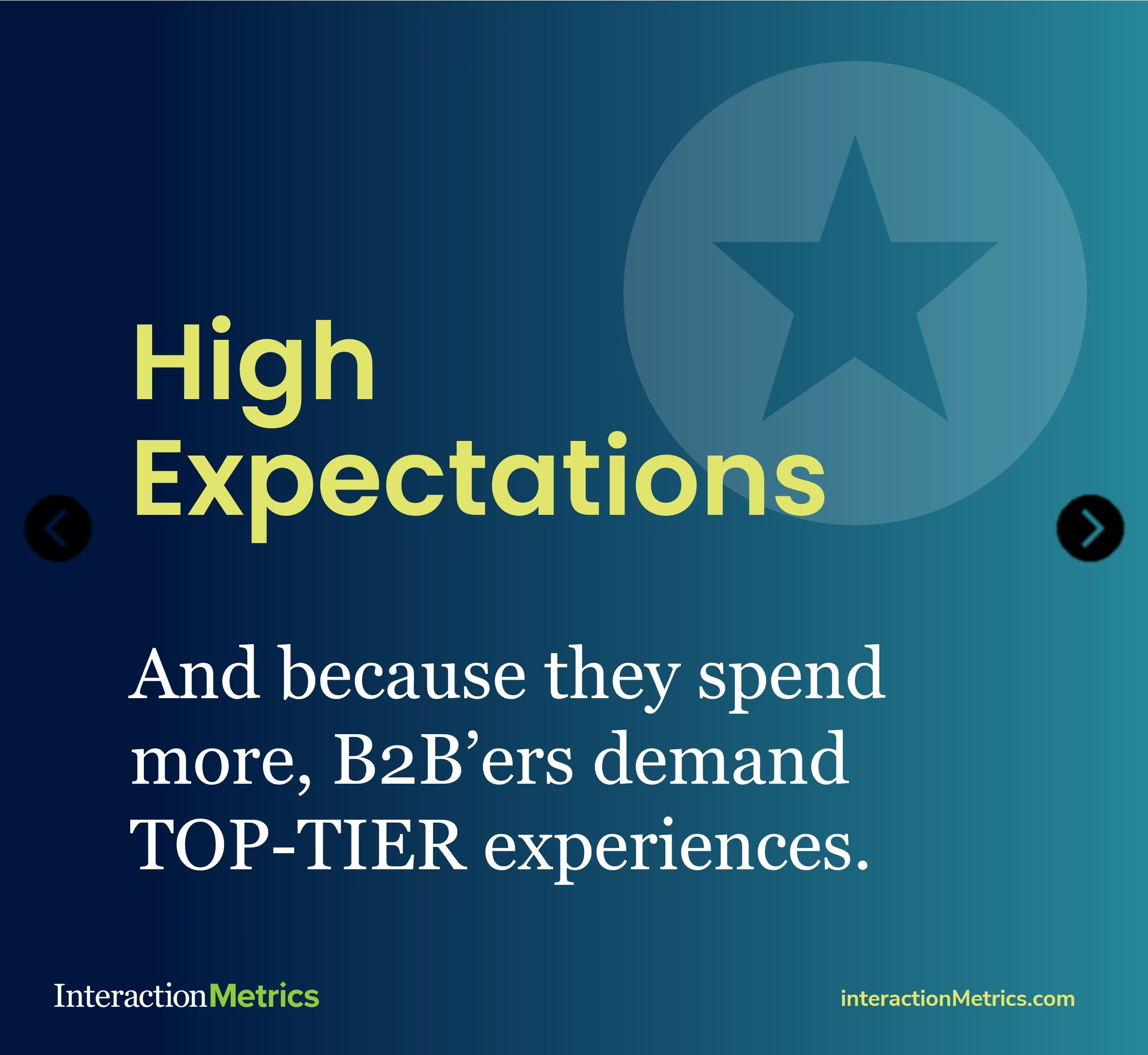
To get everyone on the same page, I usually start each Roundtable by clarifying how B2B customer experiences stand apart from consumer experiences. Based on interviews I’ve done with leaders at Intel and other companies, it’s become clear that some of the differences include: a partnering relationship, a larger customer spend, and multiple decision-makers involved.





My Perspective on AI for B2B Research
AI is great at surfacing patterns across a full dataset of customer comments—it can generate summaries, spot recurring themes, and even suggest fresh angles for analysis.
Tools like ChatGPT and Gemini are especially useful for brainstorming formulas, speeding up counts, and forming hypotheses. But when it comes to producing the final output, they fall short. AI often misreads sentiment, loses consistency in formatting, and fails to distinguish urgency or impact. A customer who repeats themselves five times about delivery can skew the data, leading to inflated themes that don’t reflect the full picture.
That’s why our Text Analysis blends the speed of AI with the nuance of human insight.
We use AI to explore ideas and form hypotheses—but humans decide what actually matters. Our researchers weigh emotional tone, assess business risk, and determine which departments are truly at stake. Just because a customer says tech support is their biggest issue doesn’t mean that’s what’s driving them away—it could be poor product quality buried elsewhere in their comments. This is where human judgment turns raw feedback into decision-ready insights. Read more about my perspective on AI as a CX research solution here.
The Panelists’ Perspective: Using AI for B2B Research
The Panelists began by exploring a fundamental question: why do B2B companies need customer experience research in the first place?
The panelists agreed that to improve the customer experience, you have to understand it—and that’s especially true in B2B. Essentially, customer experience research lays the foundation for understanding what customers expect, how they behave, and where they encounter friction.
For B2B companies, research helps in areas like these:
- Clarifying Expectations: Understand what customers actually want—not just what internal teams assume. This informs onboarding flows, training materials, and proactive support efforts.
- Improving Digital Journeys: By tracking how users engage with portals, dashboards, and websites, research pinpoints where customers get stuck, hesitate, or abandon tasks.
- Prioritizing Improvements: Not every pain point is equally urgent. Research helps companies focus on what matters most to their highest-value customers.
- Strengthening Relationships: B2B relationships are built on trust and ongoing value. Research helps teams stay aligned with customer goals over time.
In short, CX research gives B2B companies a way to fuel growth by understanding how companies can become more relevant and connected with their customers.
Watch the discussion here.
Or, because many of you listen on the go, you can download the audio here:
AI Is an Accelerator—Not a Replacement
The panelists are all finding that AI in B2B customer experience research is a lever to augment human capabilities, not to replace them.
As Gillian stated, “It is a tool in our tool belt… It’s not the magical fix-all pill that’s going to eliminate that work for you.”
AI is ideal for:
- Transcribing interviews instantly
- Drafting very initial survey questions – not the final questions
- Analyzing large datasets to develop customer personas
- Testing how different simulated personas experience touchpoints
One especially thought-provoking idea came from Gillian’s experience using simulated feedback in CX research. Rather than gathering input exclusively through live interviews or surveys, this method uses AI-generated personas or predictive models to simulate how a certain type of customer might respond to a product, service, or journey stage.
While this doesn’t replace direct customer feedback, it adds a new layer, especially useful in early-stage research or when exploring hypothetical scenarios. Of course, understanding when to use simulated vs. live methods is critical for B2B companies that want to blend efficiency with depth in their customer experience research.
AI Helps Overcome the “Blank Page” Problem
Jack shared two powerful ways AI supports researchers, especially in fast-moving or unfamiliar B2B contexts.
First, he described how AI helps overcome the “blank page” problem by generating initial drafts of survey questions and frameworks for quantitative analysis. “It’s a good speed tool that then requires me to iterate on it,” he explained. Rather than starting from scratch, AI offers a working draft—freeing up time to focus on refinement and relevance.
Second, Jack emphasized how helpful AI can be for researchers entering industries they don’t yet know well. It’s common for CX Researchers to work across sectors—and each industry and company has its own language, sales process, and pain points. AI tools can quickly surface background information, common terminology, and emerging trends, helping researchers ask smarter, more targeted questions from the start.
Together, these capabilities reduce ramp-up time and improve the quality of CX research, without sacrificing the critical thinking and human oversight required to make the results meaningful.
Human Insight Remains Essential
While AI can identify themes and patterns, it can’t fully explain the “why” behind customer behavior. Especially in B2B, where context is everything, human analysts are still essential for interpreting results and making strategic decisions.
AI can detect patterns, cluster sentiment, and surface anomalies, but it lacks the nuanced understanding of context, intent, and emotional drivers. That’s where human insight comes in.
In particular, B2B environments are filled with complexity: multi-stakeholder relationships, long buying cycles, and layered motivations. AI may flag that a key decision-maker is hesitant or disengaged—but only a skilled researcher, familiar with the industry and organizational dynamics, can connect that data point to the broader story.
Additionally, panelists emphasized that humans must validate AI-generated outputs before insights are turned into business decisions. Whether it’s refining survey questions suggested by AI or pressure-testing an emerging theme against interview transcripts, human judgment ensures accuracy, relevance, and integrity.
Ultimately, AI can get you to insight faster, but only human intelligence can ensure that insight is strategically sound and contextually correct.
Data Quality and Ethics Matter
As AI becomes more embedded in customer experience research, the panelists emphasized that data quality and ethical responsibility must remain front and center.
AI is only as good as the data it’s trained on. If your source data is biased, incomplete, or poorly structured, the insights AI produces will be misleading at best—and damaging at worst. In B2B settings, where one flawed insight can influence high-stakes decisions, bad data isn’t just inefficient—it’s a liability.
Panelists also stressed the importance of maintaining transparency with customers. Whether gathering survey responses, analyzing interviews, or using behavioral analytics, companies must clearly communicate how data will be used and ensure that privacy and consent are upheld.
Basically, the roundtable sparked some incredible insights—but it also raised broader questions about the evolving world of customer experience research.
So, what follows is more information about the methods, tools, and technologies used for B2B research and lays out more details around using AI for surveys, interviews, and journey mapping.
More about Customer Experience Research: Turning Insights Into Revenue & Retention
For industries in which products and services can seem interchangeable from one company to the next, customer experience (CX) often becomes a powerful differentiator. The theory is that premium value is built not so much around what you sell—as it is around how you sell, support customers, and forge deep long lasting customer relationships.
But great customer experiences don’t happen by chance. They’re built on insights, not intuition. And that’s where customer experience research comes in.
CX research systematically investigates how customers perceive and navigate their relationship with your brand. It uncovers friction, emotional inflection points, and unmet needs—transforming anecdotes into strategy and turning feedback into business results.
At Interaction Metrics, we’ve found that combining scientific research principles with modern AI tools leads to sharper insights and more trustworthy data. Whether it’s analyzing open-text responses, mapping experiences, or synthesizing interviews, our TrueData model ensures you’re working from facts—not guesswork.
And thanks to advancements in AI-powered tools for research, this work is now faster, more scalable, and more insightful than ever before.
What Is Customer Experience Research?
Customer experience research is the practice of collecting, analyzing, and interpreting data about how customers interact with a business across their end-to-end journey. It includes both quantitative research (like surveys and analytics) and qualitative methods (like interviews and observational studies) and focuses specifically on the customer’s experience—not just their demographics or buying habits.
To effectively conduct customer experience research, it is essential to employ both quantitative and qualitative methods to capture a comprehensive view of the customer journey.
Unlike general customer research, which often focuses on product-market fit or brand awareness, CX research zooms in on how customers feel about their interactions: where they get stuck, what delights them, and why they stay or leave.
It’s used to answer questions like:
- What are our biggest experience breakdowns?
- Where are customers losing trust or getting frustrated?
- How can we turn good experiences into unforgettable ones?

Why CX Research Matters
- Retention Over Acquisition: It costs 5–7x more to acquire a new customer than to retain an existing one. CX research shows you where and why customers are churning—and what to do about it. By addressing these issues, businesses can create better customer experiences that drive retention and loyalty.
- Experience Is the Brand: In a commoditized market, your experience becomes your product. Two companies can sell the same software—but the onboarding, support, and service journey can feel worlds apart.
- Customer-Led Growth: Word-of-mouth, upsell potential, and brand loyalty are all byproducts of memorable experiences—rooted in a deep understanding of customer needs. According to Harvard Business Review, customers who had the best experiences spend 140% more compared to those who had the poorest.
In a commoditized market, your experience becomes your product. Two companies can sell the same software—but the onboarding, support, and service journey can feel worlds apart.
As Forsta explains, B2B companies that prioritize CX can deepen loyalty and stand out in highly competitive markets.
Core Types of Customer Experience Research
#1. Surveys
Surveys are the backbone of CX research, providing structured feedback at scale. The most common survey types include:
- CSAT (Customer Satisfaction Score)
- NPS (Net Promoter Score)
- CES (Customer Effort Score)
Surveys can be deployed post-interaction (e.g., after support), post-purchase, or at periodic intervals to gauge the health of customer relationships. In addition to surveys, focus groups can provide in-depth insights by facilitating direct conversations with customers.
Use Case: A subscription company uses monthly NPS surveys to track sentiment trends across onboarding, support, and renewal.
#2. Customer Interviews
Interviews offer a rich, conversational look at customer perceptions. They allow researchers to probe for deeper insights, uncover latent needs, and pick up emotional signals that surveys can miss.
Use Case: A B2B manufacturer interviews long-term clients to understand why repeat orders have slowed—revealing issues with documentation and perceived product complexity.

#3. Customer Journey Mapping
Journey mapping translates feedback and behavioral data into a visual timeline of the customer’s experience. These maps show each stage of the journey, identify friction points, and highlight emotional inflection areas. Mapping the full customer journey helps businesses capture every interaction and touchpoint, providing a holistic view of the customer experience.
Use Case: A logistics firm discovers that customer frustration peaks not during delivery—but during quoting. They revamp the quoting interface, reducing service tickets by 30%.
#4. Usability Testing
This method is essential for digital products. It evaluates how intuitive your interfaces are and where users get stuck, click away, or make errors.
Use Case: A SaaS firm watches users try to complete a task inside its dashboard and realizes that poor labeling is causing repeated drop-off.
#5. Ethnographic and Observational Research
By watching customers in their natural settings—at work, on job sites, or using your product—you can uncover real-world workarounds, missed opportunities, and contextual challenges.
#6. Review and Feedback Analysis
Online reviews, support transcripts, and internal forms often hold unfiltered, candid commentary from customers. These are rich sources of CX data—especially when analyzed using AI for research tools.
#7. Support Ticket and Chat Analysis
Analyzing support logs reveals common pain points, tone of interactions, and knowledge gaps. In AI in B2B environments, NLP tools can analyze transcripts across product lines and departments to surface cross-functional issues.
#8. Behavioral Analytics
Using tools like FullStory, Heap, or Google Analytics, you can track how users interact with your digital properties—clicks, scrolls, hesitations—and combine this with survey data to contextualize CX issues.
Customer Experience Management
Customer Experience Management (CEM) is a strategic approach that focuses on designing and responding to customer interactions to meet or exceed their expectations. It involves a deep understanding of the entire customer journey, from the first point of contact to post-purchase support, ensuring a positive customer experience at every touchpoint. Effective CEM is crucial for increasing customer satisfaction, loyalty, and retention.
By conducting thorough customer experience research and gathering direct feedback, businesses can pinpoint areas for improvement and optimize their customer service teams to deliver exceptional service. This structured approach not only enhances the overall customer experience but also drives business growth by fostering long-term customer relationships. In essence, CEM is about creating a seamless and positive customer journey that aligns with customer expectations and business goals.
Customer Centricity
Customer centricity is a business philosophy that places the customer at the heart of all decision-making processes. It involves a comprehensive understanding of customer needs, expectations, and behaviors to create a consistently positive customer experience. Companies that embrace customer centricity leverage customer data and insights to inform their marketing teams and drive strategic business growth.
By focusing on customer centricity, businesses can build empathy with their customers, fostering a deeper connection and loyalty. This approach not only helps in retaining existing customers but also attracts potential customers by demonstrating a commitment to meeting their needs. In a competitive market, customer centricity is essential for staying ahead and driving revenue, as it ensures that every business decision is made with the customer in mind.
Customer Experience Insights
Customer experience insights are the valuable knowledge and understanding gained from conducting comprehensive customer experience research. This involves analyzing customer data and feedback to identify patterns, trends, and areas for improvement. By leveraging these insights, businesses can gain a deeper understanding of customer needs, preferences, and behaviors, which is crucial for creating a positive customer experience.
Utilizing customer experience insights allows businesses to make informed decisions that drive business growth. These insights help identify pain points in the customer journey, enabling companies to address issues proactively and enhance the overall customer experience. In today’s data-driven world, customer experience insights are indispensable for businesses aiming to stay competitive and deliver exceptional service.
The Importance of Customer Data
Customer data is a critical asset for businesses aiming to understand their customers and create a positive customer experience. This data is collected from various sources, including customer interactions, feedback, and behavior, providing a comprehensive view of the customer journey. Analyzing customer data helps businesses identify patterns, trends, and areas for improvement, which are essential for crafting targeted marketing campaigns and enhancing customer satisfaction.
By leveraging customer data, businesses can drive significant growth, increase customer satisfaction, and build a loyal customer base. Customer data is a cornerstone of effective customer experience management, enabling companies to stay ahead of the competition by making data-driven decisions that align with customer expectations. In essence, understanding and utilizing customer data is key to creating a positive customer experience and achieving long-term business success.
AI and the Future of Customer Experience Research
AI is not replacing human researchers—it’s amplifying them. Here’s how intelligent systems are redefining how we collect and act on CX data.
Machine learning algorithms can predict customer behaviors and optimize marketing efforts, enhancing the overall effectiveness of customer experience research.
AI for Surveys
AI for surveys enhances every stage: question design, deployment, analysis, and follow-up.
- Smarter Survey Design: AI can pre-test your surveys, flagging leading or confusing questions, and suggesting improvements to reduce bias. It even adapts language based on audience demographics or region.
- Open-Text Analysis at Scale: NLP tools analyze thousands of comments, clustering responses by sentiment, theme, or urgency. They distinguish between “mildly annoyed” and “about to churn”—making your follow-up more precise.
- Predictive Segmentation: AI can flag respondents who exhibit patterns linked to future churn or upsell potential, so you can take action proactively.
- Language Intelligence: AI translates and localizes surveys without losing intent or emotional nuance, allowing truly global CX insights.
Example: A global software company analyzes NPS verbatims across six regions. AI finds that customers in Europe mention “transparency” 3x more often, prompting a new communications initiative.
AI for Interviews
AI for interviews turns hours of recordings into actionable insights without sacrificing nuance.
- Automated Transcription: AI transcribes interviews with high accuracy, tagging pauses, inflections, and emotional tone.
- Emotion Detection: Tone analysis reveals when a customer is holding back, unsure, or deeply engaged. This adds a deeper emotional layer to the data.
- Thematic Summarization: AI distills long interviews into concise summaries organized by theme, complete with timestamps and relevant quotes.
- Cross-Interview Synthesis: Instead of manual coding, AI scans multiple interviews at once to surface trends, contradictions, or standout insights.
Example: A distributor conducts 30 interviews with its top B2B accounts. AI finds that customers consistently mention confusion over part compatibility. The company updates its digital catalog with smart filters, reducing tech support calls by 22%.
AI for Digital Journeys
Digital behavior offers clues surveys can’t capture—and AI decodes these clues in real time.
- Behavioral Triggers: AI watches cursor paths, rage clicks, exit timing, and form drop-offs to pinpoint moments of confusion or frustration.
- Real-Time Nudges: Based on behavior, AI can prompt help—offering live chat, dynamic tooltips, or reassurance messages at exactly the right time.
- Conversion Predictions: AI models assess digital body language and forecast likelihood to convert, enabling better remarketing and support prioritization.
Example: An insurance platform detects that users viewing quotes late at night are more likely to abandon the process. AI schedules a follow-up email for early morning with a single-click reactivation button—boosting completed applications by 18%.
AI for Journey Maps
AI for journey maps transforms static visuals into living, evolving CX dashboards.
- Dynamic Journey Detection: AI doesn’t rely on hypothetical customer paths—it builds journey models from real behavioral data, including detours and loops.
- Layered Data Visualization: Customer feedback, support logs, usage data, and operational KPIs are overlaid on the journey map, providing a 360° view.
- Friction and Delight Hotspots: AI highlights exactly where satisfaction dips, complaints spike, or customer delight increases—so teams know where to intervene.
- Intelligent Recommendations: Based on journey breakdowns, AI suggests actions—like adjusting messaging, improving handoffs, or simplifying steps.
Example: A B2B SaaS firm notices that NPS scores dip after the third login. AI-augmented journey maps reveal that this step aligns with the customer’s first usage of advanced settings—prompting the creation of a tutorial video and a welcome checklist.
How to Build a CX Research Strategy
- Define Clear Objectives: Start with business problems. Don’t do research for research’s sake—anchor it to outcomes like reducing churn, improving onboarding, or growing referrals. A well-defined CX strategy ensures that research efforts are aligned with business goals and customer needs.
- Segment Your Audience: Different personas, industries, and value tiers experience your company differently. Segment your research and analysis accordingly.
- Choose Mixed Methods: Use surveys, interviews, reviews, and behavioral data together to get a holistic picture.
- Embed Across the Lifecycle: Measure experiences at key lifecycle stages—onboarding, renewal, escalation—not just annually.
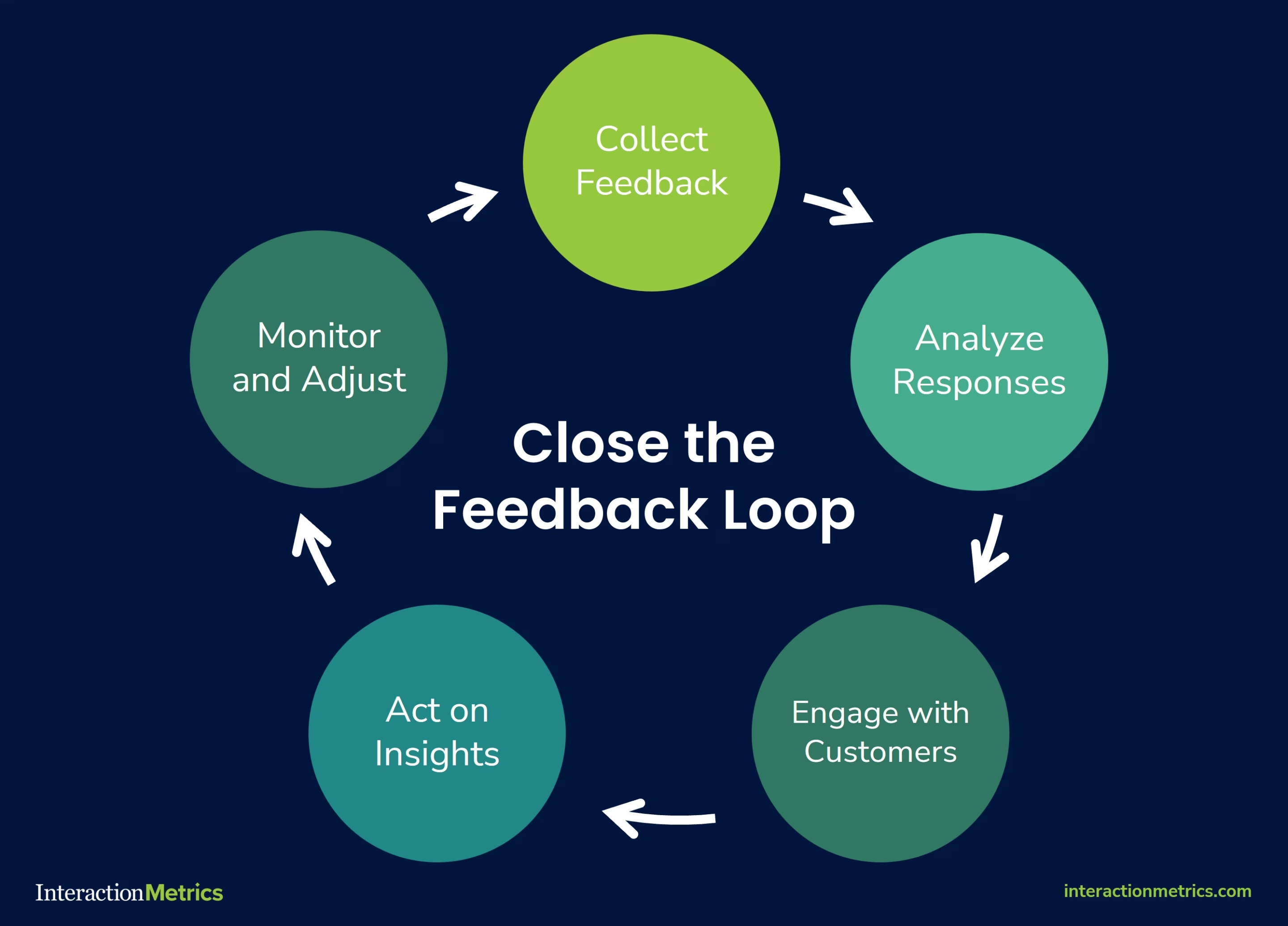
- Close the Loop: Tell customers how you’re acting on their feedback. It builds trust and increases future participation.
CX Research for B2B Companies
B2B research is often more complex—and more valuable. Buyers are part of teams, journeys are longer, and contracts are higher stakes.
- Use AI in B2B to map multi-contact touchpoints.
- Use interviews to understand not just users—but decision makers, influencers, and end customers.
- Use journey analytics to track long lead-to-close paths.
Common Pitfalls to Avoid
- Over-relying on surveys and ignoring behavioral or emotional data. Customer experience research is constantly evolving, and staying updated with new techniques and technologies is essential to avoid these pitfalls.
- Failing to segment properly, lumping all customers into one bucket
- Letting insights go unused, damaging customer trust
- Using biased or vague questions, leading to flawed conclusions
- Treating journey maps as one-time projects instead of dynamic assets
The Future of Customer Experience Research
- Emotion AI will add facial expression, voice tone, and biometric cues to deepen our emotional understanding of the customer.
- Predictive Personalization will use CX research to tailor experiences in real time—at the individual level.
- Unified CX Intelligence Platforms will connect surveys, CRM, behavioral data, and AI into one actionable dashboard. Innovation in AI and data analytics will continue to drive advancements in customer experience research, providing deeper insights and more effective strategies.
Conclusion: Research That Drives Results
Customer experience research is no longer a side project. It’s the foundation of customer-centric growth.
Whether you’re exploring friction in onboarding, studying digital behaviors, or running interviews with key accounts, the smartest companies use CX research to stay ahead.
And now, with AI for surveys, AI for interviews, and AI in B2B, you can gather richer insights, faster—and act with clarity.
Listen better. Act faster. Exceed expectations.
For brands, delivering exceptional customer experiences is crucial for building a positive reputation and fostering customer loyalty.
That’s the power of customer experience research.
============================================
Care to discuss customer surveys, analysis, or any kind of CX research? Get in touch!
============================================
The post B2B Customer Experience Research—Latest CXPA Roundtable appeared first on Interaction Metrics.
]]>Read more
The post New & Improved: How to Increase Response Rate appeared first on Interaction Metrics.
]]>We’ve just updated our blog on How to Increase Response Rate with even more insights and detailed breakdowns!
It now contains tons of useful new information, including:
- What your response rate is really telling you
- 10 research-backed ways to increase survey response rates (without bribing people)
- How better surveys lead to better decisions—and better customer experiences
And much more!
Click here to read the updated post.
The post New & Improved: How to Increase Response Rate appeared first on Interaction Metrics.
]]>